check

check

check

check

check

check
In the intricate world of industrial automation, where precision and reliability are non-negotiable, a silent sentinel plays a pivotal role: the NPN proximity sensor. This unassuming device, often no larger than a fingertip, is the fundamental building block for countless detection and control tasks. Unlike its PNP counterpart, the NPN sensor operates by sinking current to the common ground, a configuration that has become a standard in many global control systems, particularly those with PLCs (Programmable Logic Controllers) that require a sinking input.
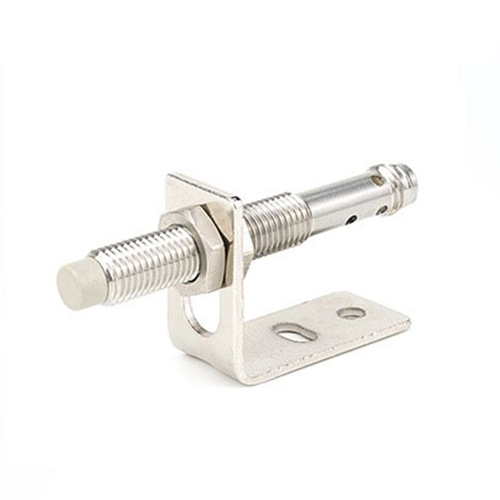
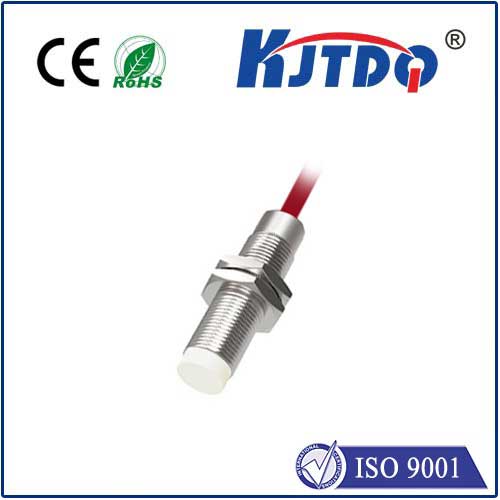
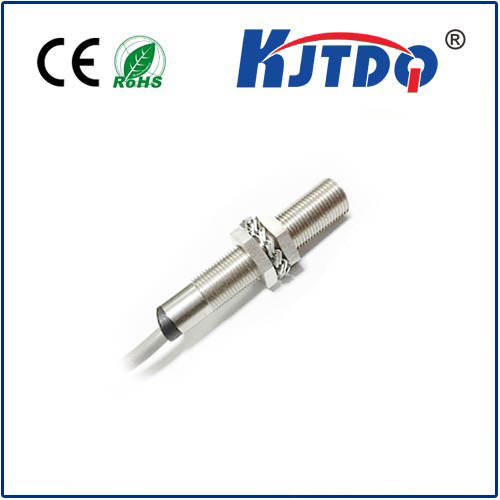
At its core, an NPN proximity sensor is a solid-state electronic device designed to detect the presence or absence of a metallic object without any physical contact. It achieves this through an electromagnetic field emitted from its sensing face. When a ferrous or non-ferrous metal target enters this field, it causes a change in the oscillation amplitude within the sensor. This internal change triggers the sensor's solid-state output switch. In an NPN sensor, this switch connects the output signal line to the negative voltage supply (0V or ground) when activated, hence the term "sinking" output. This signal is then read by the controller as a logical "ON" or "1" state, initiating a pre-programmed action such as stopping a conveyor, counting parts, or confirming a robotic arm's position.
The advantages of deploying NPN proximity sensors are manifold and directly address critical industrial needs. Their non-contact nature eliminates mechanical wear and tear, granting them an exceptionally long operational life measured in millions of cycles. They are immune to environmental contaminants like dust, oil, and moisture when properly housed, ensuring consistent performance in harsh factory conditions. Their response time is incredibly fast, often in microseconds, enabling high-speed counting and positioning in modern assembly lines. Furthermore, their simple two-wire or three-wire connection schemes facilitate easy installation and integration into existing control panels.
Selecting the correct NPN proximity sensor requires careful consideration of several application-specific parameters. The sensing range, typically from 1mm to 60mm, must be chosen with a safety margin to account for mechanical tolerances and target variations. The housing material, such as nickel-plated brass, stainless steel, or PBT plastic, must withstand the specific environmental challenges, including chemical exposure, temperature extremes, and physical impacts. Engineers must also specify the correct electrical characteristics: operating voltage (commonly 10-30V DC), output current capacity, and whether a shielded or unshielded model is needed. Shielded sensors can be flush-mounted in metal, while unshielded ones offer a longer sensing range but require non-metallic surroundings.
Real-world applications for NPN sensors are virtually limitless across manufacturing sectors. In automotive plants, they precisely detect piston positions in engines. On packaging lines, they count bottles or boxes with unerring accuracy. In material handling, they provide end-of-travel limits for automated guided vehicles (AGVs). They are integral to robotic work cells, ensuring tools are correctly positioned before a welding or painting operation begins. Their role in safety interlocking systems, where they confirm a guard door is securely closed before machinery can start, underscores their critical importance for operator protection.
For optimal performance and longevity, proper installation and maintenance are crucial. Sensors should be mounted securely to minimize vibration, and the sensing face must be kept clean from debris buildup that could attenuate the sensing field. While largely maintenance-free, periodic functional checks are recommended to ensure the sensing distance has not degraded and the output signal remains strong. Understanding the electrical wiring is essential; connecting an NPN sensor to a sourcing input, or vice versa, will result in system failure.
As Industry 4.0 and the Industrial Internet of Things (IIoT) evolve, the humble NPN proximity sensor is also advancing. Modern variants come with IO-Link communication capabilities, transforming them from simple switches into intelligent devices that can report diagnostic data like operating temperature, signal strength, and even predict potential failures. This connectivity allows for predictive maintenance, reducing unplanned downtime and elevating overall equipment effectiveness (OEE).
In conclusion, the NPN proximity sensor is far more than just a switch. It is a robust, reliable, and precise component that forms the sensory foundation of automated systems. Its ability to provide consistent, contactless feedback in demanding environments makes it an indispensable tool for engineers seeking to build efficient, safe, and intelligent manufacturing operations. From simple presence detection to enabling complex networked diagnostics, the NPN sensor continues to be a cornerstone of industrial innovation.