check

check

check

check
check
check
check
check

check

check
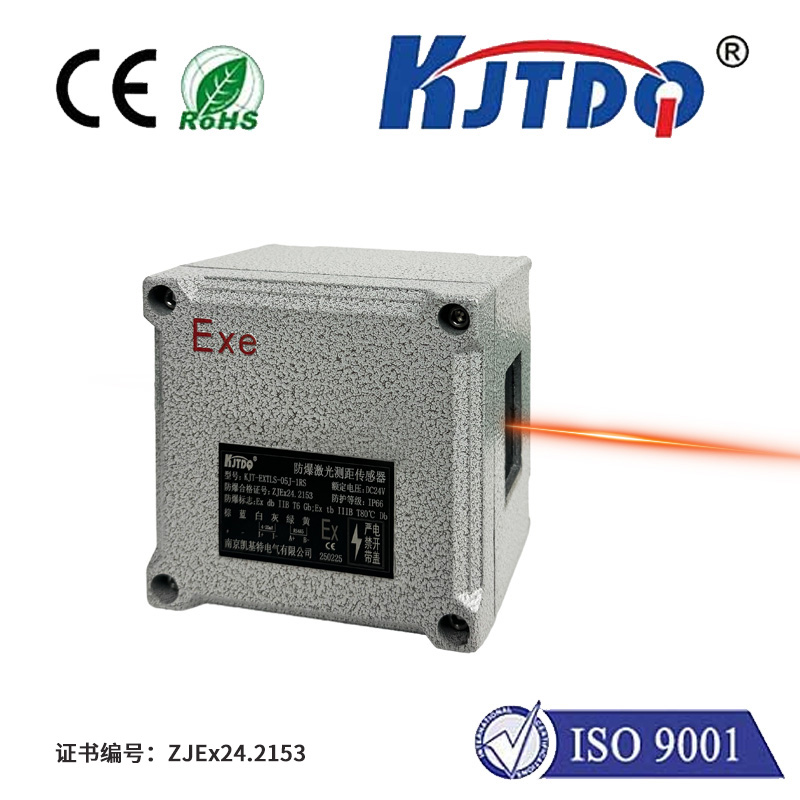
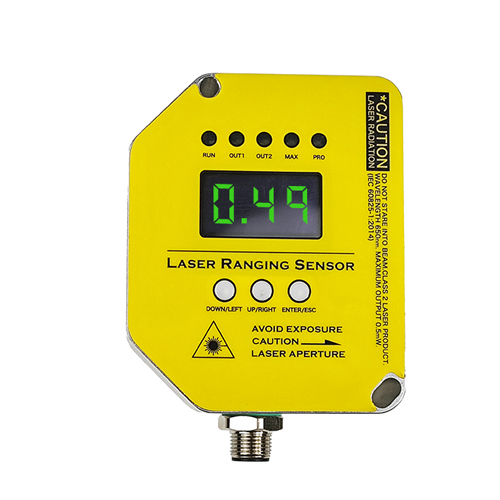
In the realm of industrial automation, robotics, and advanced surveying, the demand for unparalleled measurement accuracy is non-negotiable. Enter the high-precision laser rangefinder sensor, a technological marvel that has fundamentally transformed how distances are measured with microscopic exactitude. Unlike traditional measurement tools, these sensors employ a focused beam of laser light to calculate the distance to a target object. The principle is based on measuring the time it takes for the laser pulse to travel to the object and reflect back to the sensor, known as the time-of-flight (ToF) method, or through phase-shift analysis for even finer resolution. This process, occurring in nanoseconds, yields data with exceptional reliability and precision.
The core advantage of a high-precision laser rangefinder sensor lies in its ability to deliver consistent, accurate readings over long distances and in challenging environmental conditions. Whether it's a manufacturing assembly line where robotic arms require exact positioning to millimeter tolerances, or a construction site where land must be surveyed with absolute precision, these sensors provide the critical data needed. They eliminate human error associated with manual tape measures or older ultrasonic sensors, which can be affected by temperature, humidity, or ambient noise. The laser beam's coherence and minimal divergence ensure that the measurement spot remains small and well-defined, even over hundreds of meters, allowing for precise targeting of specific points on an object.
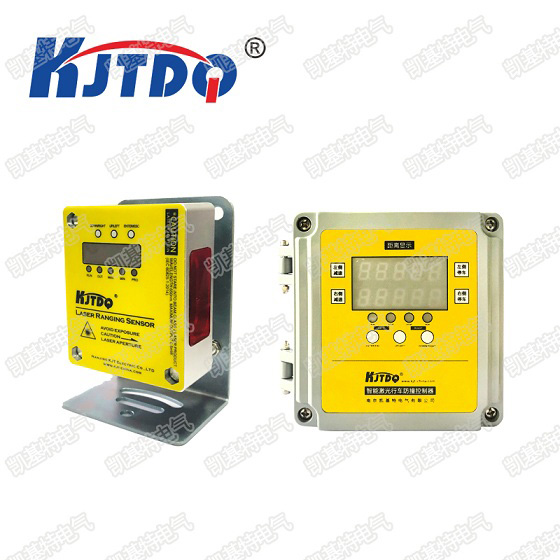
Modern high-precision laser sensors incorporate sophisticated signal processing algorithms and robust housing designs. They are engineered to compensate for potential interference, such as ambient light or dust, ensuring stable performance in outdoor or industrial settings. Many models feature integrated connectivity options like Ethernet, RS-485, or various industrial fieldbus protocols, enabling seamless integration into larger IoT (Internet of Things) systems and Industry 4.0 frameworks. This allows for real-time data streaming to central control systems, facilitating immediate adjustments in automated processes, predictive maintenance schedules, and comprehensive quality control logs.
Applications for these sensors are vast and growing. In autonomous vehicles and drones, they are pivotal for obstacle detection, navigation, and terrain mapping. In logistics, they optimize warehouse automation by precisely measuring parcel dimensions and guiding automated guided vehicles (AGVs). The forestry and mining industries utilize them for volume calculation and stockpile management. Furthermore, in safety systems, they can create invisible perimeter guards or ensure safe distances around heavy machinery. The versatility stems from the sensor's non-contact nature, which allows for measuring moving, hot, or otherwise inaccessible objects without any risk of damage or contamination.
Selecting the right high-precision laser rangefinder sensor requires careful consideration of several parameters. Key specifications include measurement range, which can vary from a few centimeters to several kilometers; accuracy, often specified in millimeters or even sub-millimeter levels; measurement rate or frequency, crucial for tracking fast-moving objects; and the laser's wavelength and class, which determine its safety and visibility. Environmental ratings like IP (Ingress Protection) codes are also critical for durability in harsh conditions. Ultimately, the choice depends on the specific application's demands for speed, precision, and operational environment.
The evolution of high-precision laser rangefinder technology continues, driven by advancements in laser diodes, optical components, and computational power. Future trends point towards even smaller form factors, lower power consumption, and enhanced smart features like onboard data analytics and AI-driven pattern recognition. As industries worldwide push the boundaries of efficiency and automation, the high-precision laser rangefinder sensor stands as an indispensable tool, providing the exact, reliable measurements that form the foundation of modern precision engineering and automated systems. Its role in enhancing productivity, safety, and data-driven decision-making is set to expand further, solidifying its position as a cornerstone of technological progress.