check

check

check

check
check
check
check
check

check

check
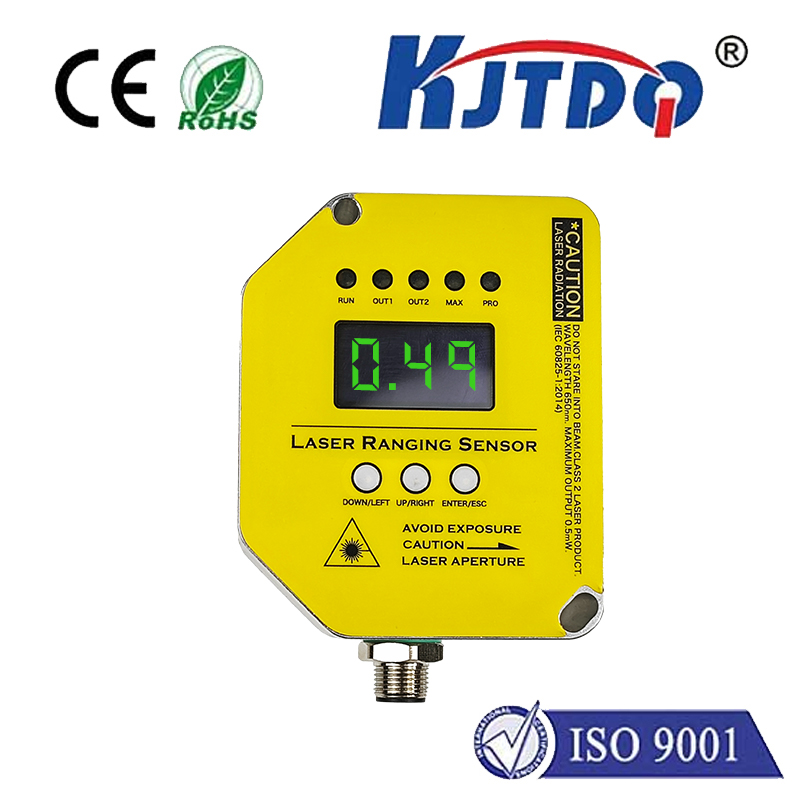
In the realm of precise distance measurement, the 10-meter laser rangefinder sensor stands as a cornerstone technology. This compact yet powerful device utilizes a focused laser beam to calculate distances with remarkable accuracy, typically within a few millimeters over its operational range. Its principle is elegantly straightforward: the sensor emits a short pulse of laser light towards a target, and a high-speed detector measures the time it takes for the reflected light to return. By calculating this time-of-flight (ToF), the sensor instantly determines the exact distance.
The utility of a 10-meter range sensor is vast and touches numerous industries. In robotics and automation, these sensors are indispensable for navigation, object avoidance, and precise positioning. A robotic arm on an assembly line, for instance, can use the sensor to gauge the exact location of a component before picking it up, ensuring flawless operation. Similarly, autonomous mobile robots rely on an array of such sensors to map their environment and navigate complex spaces safely.
Consumer electronics and smart devices represent another major growth area. Modern smartphones increasingly incorporate miniature laser rangefinder sensors to enable faster and more accurate autofocus in cameras, particularly in low-light conditions. In the smart home ecosystem, these sensors can be integrated into appliances for gesture control or to monitor room occupancy for optimized climate and lighting control. The 10-meter range is particularly suitable for these indoor applications, covering typical room sizes with ease.
Industrial maintenance and construction professionals have long benefited from handheld laser distance meters. The integration of a 10-meter sensor into more permanent systems allows for continuous monitoring. It can be used to measure sag in power lines, monitor structural deformations in buildings or bridges, or ensure precise alignment in large machinery. The non-contact nature of laser measurement means it can be performed safely from a distance, even on hazardous or moving targets.
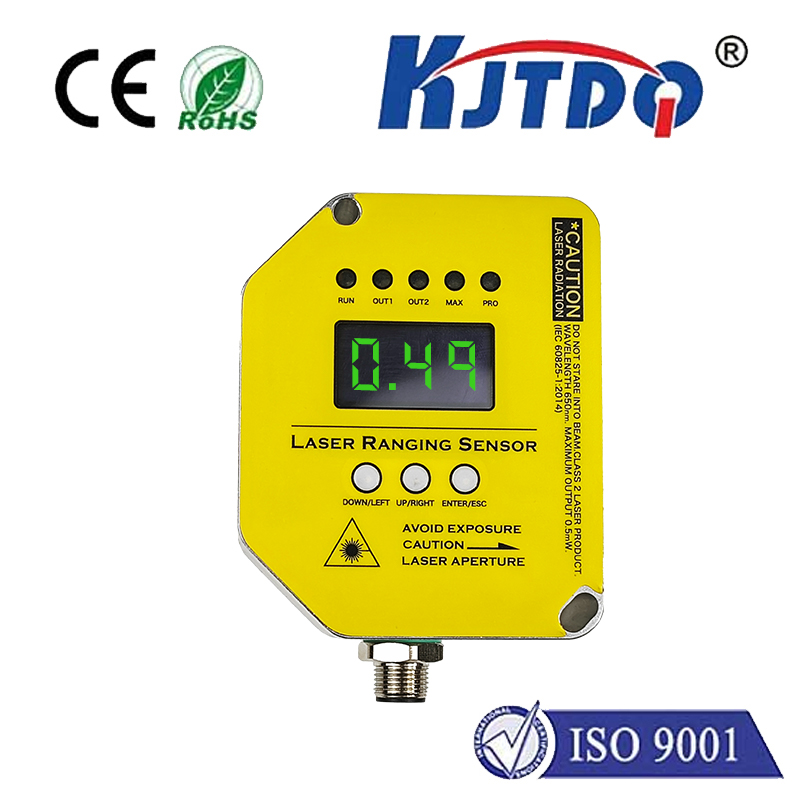
The development of the KJTDQ series of 10-meter laser rangefinder sensors addresses the growing demand for reliability and integration. These units are engineered for stability, with robust housings that protect against dust, moisture, and minor impacts, making them suitable for harsh industrial environments. They often feature digital interfaces like UART, I2C, or PWM, allowing for seamless communication with microcontrollers, single-board computers, or industrial PLCs. This plug-and-play capability significantly reduces development time for engineers designing new systems.
A key advantage of modern sensors like the KJTDQ is their low power consumption. Efficient optical design and power management circuits enable them to operate for extended periods on battery power, which is critical for portable and IoT (Internet of Things) applications. Furthermore, advanced signal processing algorithms filter out ambient light noise and false echoes, ensuring that the distance reading remains stable and reliable even in challenging lighting conditions.
Looking forward, the role of the 10-meter laser rangefinder sensor is set to expand with trends like Industry 4.0 and ubiquitous sensing. As factories become smarter, these sensors provide the essential raw data for digital twins—virtual models of physical systems. In logistics, they can precisely measure parcel dimensions for automated sorting and shipping cost calculation. Even in agriculture, such sensors can be deployed for monitoring crop growth or guiding automated machinery.
Selecting the right sensor involves considering several parameters beyond just range. Accuracy, measurement speed (update rate), beam divergence, operating temperature range, and the physical form factor are all crucial. The 10-meter laser rangefinder sensor, particularly in models designed for OEM integration like the KJTDQ, offers a balanced solution that meets the needs of a wide spectrum of applications, from consumer gadgets to heavy industry. It exemplifies how a fundamental sensing technology, continuously refined, continues to enable innovation and efficiency across the board. Its ability to deliver instant, precise spatial data makes it an invisible yet vital component in the automated and intelligent systems shaping our future.