check

check

check
check
check
check
check
check

check

check
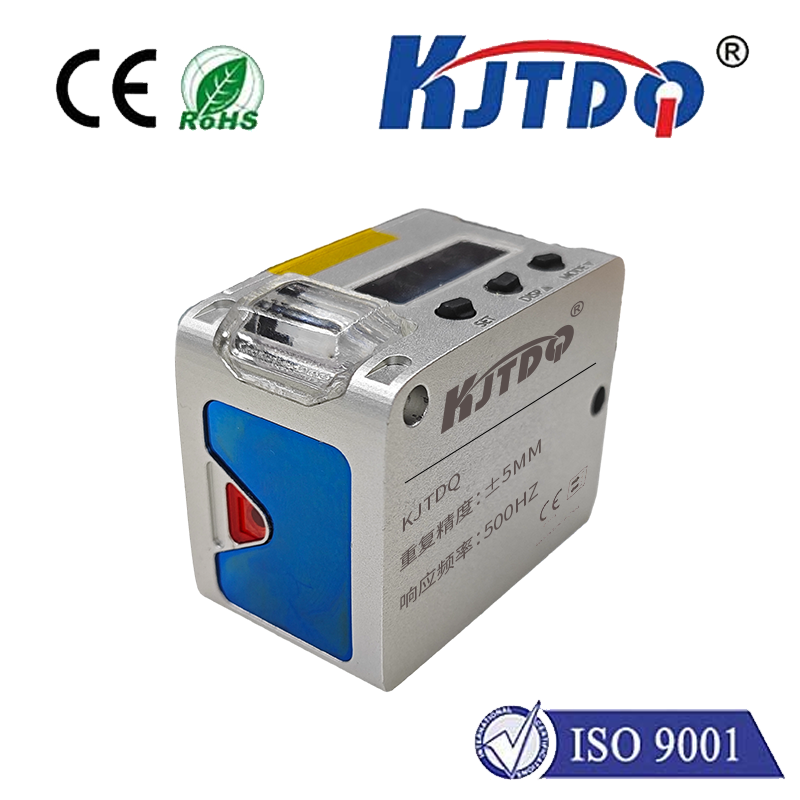
In the world of industrial automation, construction, and advanced robotics, the demand for reliable, accurate, and robust distance measurement is paramount. This is where the industrial-grade rangefinder sensor steps in, moving beyond consumer-grade devices to deliver performance that can withstand harsh environments and critical tasks. Unlike standard sensors, an industrial-grade rangefinder is engineered for durability, precision, and consistent operation under challenging conditions such as extreme temperatures, dust, moisture, and significant vibration.
The core technology behind these sensors often involves time-of-flight (ToF), laser triangulation, or ultrasonic principles. Industrial laser rangefinders, for instance, emit a laser pulse and measure the time it takes for the reflection to return, calculating distance with exceptional accuracy. This technology is vital in applications like automated guided vehicles (AGVs) for obstacle detection and navigation, in forestry for timber measurement, and on construction sites for surveying and grading. The "industrial-grade" designation means the sensor components are selected and housed to resist shock, corrosion, and electromagnetic interference, ensuring signal integrity and long-term reliability.
One of the key advantages of utilizing an industrial-grade rangefinder sensor is its contribution to safety and efficiency. In manufacturing plants, these sensors provide non-contact measurement for inventory management, positioning of robotic arms, and quality control checks on assembly lines. They help prevent collisions in automated warehouses and enable precise level monitoring in silos and tanks. The high sampling rate and low latency of advanced models allow for real-time feedback, which is crucial for dynamic systems and high-speed automation.
Integration is another critical factor. Modern industrial rangefinder sensors come with various output options—analog voltage, current loops, serial communication (RS-485), or industrial Ethernet protocols like PROFINET and EtherNet/IP. This flexibility allows them to seamlessly connect with Programmable Logic Controllers (PLCs), human-machine interfaces (HMIs), and broader Industrial Internet of Things (IIoT) networks. This connectivity facilitates predictive maintenance, where sensor data can be analyzed to forecast potential failures before they cause downtime.
When selecting an industrial-grade rangefinder, several specifications must be considered beyond just measuring range. Resolution, which is the smallest distance change the sensor can detect, is essential for precision tasks. Repeatability ensures the sensor provides the same measurement under identical conditions. The environmental protection rating, typically denoted by an IP (Ingress Protection) code like IP67, indicates resilience against dust and water immersion. Operating temperature range is also vital for outdoor or unregulated indoor environments.
The return on investment for deploying these robust sensors is clear. They reduce manual measurement errors, enhance operational safety by replacing human roles in hazardous zones, and increase overall production throughput through automation. Their robustness minimizes maintenance costs and unplanned stoppages, leading to higher system availability and lower total cost of ownership.
In conclusion, the industrial-grade rangefinder sensor is not merely a tool for measuring distance; it is a fundamental component enabling modern industrial intelligence. From ensuring the precise placement of components in electronics manufacturing to guiding massive machinery in mining operations, its role is indispensable. As industries continue to evolve towards greater autonomy and data-driven decision-making, the reliable data provided by these rugged sensors will remain a cornerstone of operational excellence and innovation.