check

check

check

check

check

check
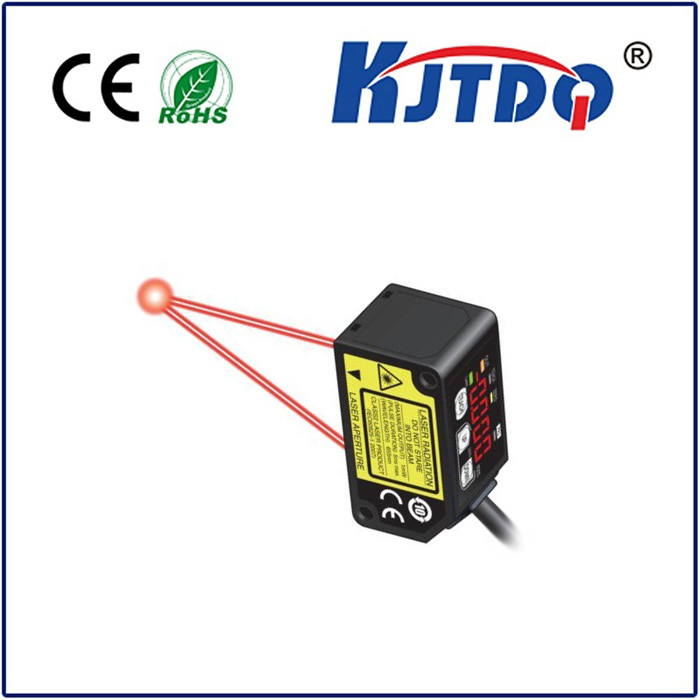
In the ever-evolving landscape of industrial automation, robotics, and smart infrastructure, the demand for accurate, reliable, and compact measurement solutions has never been greater. Enter the small laser distance sensor, a technological marvel that is quietly transforming how machines perceive and interact with their environment. Unlike traditional mechanical measuring tools or bulkier optical systems, these miniature devices offer non-contact precision at remarkable speeds, making them indispensable in modern engineering and manufacturing.
The core principle behind a small laser distance sensor is elegantly simple yet profoundly effective. It emits a focused laser beam towards a target object. The sensor then precisely measures the time it takes for the reflected light to return, a method known as time-of-flight (ToF), or analyzes the phase shift of a modulated laser beam. This data is instantly processed by an onboard microcontroller to calculate the exact distance with sub-millimeter accuracy. This entire process, from emission to calculation, occurs in microseconds, enabling real-time feedback for dynamic systems.
What truly sets the modern small laser distance sensor apart is its integration of advanced components into a remarkably small form factor. Manufacturers have achieved breakthroughs in miniaturizing laser diodes, optical lenses, and high-speed photodetectors without compromising performance. This miniaturization allows for installation in space-constrained applications where larger sensors simply cannot fit. Whether embedded within the gripper of a collaborative robot, mounted on a drone for aerial surveying, or integrated into a handheld diagnostic tool, their compact size unlocks new possibilities.
The applications for these powerful little devices are vast and varied. In automated production lines, they perform critical tasks such as verifying part dimensions, controlling robotic arm positioning, and detecting object presence on high-speed conveyors. Their high precision ensures consistent product quality and reduces material waste. In the logistics sector, they are key to automated warehouse systems, guiding autonomous guided vehicles (AGVs) and accurately measuring parcel dimensions for optimal storage and shipping. Furthermore, in the realm of consumer electronics and smart devices, small laser distance sensors contribute to features like autofocus enhancement in smartphone cameras and gesture recognition.
Beyond industrial settings, their impact is felt in construction and civil engineering. Professionals use handheld devices equipped with these sensors for quick and accurate measurements of rooms, land plots, or structural elements, significantly improving survey efficiency and reducing human error. Their ability to measure long distances with a simple point-and-click operation has made them a favorite tool for architects, engineers, and contractors alike.
When selecting a small laser distance sensor for a specific project, several key parameters must be considered. Measurement range, accuracy, and repeatability are paramount. The required response time, or how quickly the sensor can take and output a measurement, is crucial for high-speed automation. Environmental robustness is another critical factor; many industrial-grade models feature rugged housings with high Ingress Protection (IP) ratings to withstand dust, moisture, and vibration. Finally, the output interface—whether analog voltage, current loop, or digital protocols like RS-485 or IO-Link—must be compatible with the existing control system.
The future trajectory for small laser distance sensors points toward even greater intelligence and connectivity. We are seeing the emergence of sensors with integrated edge computing capabilities, allowing for basic data processing and decision-making at the device level. Enhanced connectivity through Industrial Internet of Things (IIoT) frameworks will enable seamless data integration into cloud platforms for predictive maintenance and system-wide optimization. As machine vision and artificial intelligence continue to advance, these sensors will increasingly function as the precise "eyes" for intelligent systems, providing the foundational spatial data necessary for autonomous operation and complex environmental interaction.
In conclusion, the small laser distance sensor is far more than just a miniaturized component; it is a foundational technology enabling precision in the digital age. By delivering accurate, non-contact distance measurements in a compact and robust package, it solves critical challenges across a diverse spectrum of industries. From the factory floor to the construction site and into our everyday smart devices, its role is pivotal in driving efficiency, enhancing safety, and unlocking new levels of automation. As technology continues its march forward, the capabilities and applications of these remarkable sensors will undoubtedly expand, further solidifying their status as an essential tool for innovation.