check

check

check

check

check

check
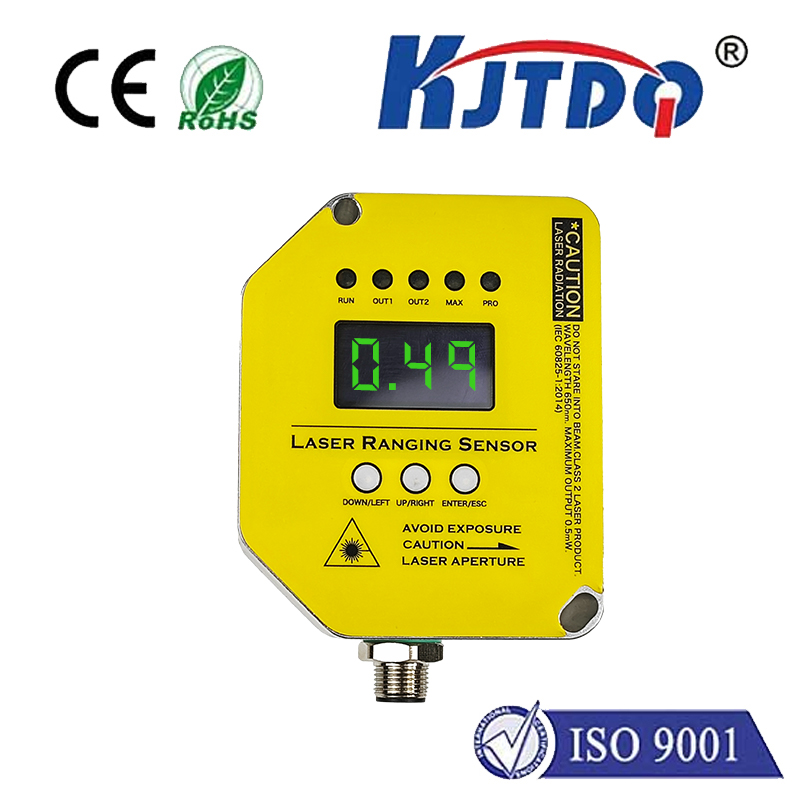
In an era where precision and automation define progress, the ranging sensor has emerged as a foundational technology driving innovation across countless industries. Far from being a simple component, it is the critical eye that enables machines to perceive distance, navigate environments, and interact with the physical world intelligently and reliably. The core function of a ranging sensor is to measure the distance between itself and a target object without physical contact. This capability, seemingly straightforward, unlocks a universe of applications, from the robotic arm in a smart factory to the advanced driver-assistance systems in your vehicle.
The technology behind modern ranging sensors is diverse, each type suited to specific challenges and environments. Ultrasonic sensors, for instance, emit sound waves and calculate distance based on the time it takes for the echo to return. They are robust, cost-effective, and perform well in various conditions, making them ideal for applications like parking assistance, liquid level measurement, and object detection in manufacturing. On the other hand, laser-based sensors, such as LiDAR (Light Detection and Ranging), use pulsed laser light to create high-resolution 3D maps of surroundings. Their exceptional accuracy and long range are indispensable for autonomous vehicles, topographic surveying, and precision agriculture.
Another pivotal technology is the infrared (IR) sensor, which often uses time-of-flight principles to measure distance. These sensors are compact and efficient, commonly found in consumer electronics for gesture recognition, in robotics for obstacle avoidance, and in smart home devices for presence detection. The choice of sensor technology hinges on factors like required range, accuracy, environmental conditions (such as dust, light, or rain), and cost constraints. This versatility ensures that a ranging sensor solution exists for nearly every conceivable need.
The impact of ranging sensors on industrial automation cannot be overstated. On production lines, they ensure precise positioning of components, control robotic movements to micrometer accuracy, and guarantee quality by verifying dimensions. This leads to reduced waste, higher throughput, and improved worker safety by creating collaborative workspaces where robots and humans can operate in close proximity. In logistics and warehousing, sensors guide automated guided vehicles (AGVs), manage inventory through precise bin-level sensing, and optimize storage space, forming the backbone of the modern supply chain.
Beyond the factory floor, ranging sensors are revolutionizing daily life and broader societal systems. In the automotive sector, they are the cornerstone of safety features like adaptive cruise control, automatic emergency braking, and blind-spot monitoring, steadily paving the way toward fully autonomous driving. In smart cities, these sensors monitor traffic flow, manage street lighting efficiently, and assist in waste management. Even in healthcare, precise ranging technology aids in surgical robotics, patient monitoring, and the development of assistive devices for the visually impaired.
When integrating a ranging sensor into a project or product, several key considerations come to the fore. Accuracy and resolution are paramount; the sensor must deliver measurements trustworthy enough for the system's decision-making. The measurement range must align with the application's scope, whether it's a few centimeters for a miniature robot or hundreds of meters for a surveying drone. Environmental robustness is critical—the sensor must perform consistently whether indoors, outdoors, in high temperatures, or in the presence of vibrations. Finally, the output format and ease of integration with existing control systems (like PLCs or microcontrollers) determine the speed and success of deployment.
Looking ahead, the evolution of ranging sensors points toward greater miniaturization, enhanced intelligence, and lower power consumption. The integration of artificial intelligence and edge computing will allow sensors to not only collect distance data but also interpret scenes, classify objects, and make preliminary decisions locally. This shift will enable even more responsive and autonomous systems. Furthermore, the fusion of data from multiple sensor types—combining LiDAR, radar, and cameras—will create redundant, fail-safe perception systems crucial for safety-critical applications like autonomous vehicles and advanced robotics.
In conclusion, the ranging sensor is far more than a mere measuring tool. It is an enabler of autonomy, a guardian of safety, and a catalyst for efficiency. From optimizing complex industrial processes to embedding intelligence into everyday objects, its role is both fundamental and transformative. As technology continues to advance, the humble ranging sensor will undoubtedly remain at the forefront, silently and precisely shaping a more automated, efficient, and intelligent world. Selecting the right sensor is not just a technical decision; it is a strategic step toward unlocking new levels of performance and innovation.