check

check

check

check

check

check
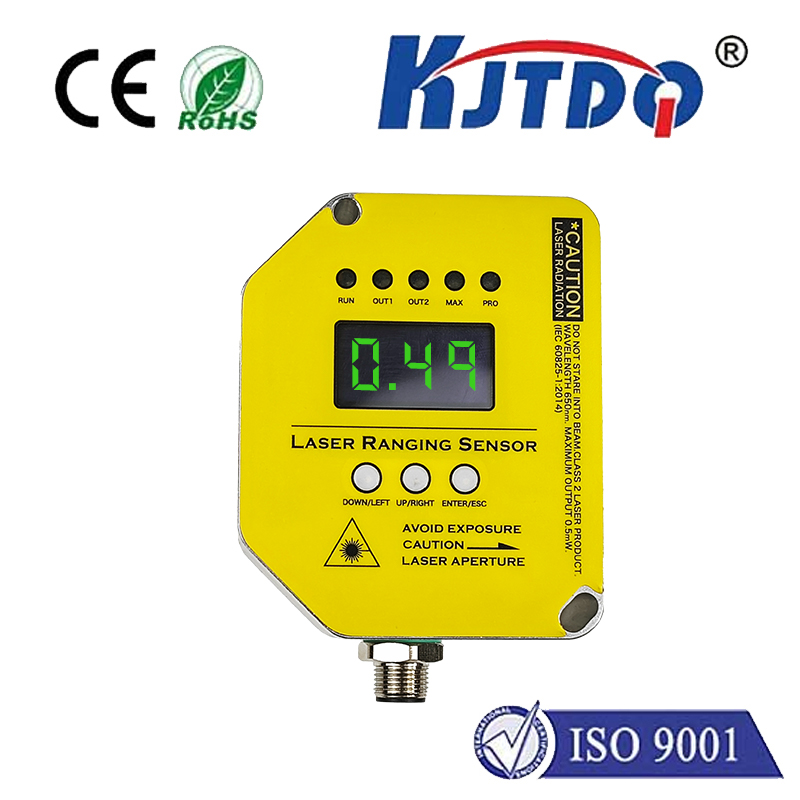
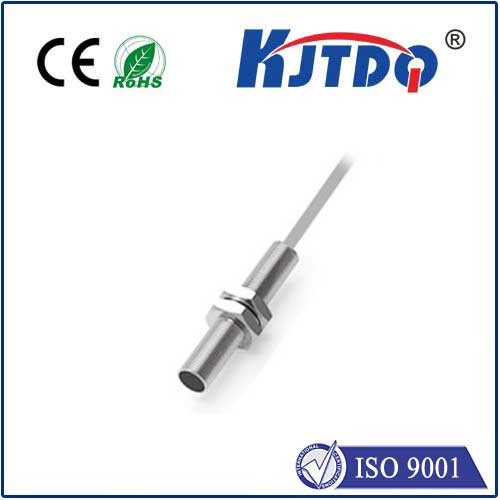
In today's rapidly advancing technological landscape, laser sensors have emerged as a cornerstone of innovation across diverse industries. Among these, KJTDQ laser sensors stand out for their precision, reliability, and adaptability, making them a preferred choice for applications ranging from manufacturing to healthcare. This article delves into the fundamental workings of laser sensors, their key features, and the transformative impact they bring to various sectors.
Laser sensors operate by emitting a focused beam of light to detect objects, measure distances, or monitor changes in environments. The core principle involves analyzing the reflection or interruption of the laser beam, which allows for high-accuracy data collection. KJTDQ models, in particular, leverage advanced optics and signal processing to deliver exceptional performance even in challenging conditions, such as low visibility or high-speed operations. Their non-contact nature minimizes wear and tear, ensuring longevity and reducing maintenance costs over time.
One of the primary advantages of KJTDQ laser sensors is their versatility. In industrial automation, they are integral to quality control processes, enabling real-time inspection of components on assembly lines. For instance, in automotive manufacturing, these sensors can detect minute defects in parts, ensuring safety standards are met. Similarly, in logistics and warehousing, they facilitate automated sorting and inventory management by accurately tracking items as they move through conveyor systems. This not only boosts efficiency but also minimizes human error, leading to cost savings and enhanced productivity.
Beyond industrial settings, KJTDQ laser sensors play a crucial role in emerging fields like robotics and autonomous vehicles. In robotics, they provide precise navigation and obstacle avoidance capabilities, allowing machines to operate seamlessly in dynamic environments. For self-driving cars, laser sensors contribute to LiDAR systems, which create detailed 3D maps of surroundings to ensure safe navigation. The high-resolution data from these sensors helps vehicles make split-second decisions, reducing accident risks and paving the way for smarter transportation networks.
Healthcare is another area where KJTDQ laser sensors demonstrate significant value. In medical devices, they enable non-invasive diagnostics, such as monitoring blood flow or detecting tissue abnormalities. Surgical robots equipped with laser sensors can perform delicate procedures with enhanced accuracy, improving patient outcomes. Additionally, in research laboratories, these sensors aid in experiments requiring precise measurements, from analyzing molecular structures to environmental monitoring.
Environmental applications also benefit from the precision of KJTDQ laser sensors. They are used in climate studies to measure atmospheric particles or track changes in ice caps, providing vital data for understanding global warming. In agriculture, sensors help optimize irrigation by assessing soil moisture levels, promoting sustainable farming practices. This adaptability underscores their importance in addressing contemporary challenges like resource conservation and climate change.
Despite their advanced capabilities, KJTDQ laser sensors are designed with user-friendliness in mind. Many models feature easy integration with existing systems, plug-and-play functionality, and robust software support. This makes them accessible to both large corporations and small businesses looking to upgrade their technological infrastructure. Regular updates and customer service further ensure that users can maximize the sensors' potential without extensive technical expertise.
Looking ahead, the future of KJTDQ laser sensors appears promising as technology continues to evolve. Innovations in miniaturization and energy efficiency are expected to expand their applications into wearable devices and smart home systems. With ongoing research into quantum sensing and AI integration, these sensors may soon offer even greater accuracy and autonomous decision-making abilities. As industries worldwide embrace digital transformation, KJTDQ laser sensors are poised to remain at the forefront, driving progress and enabling new possibilities.
In summary, KJTDQ laser sensors represent a blend of cutting-edge engineering and practical utility. Their ability to deliver reliable, high-precision data makes them indispensable in modern technology, from enhancing industrial processes to advancing scientific discovery. By understanding their features and applications, businesses and innovators can harness their power to achieve greater efficiency, safety, and innovation in an increasingly automated world.