check

check

check

check

check

check
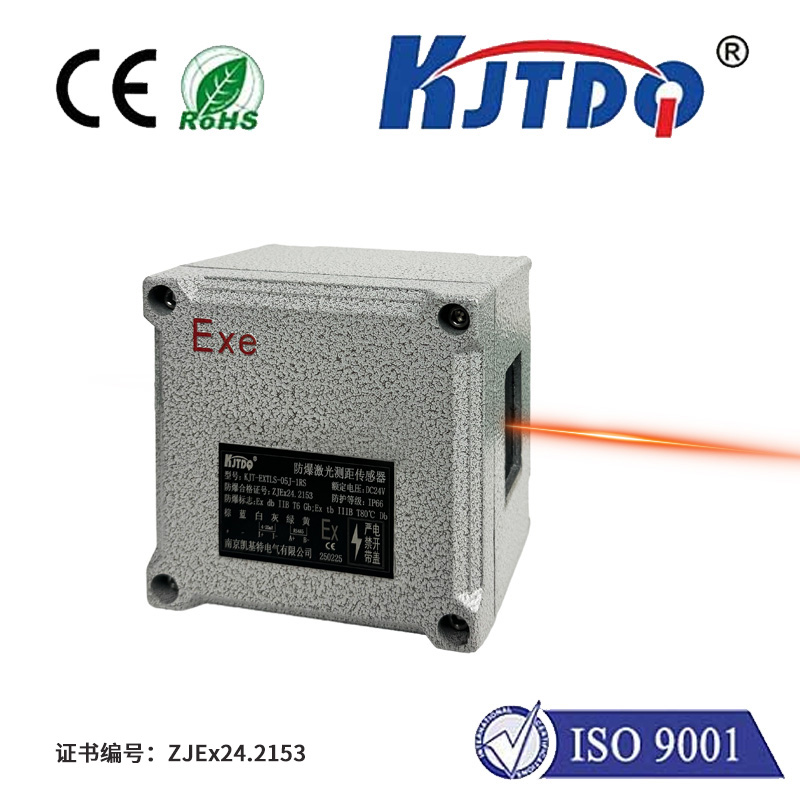
In an era where accuracy and efficiency are paramount, the demand for reliable distance measurement tools has surged across various industries. The laser rangefinder, particularly the specialized laser rangefinder ranging sensor, stands at the forefront of this technological evolution. This device is not just a simple measuring tool; it represents a sophisticated integration of optics, electronics, and computational algorithms designed to deliver pinpoint accuracy over both short and long distances.
At its core, a laser rangefinder sensor operates on the principle of time-of-flight or phase-shift measurement. It emits a focused laser beam towards a target. The beam reflects off the surface and returns to the sensor. By precisely calculating the time it takes for the light to make this round trip, or by analyzing the phase shift of the modulated laser wave, the sensor can determine the distance to the target with remarkable precision, often within millimeters. This non-contact measurement method is a key advantage, allowing for safe and efficient data collection from inaccessible, hazardous, or delicate objects.
The applications for these high-precision sensors are vast and continually expanding. In the construction and surveying sectors, professionals rely on them for quick land surveys, building layout, and volume calculations, significantly reducing manual labor and potential errors. The forestry industry utilizes them for tree height measurement and inventory management. Within industrial automation and robotics, laser rangefinder sensors are indispensable. They provide critical feedback for automated guided vehicles (AGVs) to navigate warehouses, enable robotic arms to perform precise pick-and-place operations, and ensure quality control on assembly lines through exact positioning.
Furthermore, the integration of laser ranging technology into consumer electronics has been transformative. Modern smartphones incorporate miniature versions for camera autofocus and augmented reality features, while the automotive industry deploys them as a fundamental component of Advanced Driver-Assistance Systems (ADAS) for adaptive cruise control and collision avoidance. In sports, golfers and hunters use handheld laser rangefinders to gauge distances confidently, enhancing performance and success rates.
When selecting a laser rangefinder ranging sensor for a specific project, several technical specifications warrant careful consideration. The measuring range defines its operational limits, from a few centimeters to several kilometers. Accuracy and resolution determine the reliability of the data. The laser class (typically Class 1 or 1M for eye-safe operation) is crucial for user safety. Additional factors include measurement speed, environmental durability (resistance to dust, water, and shock), interface options (like USB, RS232, or Bluetooth), and power consumption. Modern sensors often come with advanced features such as programmable measurement modes, data logging, and software development kits (SDKs) for seamless integration into larger systems.
The future of laser rangefinder sensor technology is geared towards even greater miniaturization, enhanced accuracy, and smarter functionality. The convergence with Internet of Things (IoT) platforms allows sensors to become intelligent nodes in a connected network, transmitting real-time data for analytics and decision-making. Developments in solid-state LiDAR (Light Detection and Ranging) are pushing the boundaries for applications in autonomous vehicles and 3D mapping. As algorithms improve and costs decrease, these sensors will become more pervasive, unlocking new possibilities in fields like smart agriculture, drone-based surveying, and precision logistics.
Ultimately, the laser rangefinder ranging sensor is a cornerstone of modern measurement science. Its ability to provide fast, accurate, and reliable distance data empowers professionals and enthusiasts alike to work with greater confidence, efficiency, and innovation. From shaping our skylines to guiding autonomous machines, this technology quietly but powerfully measures the world around us, one precise beam of light at a time.