check

check

check

check

check

check
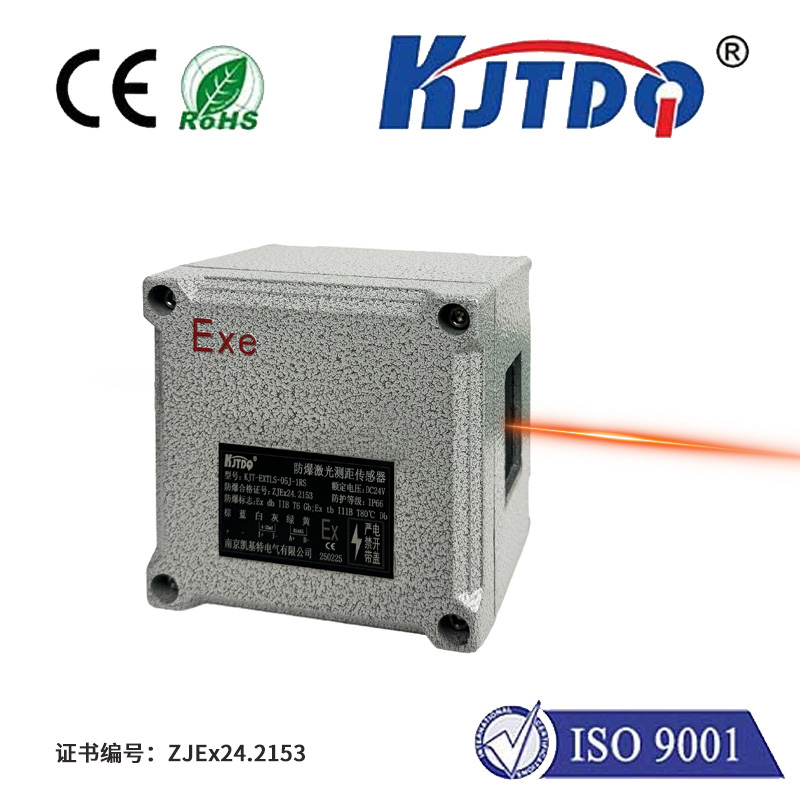
In the dynamic landscape of modern manufacturing and quality control, the demand for unparalleled accuracy and reliability in measurement has never been greater. Enter the domestic high-precision laser displacement sensor, a technological marvel engineered to meet and exceed these rigorous industrial demands. This sophisticated device represents a significant leap forward, offering micron-level measurement capabilities that are transforming production lines, R&D labs, and automated systems across the globe.
At its core, a high-precision laser displacement sensor operates on the principle of triangulation or time-of-flight measurement. A focused laser beam is projected onto the target surface. The reflected light is then captured by a high-resolution receiving element, such as a CCD or PSD array. By precisely calculating the position of the reflected light spot, the sensor determines the exact distance to the target with exceptional accuracy. Modern domestic versions have refined this process, incorporating advanced algorithms and superior optics to minimize environmental interference and deliver stable, repeatable readings even on challenging surfaces like shiny metals or dark, absorbent materials.
The applications for this precision tool are vast and critical. In the automotive industry, these sensors are indispensable for inspecting engine component tolerances, measuring body panel gaps with flawless consistency, and ensuring the perfect alignment of robotic welding arms. The electronics sector relies on them for verifying the coplanarity of chip pins, measuring the thickness of wafer substrates, and precisely placing microscopic components on circuit boards. Furthermore, in fields like aerospace and precision machinery, they facilitate the non-contact inspection of turbine blade profiles, the monitoring of vibration displacements, and the real-time feedback control in CNC machining.
What sets the latest generation of domestic sensors apart is their integration of cutting-edge features. They boast enhanced resistance to ambient light, robust performance in environments with oil mist or dust, and significantly improved temperature stability. Many models now offer high-speed sampling rates, capturing thousands of data points per second to monitor fast-moving objects or dynamic processes without missing a beat. The integration of smart interfaces like Ethernet/IP, PROFINET, or EtherCAT allows for seamless connectivity within Industry 4.0 frameworks, enabling predictive maintenance and data-driven optimization.
Choosing the right sensor involves careful consideration of several key parameters. Resolution, often down to sub-micron levels, defines the smallest detectable change in distance. Linearity indicates the accuracy across the entire measuring range. Spot size determines the minimum feature that can be measured, crucial for small objects. The stand-off distance and measuring range must be matched to the specific application. Fortunately, domestic manufacturers now provide a wide portfolio, from ultra-compact models for confined spaces to long-range variants for large-scale measurements, all while maintaining a compelling balance between performance and cost-effectiveness.
The development and proliferation of domestic high-precision laser displacement sensors underscore a broader trend of technological sovereignty and innovation. By providing tools that rival and sometimes surpass international counterparts in performance, these sensors empower industries to enhance product quality, boost production efficiency, and reduce waste. They are no longer just measurement devices; they are foundational components for building smarter, more agile, and more competitive manufacturing ecosystems. As automation and precision requirements continue to escalate, the role of these sophisticated domestic sensors will only become more central, driving progress and setting new benchmarks for what is measurable and achievable in the industrial world.