check

check

check
check
check
check
check
check

check

check
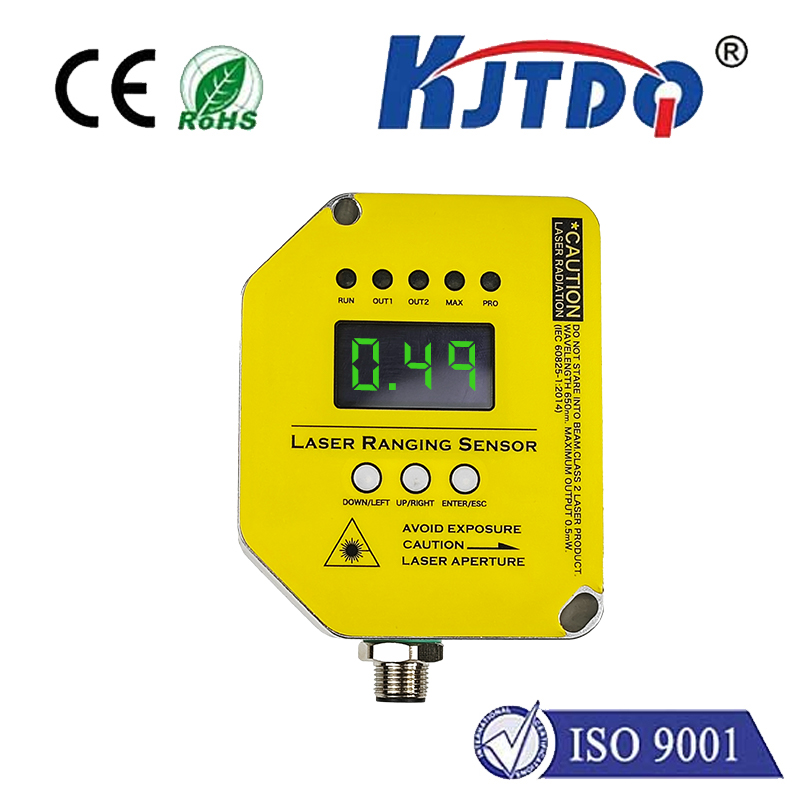
In an era where precision is paramount across countless industries, the 10m laser rangefinder sensor stands as a cornerstone technology. This compact yet powerful device utilizes a focused laser beam to calculate distances with remarkable accuracy, up to a range of ten meters. Its operation is elegantly simple: it emits a laser pulse towards a target, measures the time it takes for the reflection to return, and uses the constant speed of light to compute the exact distance. This fundamental principle enables non-contact measurement, a critical feature for applications where touching the object is impossible, impractical, or could cause damage.
The utility of a high-quality 10m laser sensor extends far beyond simple distance checking. In the realm of robotics and automation, these sensors are indispensable. They provide real-time spatial data, allowing robotic arms to navigate, pick, and place items with sub-millimeter precision on assembly lines. Autonomous mobile robots and drones rely on them for obstacle detection and avoidance, creating safer and more efficient operational environments. The sensor's speed and accuracy ensure that machines can react instantaneously to changes in their surroundings.
For professionals in construction, interior design, and real estate, the 10m laser rangefinder sensor has revolutionized workflow. Gone are the days of cumbersome tape measures and potential human error. An architect can quickly and single-handedly measure room dimensions, ceiling heights, or plot layouts. Contractors can verify alignments, calculate areas for material estimation, and ensure installations are perfectly level. The data can often be seamlessly transferred to design software, streamlining the entire planning process.
The device also plays a crucial role in emerging smart technologies and the Internet of Things (IoT). Integrated into smart trashes, it can monitor fill levels for optimized collection routes. In security systems, it can act as a precise tripwire or monitor perimeter intrusions. Even in consumer electronics, such as advanced cameras, it contributes to faster and more accurate autofocus capabilities, especially in low-light conditions. Its versatility is a key driver of innovation.
When selecting a 10m laser rangefinder sensor, several technical specifications demand attention. Accuracy and resolution are primary; look for models that specify error margins, often within ±1.5mm or better. The measurement speed, or how quickly it can take consecutive readings, is vital for dynamic applications. Robustness is another factor; a sensor with a good Ingress Protection (IP) rating can withstand dust, moisture, and vibrations in industrial settings. Finally, consider the output interface—whether it's analog, digital (like UART or I2C), or with built-in Bluetooth—to ensure compatibility with your existing system.
Installation and calibration are straightforward but essential for optimal performance. The sensor should be mounted securely to minimize vibration. Ensuring the laser beam is perpendicular to the target surface typically yields the most accurate result, as angled measurements can introduce cosine error. Most modern sensors feature simple calibration routines, sometimes just a push of a button, to zero out any environmental interference. Regular maintenance involves keeping the lens clean and checking for firmware updates from the manufacturer to enhance functionality.
Looking ahead, the future of 10m laser rangefinder sensors is intertwined with advancements in miniaturization, power efficiency, and data integration. We can expect even smaller form factors, lower power consumption for battery-operated devices, and smarter sensors with onboard processing that can filter noise and provide more refined data directly. Integration with AI and machine learning platforms will enable predictive analytics, such as anticipating maintenance needs in machinery or analyzing movement patterns.
In conclusion, the 10m laser rangefinder sensor is far more than a simple measuring tool. It is a critical enabler of precision, automation, and intelligence in a digitally-driven world. From factory floors to construction sites and smart homes, its ability to deliver fast, reliable, and contactless distance data makes it an unsung hero of modern engineering and design. Choosing the right sensor and implementing it correctly unlocks significant gains in efficiency, safety, and overall project quality.