check

check

check

check

check

check
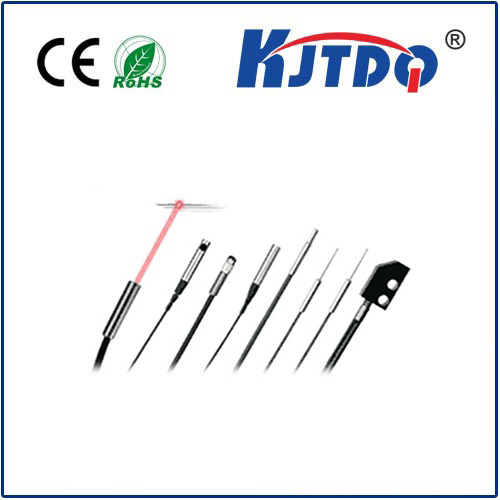
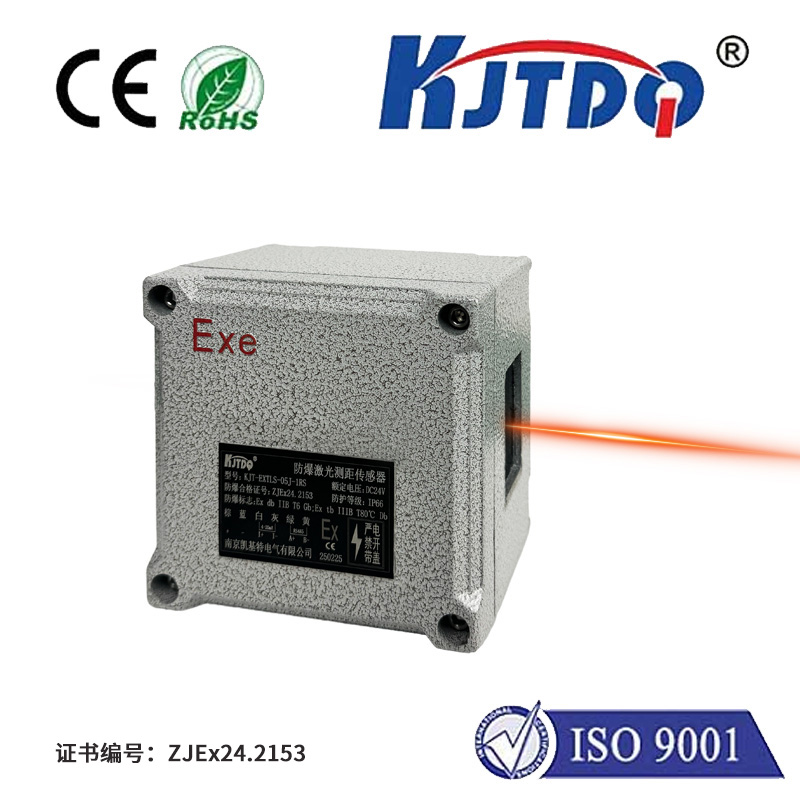
In the realm of industrial automation, quality control, and robotics, the demand for non-contact, high-precision measurement is paramount. The Laser Displacement Sensor for rangefinding stands as a cornerstone technology, enabling systems to perceive distance with remarkable accuracy and reliability. Unlike traditional mechanical probes or ultrasonic sensors, these devices utilize a focused laser beam to measure the displacement or distance to a target object without physical contact. This fundamental principle translates into significant advantages, including minimal wear and tear, the ability to measure delicate or moving surfaces, and exceptionally fast response times.
The core operation of a typical laser displacement sensor involves triangulation. A laser diode projects a visible or infrared spot onto the target surface. The reflected light is then focused onto a position-sensitive detector, such as a CCD or CMOS array. As the target distance changes, the position of the reflected light spot shifts on the detector. The sensor's internal processor calculates the exact displacement based on this positional shift and the known geometry of the optical system. This method delivers micron-level resolution, making it indispensable for applications like thickness gauging, vibration analysis, and part dimension verification on production lines.
Modern laser displacement sensors offer a suite of features that extend their utility far beyond simple distance measurement. Advanced models incorporate sophisticated algorithms for edge detection, allowing them to precisely locate the edges of components. They can perform profile scanning by rapidly taking measurements across a line, creating a detailed 2D contour of an object. Furthermore, features like multi-peak detection enable reliable measurements on challenging surfaces such as translucent materials, liquids, or coarse textures, where standard sensors might fail. The integration of digital interfaces like Ethernet/IP, PROFINET, or EtherCAT facilitates seamless communication with PLCs and industrial computers, enabling real-time data acquisition and process control.
The application spectrum for these sensors is vast and continually expanding. In the automotive industry, they are used to inspect panel gaps, measure brake disc thickness, and align components during assembly. In electronics manufacturing, they verify the coplanarity of BGA chips and the height of solder paste. Within logistics and warehousing, they help in palletizing, dimensioning packages, and guiding automated guided vehicles (AGVs). Even in sectors like civil engineering and archaeology, portable laser rangefinders based on similar displacement principles are used for surveying and mapping.
Selecting the appropriate laser displacement sensor requires careful consideration of several key parameters. The measuring range defines the minimum and maximum distances over which the sensor can operate accurately. Resolution indicates the smallest detectable change in distance. Spot size affects the minimum feature that can be measured and influences performance on curved or rough surfaces. Sampling speed, or response frequency, determines how quickly the sensor can take measurements, which is critical for high-speed production lines or vibration analysis. Environmental factors such as ambient light, temperature fluctuations, and the presence of dust or steam must also be accounted for, often necessitating sensors with robust housings and specialized optical filters.
The evolution of laser displacement sensing continues to push boundaries. Integration with artificial intelligence and machine vision systems is creating smarter sensors capable of complex classification and decision-making at the edge of the network. Developments in blue laser technology offer improved performance on organic materials like rubber or resin, which traditionally absorb standard red laser light. As Industry 4.0 and the Industrial Internet of Things (IIoT) mature, the role of the laser displacement sensor as a critical data-generating node will only become more pronounced, driving efficiency, quality, and innovation across countless fields. Its combination of non-contact operation, high speed, and exceptional precision ensures it remains a vital tool for engineers and technicians seeking to measure, inspect, and control their processes with confidence.