check

check

check

check

check

check
In the realm of industrial automation and precision measurement, achieving reliable and accurate object detection is paramount. Among the various sensing technologies available, the laser through-beam sensor stands out as a cornerstone for high-performance applications. This guide delves into the fundamental principles, key advantages, and diverse applications of this critical component, providing a comprehensive overview for engineers and system integrators.
At its core, a laser through-beam sensor operates on a straightforward yet powerful principle. It consists of two separate units: a laser transmitter and a receiver. The transmitter emits a focused, coherent beam of laser light, which is precisely aimed at the receiver unit. The receiver continuously monitors the intensity of this incoming light beam. When an object passes between the two units, it interrupts the beam. The receiver detects this drop in light intensity and triggers an output signal, indicating the presence or passage of the object. This simple "light on/light off" mechanism is the basis of its operation.
The primary advantage of this setup is its exceptional sensing reliability and accuracy. Because the system relies on the direct interruption of a beam, it is largely immune to common challenges faced by other sensors. Factors such as object color, surface texture, reflectivity, or material composition have minimal effect on detection. A black rubber tire, a transparent glass bottle, and a shiny metal can will all reliably break the beam and be detected. This makes through-beam sensors incredibly versatile for mixed-material production lines. Furthermore, they offer very long sensing ranges, often up to several tens of meters, and can detect extremely small objects, limited only by the diameter of the laser beam itself.
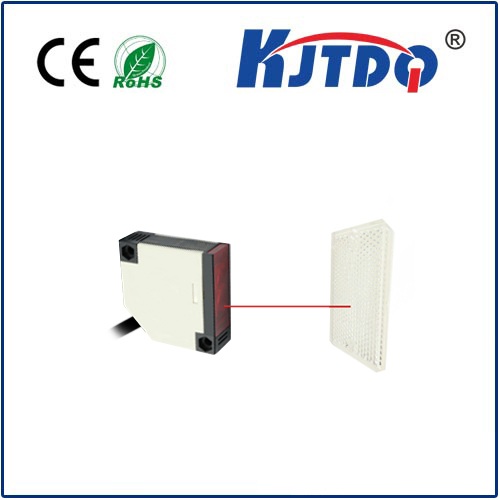
Comparing laser through-beam sensors to other types, like diffuse-reflective or retro-reflective sensors, highlights their robustness. Diffuse-reflective sensors, which emit light and detect the reflection from an object, are sensitive to color and surface properties. Retro-reflective models use a reflector but can be fooled by shiny objects that reflect the beam directly back. The through-beam design avoids these pitfalls entirely, providing the highest possible contrast between "beam present" and "beam broken" states. This results in superior stability, especially in environments with dust, steam, or varying ambient light conditions, as the receiver is tuned specifically to the transmitter's wavelength.
The applications for laser through-beam sensors are vast and critical across numerous industries. In packaging and logistics, they are used for precise object counting, bottle cap presence verification on filling lines, and detecting the position of items on high-speed conveyors. Within the automotive sector, they ensure component positioning in robotic assembly cells and verify part placement before welding or riveting. In material handling, they safeguard automated storage and retrieval systems by confirming the presence of pallets or boxes. Their ability to detect transparent films, wires, and fibers makes them indispensable in the textile and electronics manufacturing industries. Essentially, anywhere that demands fail-safe detection of object presence or precise positioning over a distance, the laser through-beam sensor is a preferred solution.
When selecting a laser through-beam sensor for a specific application, several key specifications must be considered. The sensing range defines the maximum operable distance between transmitter and receiver. The beam spot size determines the minimum detectable object size. Response time is crucial for high-speed applications, indicating how quickly the sensor can react to a beam interruption. Environmental ratings, such as IP67 for dust and water resistance, are vital for harsh industrial settings. Additionally, the choice of output type (PNP/NPN, relay) and housing material (stainless steel, plastic) should align with the control system and environmental demands.
Installation and alignment, while conceptually simple, require attention to detail. The transmitter and receiver must be securely mounted and precisely aligned so that the laser beam falls centrally on the receiver's detection area. Many modern sensors feature visual or audible alignment aids, such as LED indicators that change color when optimal alignment is achieved. Proper alignment ensures maximum signal strength and operational reliability, preventing false triggers or missed detections.
In conclusion, the laser through-beam sensor remains an irreplaceable tool in the automation engineer's arsenal. Its principle of operation guarantees high reliability, independent of object surface properties, and enables long-range, high-precision detection. From controlling complex machinery to ensuring quality on production lines, its role is foundational. For applications where detection certainty cannot be compromised, the through-beam laser sensor provides a clear and definitive solution, forming an invisible yet unbreakable line of defense for modern industrial processes.