check

check

check

check

check

check
In the intricate world of industrial automation, achieving precise, reliable, and adaptable object detection is a fundamental requirement. Among the myriad of sensing solutions available, the Distance Setting Type Photoelectric Sensor stands out as a sophisticated tool that offers unparalleled control and flexibility. This technology represents a significant evolution from traditional fixed-threshold sensors, empowering engineers and system integrators to tackle complex applications with greater ease and accuracy.
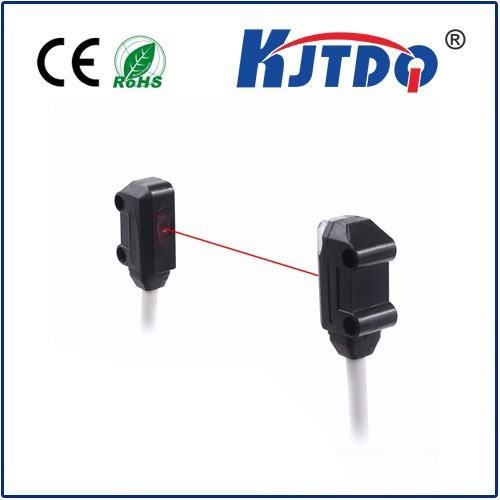
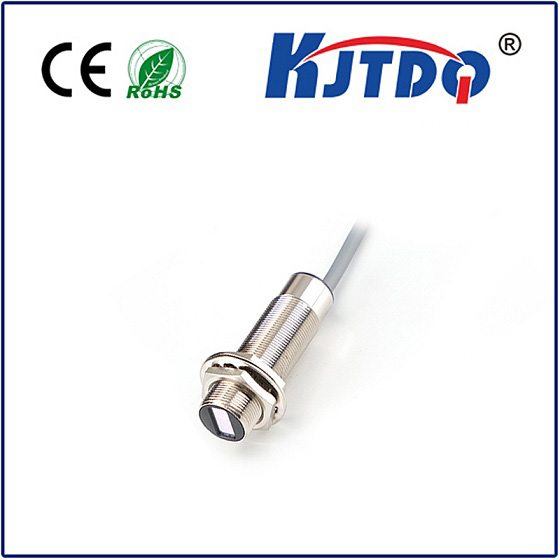
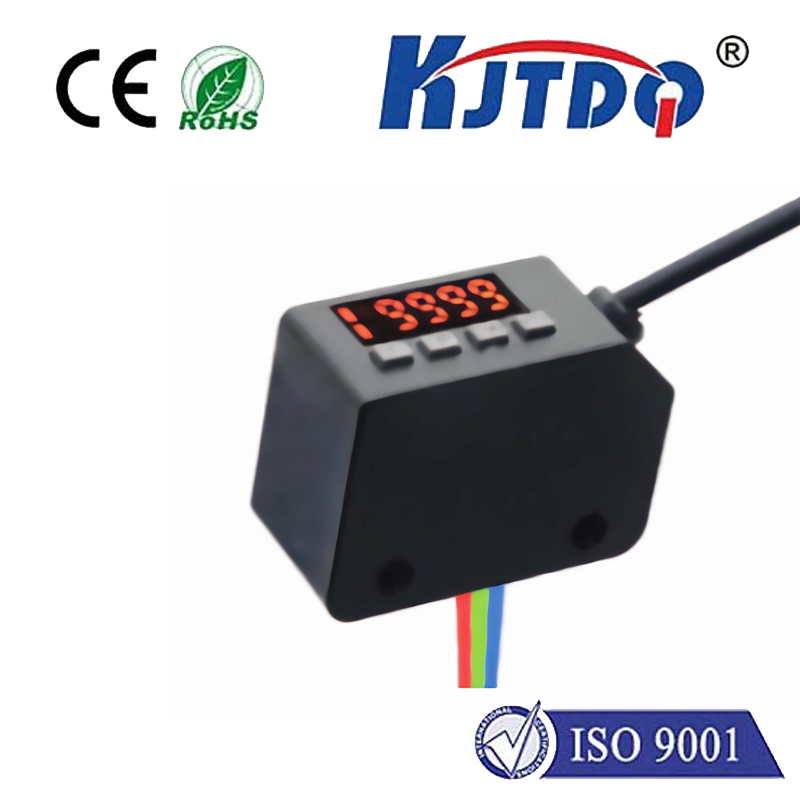
At its core, a Distance Setting Type Photoelectric Sensor operates on the same basic principle as standard photoelectric sensors: it emits a beam of light (typically infrared, red, or laser) and detects the presence, absence, or distance of an object by analyzing the reflected light. The critical differentiator lies in its programmability. Unlike conventional sensors with a fixed sensing range or a single teach point, this type allows users to digitally set and adjust the specific detection distance directly on the device or via a remote interface. This is often accomplished through a simple push-button teaching method or sophisticated software configuration, enabling precise calibration for exact object positioning, height differentiation, or width measurement.
The operational advantages are substantial. Consider a packaging line where boxes of varying heights must be routed to different lanes. A Distance Setting Type sensor can be programmed with multiple set points to distinguish between tall and short packages reliably, eliminating the need for multiple fixed sensors and reducing mechanical complexity. In automated storage and retrieval systems, these sensors ensure forklifts or shuttles position loads with millimeter accuracy by detecting precise pallet placement points. Furthermore, in quality control checkpoints, they can verify component dimensions by setting exact tolerance bands for acceptance or rejection, ensuring only parts within specification proceed down the line.
This programmability directly translates to enhanced efficiency and reduced downtime. Machine changeovers for new product runs, which once required manual adjustment or replacement of sensors, can now be executed in seconds. A technician can simply reprogram the detection distance for the new component, minimizing production halts and maximizing overall equipment effectiveness (OEE). The flexibility also reduces inventory needs, as a single, multi-purpose sensor can replace several fixed-range models, simplifying maintenance and spare parts management.
Modern iterations of these sensors come equipped with advanced features that bolster their robustness. Many offer high noise immunity to function reliably in electrically noisy industrial environments. Bright, multi-status indicators provide clear visual feedback on operating mode and detection status. Some models incorporate background suppression technology, which intelligently ignores objects beyond the set distance, making them exceptionally reliable for detecting objects against complex or reflective backgrounds—a common challenge in automotive or electronics assembly.
When selecting a Distance Setting Type Photoelectric Sensor for an application, several key specifications demand attention. The sensing range is paramount; ensure it comfortably covers the maximum and minimum distances required. Resolution, or the smallest detectable distance change, determines the precision of measurement or differentiation tasks. Response time must be fast enough to keep pace with high-speed production lines. Environmental ratings for dust, water (IP67/IP69K), and temperature are crucial for longevity in harsh conditions. Finally, the output type (NPN/PNP, analog, or IO-Link) must be compatible with the existing control system architecture.
The integration of smart communication protocols like IO-Link is pushing the boundaries further. IO-Link enabled Distance Setting Type sensors not only allow for remote parameter setting and monitoring but also enable the collection of valuable process data and predictive maintenance insights, feeding into the broader framework of Industry 4.0 and the Industrial Internet of Things (IIoT).
In conclusion, the Distance Setting Type Photoelectric Sensor is more than just a detection device; it is a versatile and intelligent component that brings a new level of precision and adaptive control to automated systems. By allowing dynamic adjustment of the sensing distance, it solves complex application challenges, streamlines operations, and future-proofs installations. For any operation seeking to improve accuracy, flexibility, and efficiency in material handling, packaging, assembly, or logistics, integrating this advanced sensing technology is a strategic step toward smarter, more responsive automation.