check

check

check

check

check

check
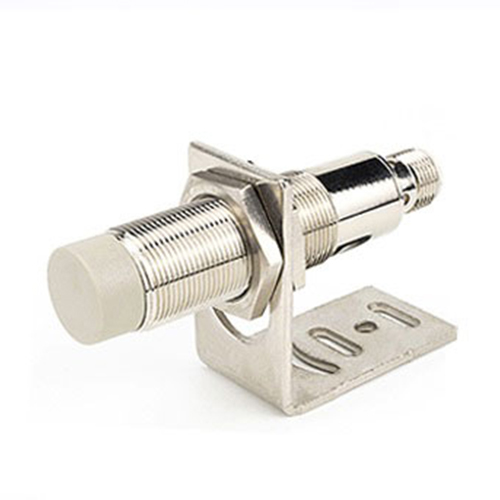
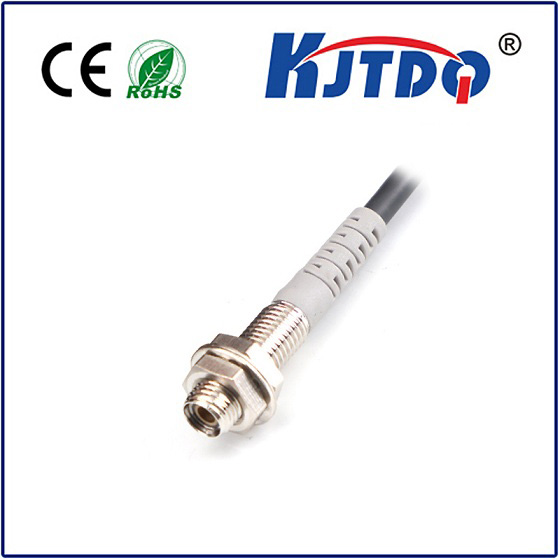
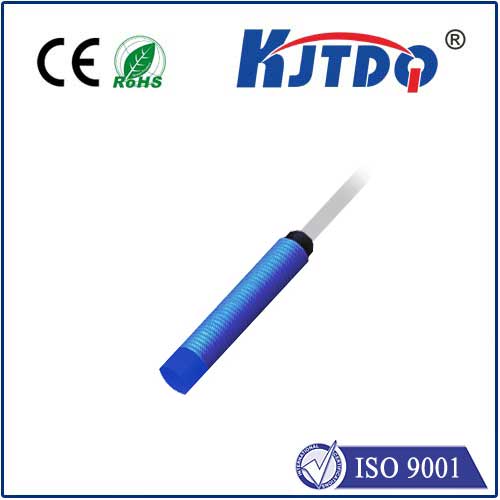
In the heart of modern industrial automation, where machinery operates under extreme pressures and in unforgiving conditions, the reliability of every component is paramount. Sensor failure in such environments isn't just an inconvenience; it can lead to costly downtime, safety hazards, and compromised product quality. This is where specialized components like the KNYT1.8-M12-NB-41 High Pressure Proximity Sensor prove their indispensable value. Engineered to thrive where standard sensors falter, this device represents a critical leap in sensing technology for high-pressure applications.
The defining challenge in many hydraulic systems, die-casting machines, plastic injection molding equipment, and heavy-duty press lines is the intense ambient pressure. Conventional inductive proximity sensors can suffer from housing deformation or seal failure when subjected to these forces, leading to inaccurate readings or complete malfunction. The KNYT1.8-M12-NB-41 is specifically designed to counteract this. Its robust housing is constructed from high-grade stainless steel, capable of withstanding significant external pressure without compromising the internal electronics. The "High Pressure" designation isn't merely a label; it's a core performance specification that ensures consistent operation in environments that would disable lesser sensors.
Let's decode its nomenclature to understand its capabilities fully. The model name, KNYT1.8-M12-NB-41, provides a clear blueprint of its features. "KNYT" typically denotes a cylindrical, inductive proximity sensor. The "1.8" indicates the sensing distance in millimeters, offering precise detection of metallic targets at close range, which is ideal for space-constrained, high-pressure zones. "M12" refers to the compact and industry-standard connector type, facilitating easy integration and replacement within existing M12-based wiring infrastructures. "NB" often signifies a non-flush mountable design (or a specific output type, depending on the manufacturer's coding), allowing it to be installed embedded in metal, which can be advantageous for mechanical protection. Finally, "41" could relate to the thread size or a specific variant code. This combination makes it a plug-and-play powerhouse for engineers seeking a reliable solution.
The operational benefits of integrating this sensor are substantial. First and foremost is enhanced system reliability. By providing stable and accurate detection of piston positions, valve actuation, or part presence within high-pressure chambers, it ensures the precise sequencing and control essential for automated processes. This reliability directly translates to reduced maintenance intervals and lower total cost of ownership, as the sensor's durability minimizes unplanned stops. Furthermore, its robust design contributes to improved safety. In systems where pressure containment is critical, a failing sensor can't be tolerated. The KNYT1.8-M12-NB-41's resilience acts as a safeguard, helping to prevent machine faults that could lead to dangerous situations.
Typical application scenarios vividly illustrate its role. In a hydraulic press, it can be used to reliably detect the end position of a cylinder rod amidst fluctuating system pressures of several hundred bar. Within a die-casting machine, it monitors the position of the injection piston, a task requiring a sensor unphased by the heat and pressure of molten metal. In plastic injection molding, it ensures the correct position of the screw or mold closure, where pressure is consistently high. For offshore equipment or deep-sea hydraulic systems, its pressure-resistant qualities are non-negotiable. In each case, the sensor performs a simple but vital function with unwavering consistency, forming the dependable sensory backbone of the entire operation.
When selecting a sensor for high-pressure duties, several factors beyond the basic specifications warrant consideration. The pressure rating, often detailed in technical datasheets as "withstands up to X bar," must exceed the maximum expected ambient pressure in the application. The housing material's corrosion resistance is another key factor, especially in environments with coolants, oils, or seawater. The ingress protection (IP) rating, such as IP67 or IP69K, confirms its ability to resist dust and high-pressure water jets, which often accompany high-pressure washdowns in food and pharmaceutical industries. The KNYT1.8-M12-NB-41 is typically designed to excel in these ancillary challenges as well.
Ultimately, the choice of sensing components in industrial automation is a strategic decision. Opting for a purpose-built high-pressure proximity sensor like the KNYT1.8-M12-NB-41 is an investment in system integrity. It moves beyond basic functionality to address the specific, harsh realities of pressure-intensive applications. For system integrators, maintenance engineers, and plant managers, specifying this sensor means choosing a component that won't be the weak link. It delivers not just a signal, but certainty—the certainty that in the demanding, high-stakes world of industrial pressure, detection will remain precise, reliable, and uninterrupted.