check

check

check

check

check

check
In the relentless world of industrial automation, where machinery operates under extreme pressures and in unforgiving conditions, the reliability of every component is paramount. Sensor failure is not merely an inconvenience; it can lead to catastrophic downtime, safety hazards, and significant financial loss. This is where precision engineering meets rugged durability. The NJ40+U1+E2 High Pressure Proximity Sensor emerges as a critical component designed to deliver unwavering performance where others falter.
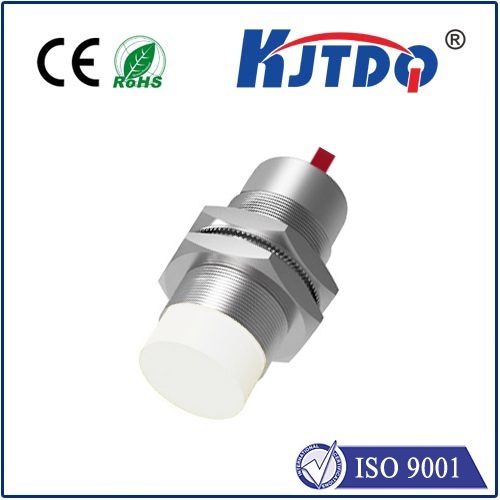
Traditional sensors often struggle in high-pressure washdown environments, common in food processing, chemical manufacturing, and heavy machinery. Exposure to intense water jets, corrosive cleaning agents, and physical impacts can quickly degrade their functionality. The NJ40+U1+E2 is engineered from the ground up to defy these challenges. Its defining feature is an exceptionally robust stainless-steel housing, hermetically sealed to withstand pressures far exceeding standard industrial cleaning protocols. This IP69K-rated protection ensures that not a single drop of moisture or particle of contaminant compromises the sensor's internal electronics, guaranteeing long-term integrity and signal stability.
Beyond its formidable exterior lies sophisticated sensing technology. Utilizing a high-performance inductive principle, the NJ40+U1+E2 provides non-contact detection of metallic objects with remarkable accuracy and repeatability. This is crucial for applications involving hydraulic cylinders, press controls, or valve positioning in high-pressure systems, where precise positional feedback is essential for cycle control and safety interlocks. The "U1" and "E2" designations typically refer to specific electrical configurations and connector types, offering flexibility for seamless integration into various control systems, whether requiring PNP or NPN output signals, and pre-wired or quick-disconnect connectors for easy installation and maintenance.
The operational benefits are substantial. First and foremost is enhanced reliability. The sensor's ability to perform consistently under pressures up to 500 bar (depending on specific model configuration) minimizes unplanned stoppages. This translates directly to increased Overall Equipment Effectiveness (OEE). Secondly, its durability drastically reduces the total cost of ownership. The need for frequent replacements due to environmental damage is eliminated, lowering spare parts inventory and maintenance labor costs. Furthermore, its high switching frequency and immunity to electromagnetic interference ensure that it keeps pace with fast-moving production lines without generating false signals.
Consider its application in a high-pressure die-casting machine. The sensor must reliably detect the position of the injection piston amidst vibrations, temperature fluctuations, and exposure to release agents. A standard sensor might fail within weeks. The NJ40+U1+E2, with its pressure-resistant design and stable sensing field, provides continuous, accurate feedback for the entire control cycle, ensuring product quality and protecting the machinery from damage due to misalignment. Similarly, in offshore oil and gas equipment, where sensors face saline spray and high-pressure washdowns, this sensor's corrosion-resistant construction and reliable sealing are indispensable for safe and continuous operation.
Installation and setup are streamlined for efficiency. The sensor body is designed for easy mounting in tight spaces, and its LED status indicator provides clear visual confirmation of operation and switching state, aiding in quick diagnostics. When selecting the NJ40+U1+E2, engineers must consider key parameters such as the sensing distance, target material, required supply voltage, and output type to ensure optimal performance for the specific application. Consulting the detailed technical datasheet is always recommended for integration planning.
In conclusion, the NJ40+U1+E2 High Pressure Proximity Sensor is not just another component; it is a strategic investment in operational resilience. It addresses the core pain points of maintenance-heavy, high-pressure industrial applications by offering a blend of brute-force environmental resistance and precise, reliable sensing. For system integrators and plant managers seeking to eliminate sensor-related failures in the most demanding zones of their operations, specifying the NJ40+U1+E2 is a decisive step towards achieving higher productivity, improved safety, and lower lifetime costs. It stands as a testament to engineering focused on solving real-world industrial challenges.