check

check

check

check

check

check
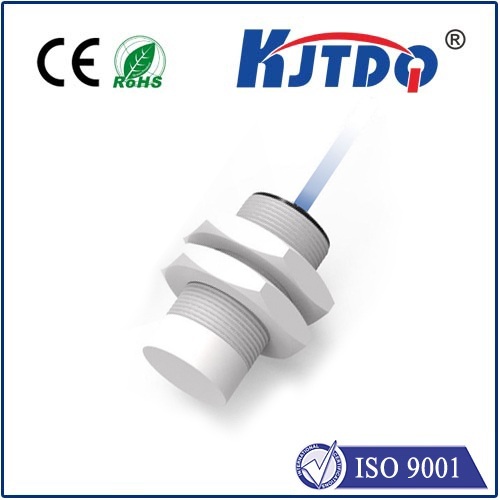
In the complex and often unforgiving world of industrial automation, reliability is not just a feature—it's the foundation. Equipment must perform flawlessly under extreme conditions, where high pressure, temperature fluctuations, and physical stress are daily challenges. The failure of a single component can lead to catastrophic downtime, safety hazards, and significant financial loss. This is where the MFS211 High Pressure Proximity Sensor steps in, engineered specifically to deliver unwavering performance where standard sensors falter.
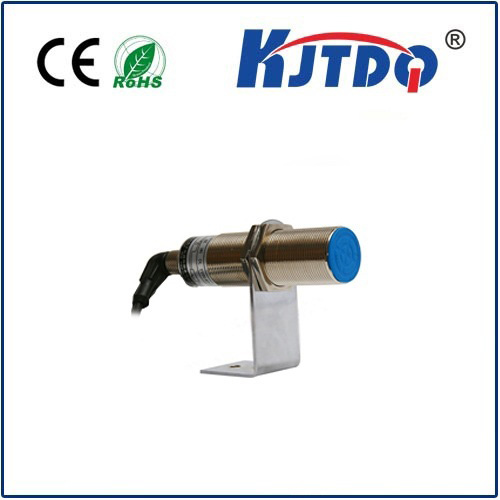
Traditional inductive proximity sensors, while effective in many scenarios, often reach their limits when confronted with sustained high-pressure environments. Seal integrity can be compromised, housing materials may deform, and internal electronics can fail under the relentless stress. The MFS211 is designed from the ground up to overcome these limitations. Its robust, all-metal stainless steel housing is not merely for protection; it is a critical component of its functionality, capable of withstanding pressures that would cripple lesser devices. This makes it an indispensable tool in hydraulic systems, heavy-duty presses, injection molding machinery, and offshore drilling equipment, where pressure ratings are a primary concern.
The core technology of the MFS211 revolves around its advanced inductive sensing principle. It generates a high-frequency electromagnetic field from its active face. When a metallic target enters this field, eddy currents are induced within the target, causing a change in the sensor's own oscillation amplitude. This change is detected and converted into a precise, switch-like output signal. What sets the MFS211 apart is its ability to maintain this precise detection capability while its housing is subjected to immense external pressure. The design ensures that the sensing field and internal components are completely isolated from the environmental stress, guaranteeing consistent switching points and long-term stability.
Key technical specifications underscore its rugged design. Typically rated for pressures exceeding several hundred bar, the MFS211 often features high ingress protection ratings like IP67 or IP69K, making it resistant to water, oil, and dust. It operates across a wide temperature range and provides various output options (e.g., PNP, NPN, or analog) to integrate seamlessly into diverse control systems. Its short-circuit and reverse polarity protection further enhance system reliability. Unlike many sensors that require frequent recalibration or replacement in harsh settings, the MFS211 is built for endurance, significantly reducing maintenance intervals and total cost of ownership.
The practical applications are vast and critical. In hydraulic press monitoring, the sensor reliably detects piston position even as system pressure soars, ensuring precise control and preventing over-travel. Within high-pressure pump systems, it provides essential feedback for condition monitoring, helping to predict maintenance needs before a failure occurs. In the oil and gas sector, it performs vital tasks in blowout preventer (BOP) stacks and other subsea equipment, where reliability under colossal pressure is non-negotiable for safety and environmental protection. Furthermore, in automotive manufacturing, particularly in high-pressure die-casting processes, the MFS211 ensures accurate part ejection and machine cycle control.
Selecting the right high-pressure sensor involves careful consideration. Engineers must evaluate the maximum operating pressure, the required sensing distance, the target material, and the necessary electrical interface. The MFS211 series typically offers variants to meet these specific needs. Installation is also crucial; proper mounting, using the correct seals and torque, ensures the sensor performs as intended throughout its lifespan. It is always recommended to consult the manufacturer's detailed datasheets and application engineers to match the sensor precisely to the operational demands.
Ultimately, the MFS211 High Pressure Proximity Sensor represents more than just a component—it is a commitment to operational resilience. It transforms a potential point of failure into a bastion of reliability. For system designers and plant managers navigating the demands of modern industry, investing in such robust sensing technology is a strategic decision. It safeguards productivity, protects capital equipment, and ensures the continuous, safe operation of critical machinery. In environments where pressure is the defining factor, the MFS211 doesn't just function; it excels, providing the confidence needed to push industrial capabilities forward.