check

check

check

check

check

check
In the world of industrial automation and process control, the ability to detect the presence or position of an object with unwavering reliability under extreme conditions is not just a convenience—it's a critical necessity. This is where specialized components like the DW-AD-501-P12-625 High Pressure proximity sensor come into play, engineered to deliver precision where standard sensors would fail. This guide delves into the core features, operational principles, and vital applications of this robust sensing solution.
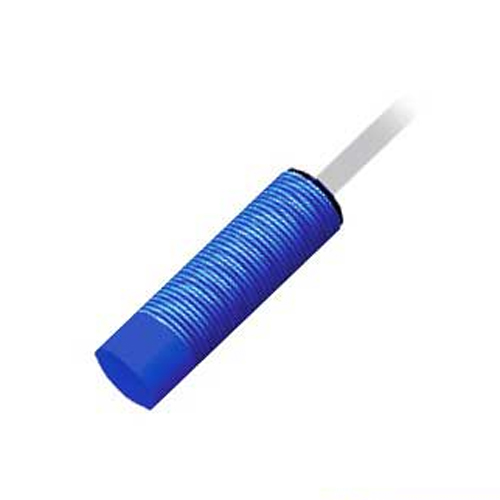
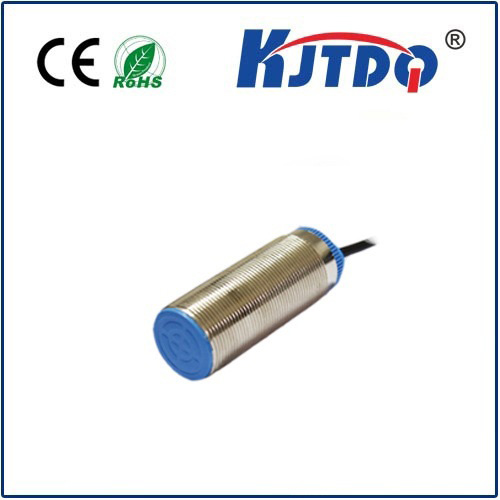
At its heart, the DW-AD-501-P12-625 is an inductive proximity sensor designed to excel in high-pressure environments. The "P12-625" designation often refers to key specifications: a PNP normally open (NO) output configuration, a 12mm diameter sensing face, and a robust housing built to withstand significant pressure, potentially up to several hundred bar, depending on the exact model certification. Unlike photoelectric or capacitive sensors, inductive sensors detect metallic objects without physical contact. They generate an electromagnetic field from the sensing face. When a metallic target enters this field, it induces eddy currents within the target, which in turn dampens the sensor's own oscillation. This change is detected by the internal circuitry, triggering a solid-state switch (the PNP output) to change state.
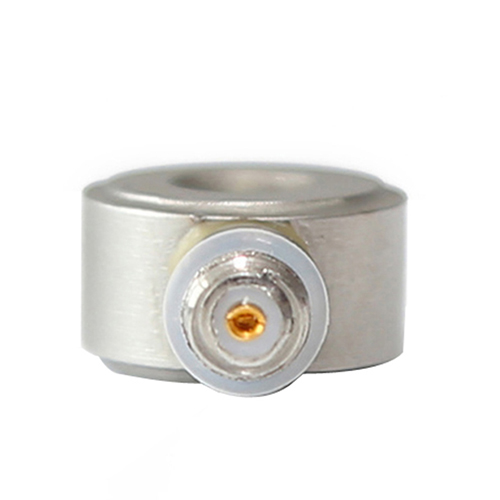
The defining characteristic of the DW-AD-501-P12-625 is its high-pressure resistance. Standard proximity sensors are vulnerable to housing deformation or seal failure when subjected to intense pressure, such as those found in hydraulic systems, die-casting machines, or high-pressure cleaning equipment. The construction of this sensor typically involves a stainless steel housing (often AISI 303 or 304), high-grade sealing materials like Viton or polyurethane, and a specially designed pressure-resistant diaphragm behind the sensing face. This engineering ensures that the internal electronics remain completely isolated from the external pressure, guaranteeing long-term stability and preventing false triggers or catastrophic failure.
Installation and integration are straightforward due to its cylindrical M12 form factor, a standard in industrial sensing. The 3-wire DC design with PNP output provides compatibility with most programmable logic controllers (PLCs) and control systems. The sensing range, while typically short (e.g., 2mm for a 12mm sensor), is highly precise and repeatable, making it ideal for applications requiring exact positioning. Key performance metrics to consider include its operating voltage range (commonly 10-30V DC), switching frequency, temperature tolerance, and its Ingress Protection (IP) rating, which is likely IP67 or higher, ensuring resistance to water and dust.
The applications for the DW-AD-501-P12-625 are found in industries where pressure and reliability intersect. In hydraulic press monitoring, it detects piston position or end-of-stroke with absolute certainty, even when submerged in hydraulic fluid under extreme pressure. Within plastic injection molding machines, it confirms mold closure or ejector plate position. It is also indispensable in heavy machinery for monitoring cylinder rod position, in marine applications for valve positioning, and in chemical processing equipment where pressure vessels require internal component sensing. Its durability makes it a preferred choice for reducing downtime and maintenance costs in these harsh operational landscapes.
When selecting a sensor for such demanding duties, the DW-AD-501-P12-625 represents a focused solution. It is crucial to consult the manufacturer's exact datasheet to confirm parameters like maximum pressure rating, media compatibility, and output type. Proper installation, ensuring the sensor is not subjected to mechanical stress beyond its specifications and that electrical connections are secure, is paramount for achieving its advertised service life.
In conclusion, the DW-AD-501-P12-625 High Pressure proximity sensor stands as a specialized tool for a specific and challenging set of industrial problems. Its value lies in its engineered resilience, providing a dependable electrical signal in physical conditions that would compromise ordinary devices. For engineers and maintenance professionals tasked with designing or sustaining systems under high pressure, understanding and utilizing this sensor is a step toward achieving greater operational reliability, safety, and efficiency. It is a component that works silently under pressure, ensuring that the larger machine continues to function flawlessly.