check

check

check

check

check

check
In modern industrial automation and precision measurement applications, the demand for reliable, accurate, and robust sensing technology is paramount. The HL-G112-A-C5 laser sensor emerges as a sophisticated solution engineered to meet these rigorous demands. This device represents a significant advancement in non-contact measurement, offering unparalleled performance in diverse and challenging environments.
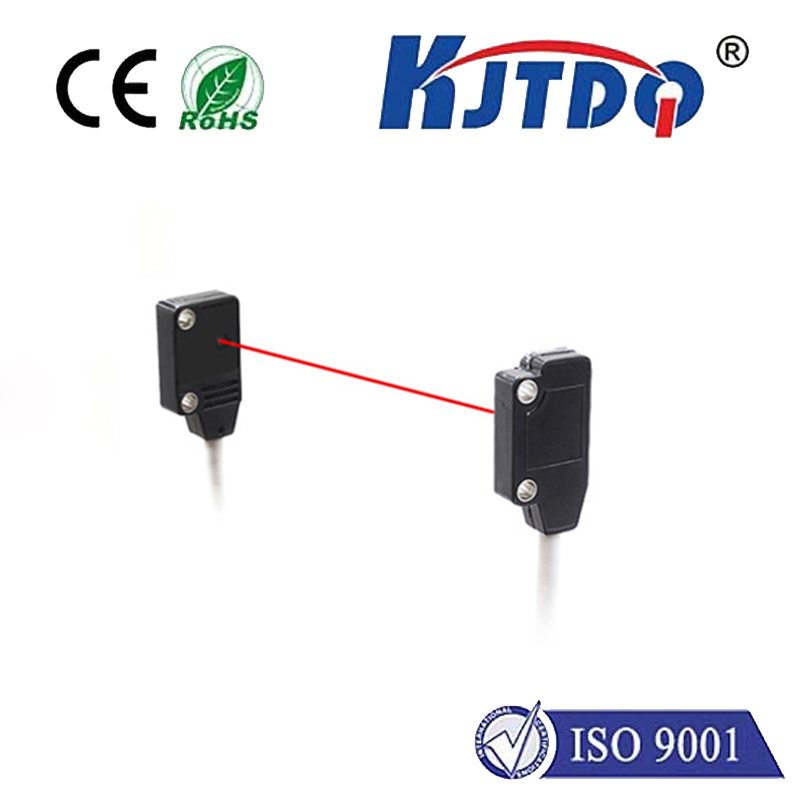
The core of the HL-G112-A-C5's capability lies in its advanced laser triangulation principle. By projecting a focused laser beam onto a target surface and analyzing the position of the reflected light on a high-resolution CMOS detector, the sensor calculates distance with exceptional accuracy. This method allows for precise measurements regardless of the target's material, color, or surface texture, a common challenge for other optical sensors. The HL-G112-A-C5 is specifically calibrated to deliver stable readings even on difficult surfaces like shiny metals, dark plastics, or translucent materials.
Engineered for industrial resilience, the HL-G112-A-C5 features a rugged housing rated for IP67 protection. This ensures complete resistance to dust ingress and the ability to withstand temporary immersion in water, making it ideal for use in washdown areas, outdoor installations, or dusty manufacturing floors. Its robust construction can endure significant vibrations and shocks, maintaining calibration and performance where lesser sensors would fail. The operational temperature range is broad, supporting consistent functionality from freezing cold to high-heat factory conditions.
A key strength of this sensor is its impressive specification set. It boasts a high sampling rate, enabling real-time monitoring and control of fast-moving processes on production lines. The measurement resolution is fine, capable of detecting minute variations critical for quality control in electronics assembly, automotive part inspection, or precision machining. The linearity error is minimized, ensuring that measurements are consistently accurate across the entire sensing range. Users can configure various output modes, including analog voltage/current and digital switching, providing seamless integration with PLCs, data acquisition systems, and industrial networks.
The application spectrum for the HL-G112-A-C5 laser sensor is vast. In automotive manufacturing, it is deployed for gap and flush measurement between body panels, thickness inspection of brake pads, and positioning of robotic arms. Within the electronics industry, it verifies component height on PCBs, measures solder paste thickness, and inspects semiconductor wafer warpage. Packaging lines utilize it to monitor fill levels, check lid placement, and control the stacking height of products. Furthermore, its precision is invaluable in woodworking for thickness planing control and in metallurgy for monitoring roll gap dimensions.
Installation and operation are streamlined through user-friendly features. Many models include intuitive teach-in functions, allowing quick setup of measurement windows and switch points directly on the device or via software. Built-in diagnostics and status indicators provide immediate feedback on operational health and signal quality, facilitating quick troubleshooting and minimizing downtime. Its compact form factor allows for easy integration into space-constrained machinery.
When compared to traditional contact probes or ultrasonic sensors, the HL-G112-A-C5 offers distinct advantages. It eliminates mechanical wear and measurement force, preserving delicate target surfaces. It provides faster response times and higher accuracy than ultrasonic methods, especially over short distances. For engineers and system integrators, selecting the HL-G112-A-C5 translates to enhanced process reliability, reduced waste from measurement errors, and improved overall equipment effectiveness (OEE).
In conclusion, the HL-G112-A-C5 laser sensor stands as a critical tool for industries striving for excellence in automation and quality assurance. Its combination of high precision, environmental durability, and versatile interfacing addresses the core challenges of modern industrial measurement. By enabling non-contact, reliable data acquisition, it empowers smarter manufacturing processes, ensuring products meet stringent specifications and production lines operate at peak efficiency.