check

check

check

check

check

check
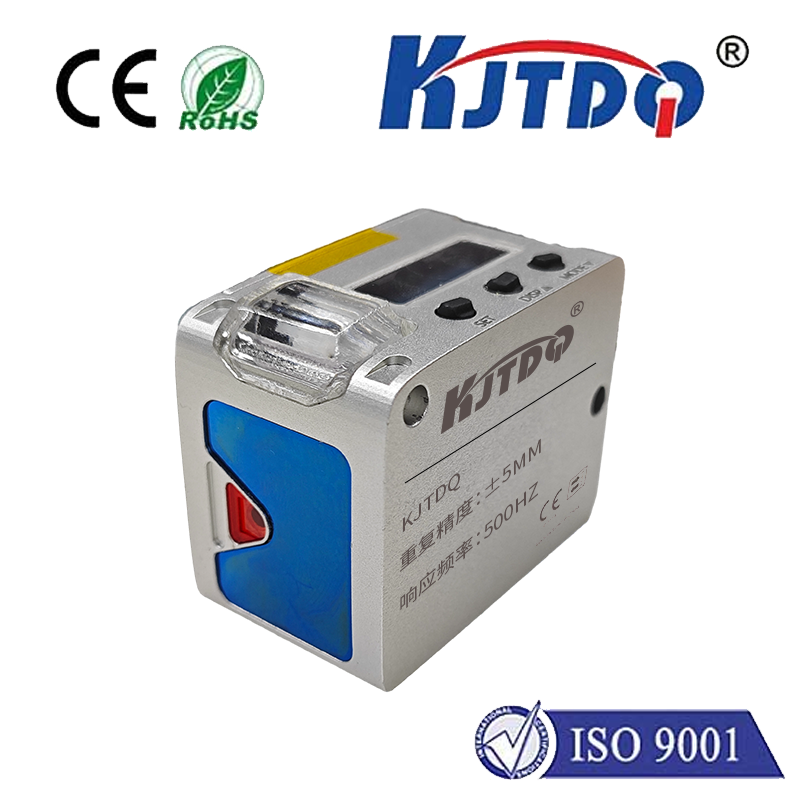
In the fast-paced world of industrial automation, the margin for error is virtually zero. Production lines demand relentless accuracy, speed, and reliability. This is where the GV-H1000L laser sensor emerges not just as a component, but as a cornerstone of modern precision engineering. Designed to meet the rigorous demands of diverse applications, from intricate assembly verification to high-speed dimensional gauging, this sensor represents a significant leap forward in non-contact measurement technology.
At its core, the GV-H1000L utilizes a focused laser beam to perform highly accurate distance and presence detection. Unlike traditional mechanical probes or basic photoelectric sensors, it delivers micron-level precision without ever touching the target object. This non-contact operation is crucial for protecting delicate surfaces, such as polished metals, fragile electronics, or sensitive automotive finishes, from scratches or deformation. The sensor's advanced optics and signal processing algorithms ensure stable measurements even on challenging surfaces, including shiny, dark, or transparent materials that often confound lesser devices.
The operational principle is both sophisticated and robust. The sensor emits a laser dot onto the target. The reflected light is captured by a high-resolution receiver, and through triangulation or time-of-flight calculation (depending on the specific model variant), the exact distance is computed with exceptional speed. This process happens in milliseconds, enabling real-time feedback for control systems. Key performance metrics of the GV-H1000L often include an extensive measuring range, a remarkably fine repeatability specification, and a high sampling rate, making it suitable for dynamic environments where objects are moving rapidly on conveyor belts.
Practical applications for the GV-H1000L are vast and transformative. In automotive manufacturing, it ensures precise gap and flush measurements between body panels, guaranteeing perfect fit and finish. Within the electronics sector, it verifies the coplanarity of chip pins on circuit boards before soldering, preventing costly defects. In packaging lines, it monitors fill levels, checks lid placement, and controls robotic pick-and-place arms with unwavering accuracy. Furthermore, its robust housing typically offers high ingress protection ratings, allowing it to perform consistently in environments with dust, moisture, or minor vibrations.
Integration into existing systems is streamlined. The GV-H1000L commonly features standard industrial communication interfaces, such as IO-Link, analog voltage/current outputs, or discrete switching signals. This plug-and-play compatibility with PLCs (Programmable Logic Controllers) and industrial networks minimizes setup time and complexity. Many models also come with intuitive configuration software, allowing engineers to easily set measurement windows, thresholds, and filtering parameters directly from a laptop, reducing downtime for adjustments.
Choosing the GV-H1000L translates into tangible operational benefits. The primary advantage is a dramatic reduction in product variability and scrap rates, directly improving yield and profitability. By eliminating contact wear, maintenance intervals are extended, and sensor longevity is increased, lowering the total cost of ownership. The enhanced data provided also feeds into Industry 4.0 initiatives, offering valuable insights for predictive maintenance and process optimization.
When selecting a laser sensor for a critical application, the GV-H1000L stands out for its blend of precision, durability, and ease of use. It is engineered not merely to detect but to deliver trustworthy, high-fidelity data that drives automated decision-making. For engineers and system integrators aiming to push the boundaries of quality control and operational efficiency, deploying this sensor is a strategic move towards building more intelligent, responsive, and error-resistant manufacturing systems. It embodies the shift from simple automation to truly adaptive and precise industrial intelligence.