check

check

check

check

check

check
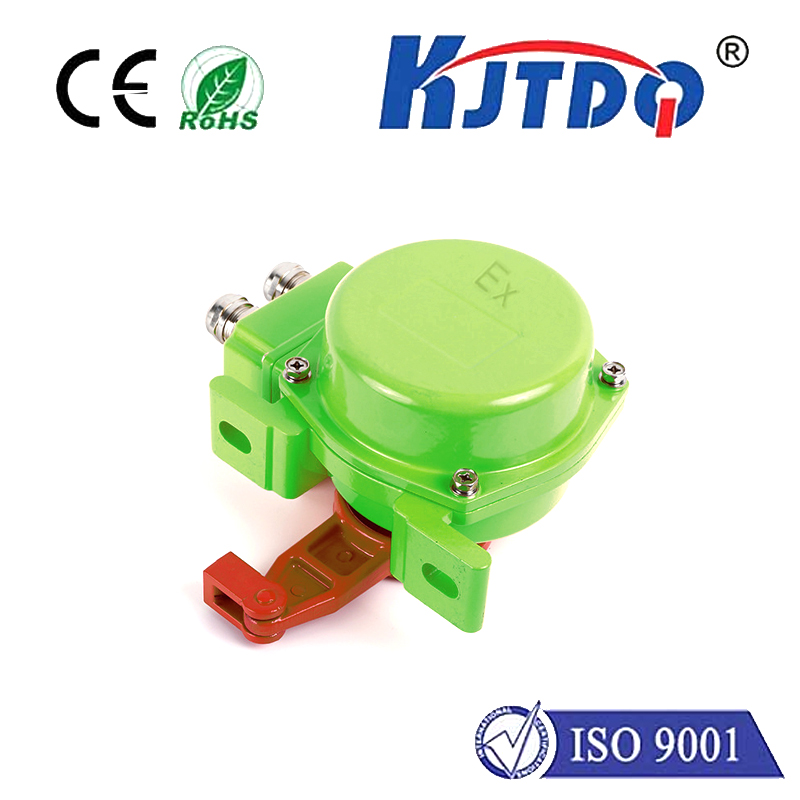
In the complex landscape of industrial automation, where precision and reliability are non-negotiable, the maintained limit switch stands as a fundamental component. Often abbreviated as a maintained contact switch, this device plays a pivotal role in machinery control and safety systems. Unlike momentary switches that only change state while being actuated, a maintained limit switch retains its last position until it is physically changed again. This characteristic makes it indispensable for applications requiring a persistent signal, such as indicating the open or closed status of a gate, valve, or door, or for mode selection on control panels.
The core function of a maintained limit switch is to provide a stable electrical signal based on the physical position of a machine part. When an actuator—like a cam, lever, or plunger—engages the switch, it changes the state of its electrical contacts. This change is "maintained" or latched. For instance, in a conveyor system, a maintained limit switch might be installed to detect when a safety guard is properly closed. Once the guard is shut and the switch is actuated, it will keep the circuit closed, signaling the control system that it is safe to operate. Only when the guard is opened again will the switch revert to its normal open state, breaking the circuit and potentially halting the machine for safety.
The advantages of using a maintained limit switch are numerous. First and foremost is operational clarity. The maintained state provides a definitive, unchanging indication of a machine's condition, reducing ambiguity for operators and control systems. This leads to enhanced safety, as critical statuses are reliably communicated. Furthermore, they contribute to system efficiency by eliminating the need for constant sensor polling or power to hold a state, which can be crucial in energy-conscious designs. Their mechanical simplicity often translates to robustness, durability, and long service life even in harsh industrial environments characterized by dust, moisture, vibration, and extreme temperatures.
Selecting the right maintained limit switch involves careful consideration of several technical parameters. The electrical rating (voltage and current capacity of the contacts) must match the load requirements. The mechanical life expectancy, often rated in millions of operations, dictates longevity. Environmental protection, denoted by IP (Ingress Protection) or NEMA ratings, is critical for reliability in specific conditions. Actuator type—whether roller lever, fork lever, or push rod—must be chosen based on the mechanical motion it needs to detect. Finally, the contact configuration, typically single-pole double-throw (SPDT), defines the switching logic available for the control circuit.
A common application scenario is in material handling. On a large overhead crane, maintained limit switches are strategically placed at the ends of the bridge and trolley travel paths. When the crane reaches its physical limit, the switch is actuated and maintains a "stop" signal, preventing the drive motors from moving further and protecting against over-travel and potential collision. Another key use is in automated assembly lines, where a maintained switch might confirm that a part is correctly clamped in a fixture before a welding or machining operation commences, ensuring process integrity.
Maintenance, while minimal, is essential for sustained performance. Regular inspection for physical damage, accumulation of debris, and wear on the actuator mechanism is recommended. Checking the tightness of mounting hardware and verifying the electrical continuity and insulation resistance periodically can prevent unexpected failures. It is crucial to follow the manufacturer's guidelines for lubrication, if applicable, and to replace switches that show signs of pitted contacts or weakened spring action.
In conclusion, the maintained limit switch is far more than a simple mechanical component. It is a reliable sentinel in automated systems, providing steadfast positional feedback that underpins both safety and operational consistency. Its ability to latch a state offers a simple yet powerful solution for countless control and indication tasks. For engineers and system integrators, understanding its function, selection criteria, and applications is key to designing robust and fail-safe industrial machinery. As automation evolves, the fundamental principle of the maintained limit switch continues to be a cornerstone of dependable machine control.