check

check

check

check

check

check
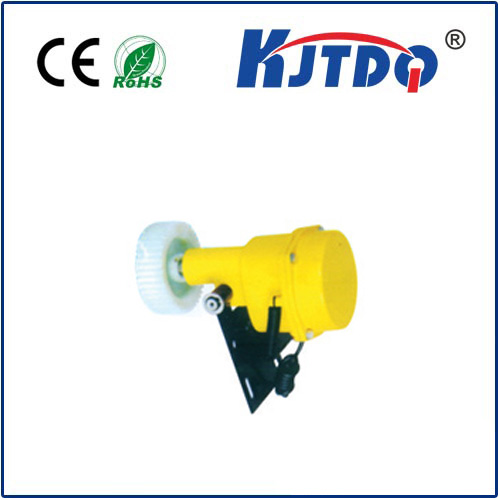
In the demanding environment of industrial material handling, Electric Overhead Travel (EOT) cranes are indispensable for lifting and transporting heavy loads across workshops, warehouses, and construction sites. The reliability and safety of these cranes are paramount, not only for operational efficiency but also for protecting personnel and assets. A critical component that ensures these cranes operate within their designated physical boundaries is the rotary limit switch. Specifically, the integration of a high-performance rotary limit switch, such as the KJTDQ series, brings a new level of control, safety, and durability to EOT crane systems.
Traditional limit switches often face challenges like mechanical wear, inaccurate positioning, and vulnerability to harsh industrial conditions. The KJTDQ rotary limit switch addresses these issues head-on with its robust design and advanced engineering. Unlike simple on/off switches, a rotary limit switch is designed to monitor and control the rotational movement of the crane's mechanisms, such as the travel motion of the bridge or the trolley, and the hoisting and lowering functions. It works by being mechanically linked to the crane's moving parts. As the crane operates, the rotation of this linkage is precisely measured. The switch is pre-set to trigger a control signal—either to stop, slow down, or reverse the motor—once the crane hook or trolley reaches a pre-defined limit, preventing over-travel and potential collisions.
The application of the KJTDQ rotary limit switch in an EOT crane system offers multifaceted benefits. Primarily, it is a cornerstone of operational safety. By reliably preventing the crane from exceeding its safe working travel limits, it mitigates the risk of catastrophic accidents, such as the crane crashing into end stops or colliding with another crane on the same runway. This proactive safety measure is crucial for compliance with international safety standards like OSHA and ISO, helping facility managers avoid costly fines and legal liabilities.
Beyond safety, the precision offered by the KJTDQ switch enhances overall productivity. Accurate limit setting ensures that loads are positioned exactly where needed, reducing the time spent on manual adjustments and re-positioning. This precision is vital in assembly lines or storage facilities where space optimization is key. Furthermore, the durable construction of the KJTDQ switch, often featuring sealed housings that protect against dust, moisture, oil, and mechanical impacts, ensures longevity and reduces maintenance downtime. Its ability to perform consistently in environments with significant temperature variations, vibration, and electrical noise makes it a reliable choice for heavy-duty cycles.
The installation and configuration of the KJTDQ rotary limit switch are designed for ease of integration into both new crane installations and existing system upgrades. Technicians can calibrate the switch to define multiple control points for different crane functions, offering flexible control over complex movement sequences. Regular maintenance primarily involves simple visual inspections and ensuring the mechanical linkage remains secure and free from obstruction, contributing to a low total cost of ownership.
For industries ranging from steel and automotive to shipping and energy, where EOT cranes are workhorses, investing in reliable limit switch technology is non-negotiable. The KJTDQ rotary limit switch stands out as a solution that not only meets but exceeds the rigorous demands of modern industrial automation. It transforms a basic safety device into a strategic tool for enhancing precision, protecting capital investment, and ensuring a safer workplace. By choosing a proven component like the KJTDQ, businesses can achieve smoother crane operations, minimize unplanned stoppages, and build a stronger foundation for their material handling processes, ultimately driving efficiency and safety to new heights.