check

check

check

check

check

check
In industrial automation and robotics, the marriage of limit switches with Arduino microcontrollers has revolutionized how engineers approach motion control and safety mechanisms. A limit switch serves as a fundamental sensor that detects the presence or absence of an object, or defines the boundaries of mechanical movement. When integrated with an Arduino board, these simple electromechanical devices transform into intelligent components capable of triggering complex automated sequences, ensuring operational safety, and providing precise positional feedback.
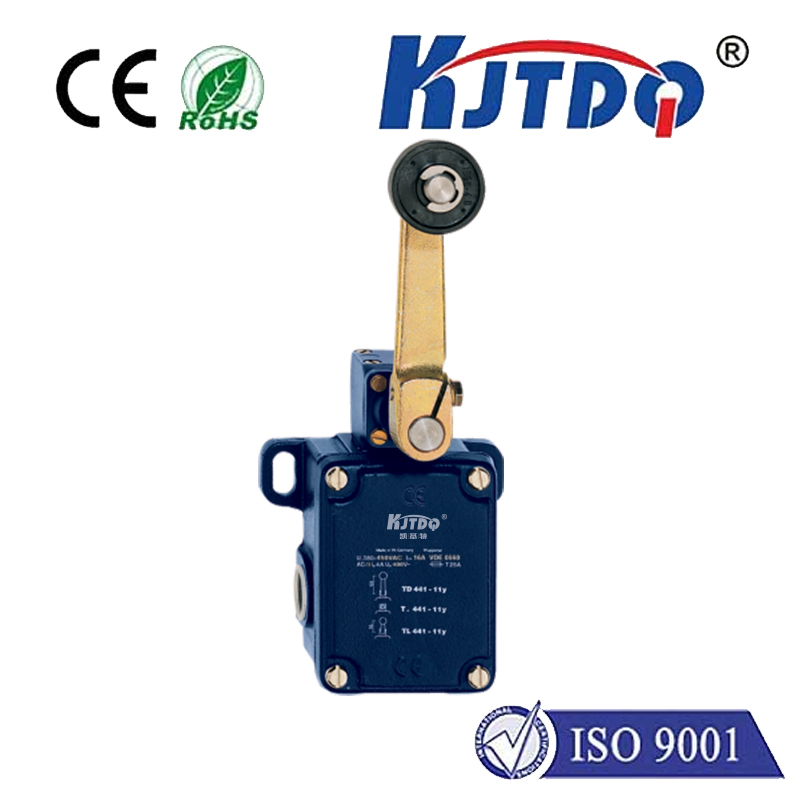
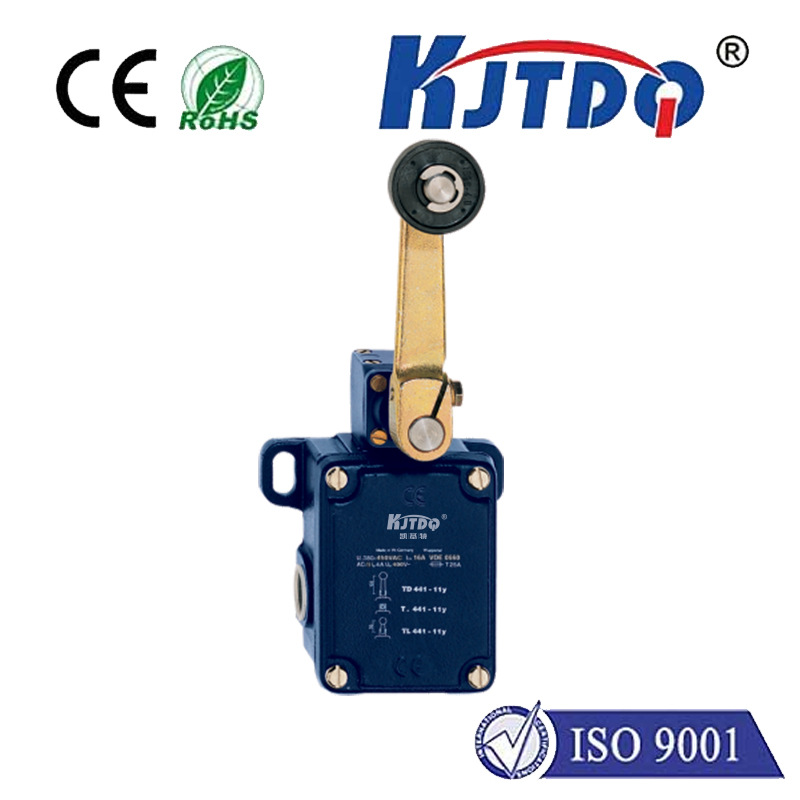
The operational principle of a basic limit switch is straightforward. It typically consists of an actuator head physically linked to a set of internal electrical contacts. When an external object, like a moving machine part, presses the actuator, the contacts change state—either opening or closing the circuit. This state change is the critical signal. An Arduino microcontroller, acting as the brain of the system, continuously monitors the digital pin connected to this switch. Through simple yet powerful code, the Arduino can interpret this signal to instantly halt a motor, change its direction, activate an alarm, or log data, thereby preventing over-travel and potential equipment damage.
Connecting a standard single-pole, double-throw (SPDT) limit switch to an Arduino is an accessible project for beginners. The common terminal of the switch is connected to the Arduino's ground. The normally open (NO) terminal is connected, via a pull-down resistor (e.g., 10kΩ), to a designated digital input pin (like Pin 2) and also to the 5V supply through the resistor. This configuration ensures a stable LOW signal when the switch is open. When the actuator is pressed, the circuit to the NO terminal closes, sending a HIGH signal to the Arduino pin. The code logic then springs into action. A basic sketch involves declaring the pin as an INPUT, usingdigitalRead() in theloop() function to check its state, and executing commands based on the reading, such as controlling a motor driver module.
For more robust industrial applications, considerations extend beyond basic wiring. Debouncing the switch signal is crucial in software to eliminate electrical noise from contact vibration, which can cause multiple false triggers. This can be achieved with simple delay checks or more advanced state-change detection libraries. Furthermore, for environments with electrical interference, opto-isolation circuits are recommended to protect the sensitive Arduino inputs from voltage spikes. The physical mounting and actuator selection (roller lever, plunger, etc.) are equally vital, depending on the force, angle, and frequency of operation required.
The practical applications are vast. In a CNC machine or 3D printer, limit switches define the home position for each axis, ensuring every job starts from a known, repeatable point. In automated conveyor systems, they can detect when a product reaches a specific station, triggering a pusher or a robotic arm. In safety interlocks, they can ensure a protective guard is in place before a machine is allowed to operate. The Arduino's programmability allows for customization far beyond a simple hardwired relay logic, enabling conditional operations, integration with displays, and communication with other systems via serial, I2C, or Ethernet.
Choosing the right limit switch involves assessing voltage/current ratings (though the Arduino handles only low-current signals), environmental factors (IP rating for dust/water resistance), mechanical life expectancy, and actuator type. Pairing it with an Arduino Uno, Mega, or even a compact Nano, opens a world of prototyping and deployment possibilities. By mastering this integration, developers and hobbyists can build smarter, safer, and more reliable automated systems, laying a solid foundation for advanced projects in the Internet of Things (IoT) and Industry 4.0. The combination is a testament to how classic industrial components, when empowered by modern microcontroller flexibility, continue to drive innovation in automation.