check

check

check

check

check

check
In the realm of industrial automation, precision and reliability are non-negotiable. The magnetic limit switch sensor stands as a cornerstone technology, enabling seamless control and safety in countless applications. Unlike traditional mechanical limit switches that rely on physical contact, magnetic limit switches operate through non-contact sensing, utilizing the interaction between a sensor and a magnet. This fundamental difference translates into significant advantages, including reduced wear and tear, longer operational lifespans, and consistent performance even in harsh environments filled with dust, moisture, or vibrations.
The core principle behind a magnetic limit switch sensor is elegantly simple. The sensor unit, typically housing a reed switch or a Hall-effect sensor, is installed in a fixed position. A corresponding magnet is attached to the moving part of the machinery, such as a door, gate, cylinder, or linear actuator. When the magnet approaches within a predefined range of the sensor, the magnetic field triggers the sensor to change its state—either opening or closing an electrical circuit. This state change sends a clear signal to the programmable logic controller (PLC) or other control systems, indicating the position of the moving component. This binary signal is the critical input for automating sequences, initiating safety stops, or confirming the completion of a movement cycle.
The applications for magnetic limit switch sensors are vast and varied. In manufacturing, they are indispensable for robotic arms, ensuring precise positioning and preventing over-travel. On conveyor systems, they detect the presence or absence of items, controlling the flow of materials. In the packaging industry, they verify the open or closed status of doors and guards, ensuring operator safety. Automotive assembly lines use them to monitor the position of fixtures and tools. Beyond factories, these sensors are found in elevator systems for floor leveling, in agricultural machinery for implement positioning, and in access control systems for door status monitoring. Their versatility stems from their robust design; many models boast high IP ratings for protection against water and dust, and they can function reliably across a wide temperature range.
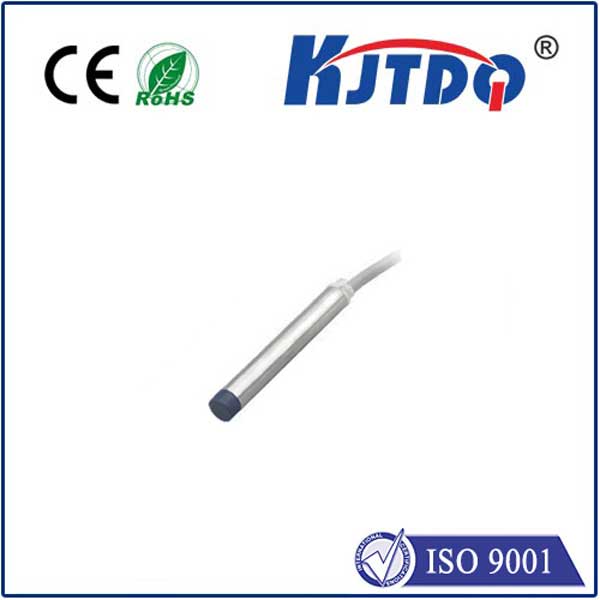
When selecting a magnetic limit switch sensor for a specific application, several key parameters must be considered. The sensing distance, or the maximum gap at which the sensor can reliably detect the magnet, is crucial for proper installation and alignment. The type of output (e.g., NPN, PNP, NO, NC) must be compatible with the control system's input card. The electrical ratings for voltage and current must not be exceeded. Furthermore, the physical construction—whether cylindrical, rectangular, or with specific mounting brackets—needs to suit the installation space. For environments with strong stray magnetic fields or extreme temperatures, specifying sensors with appropriate shielding and ratings is essential to avoid false triggering or failure.
The integration of magnetic limit switch sensors into modern Industry 4.0 frameworks is straightforward yet powerful. Their digital output provides clear, real-time data on machine state and position. This data feeds into supervisory control and data acquisition (SCADA) systems and manufacturing execution systems (MES), enabling predictive maintenance, detailed production logging, and overall equipment effectiveness (OEE) monitoring. By knowing exactly when a cylinder has fully retracted or a guard door is securely closed, plants can prevent jams, reduce downtime, and enhance safety protocols automatically. Their reliability minimizes false alarms and maintenance interventions, contributing directly to higher productivity and lower total cost of ownership.
In conclusion, the magnetic limit switch sensor is a fundamental, robust, and highly effective component in automation. Its non-contact operation ensures durability, while its simple interface allows for easy integration into both simple machines and complex networked systems. For engineers and system integrators aiming to build reliable, safe, and efficient automated processes, understanding and utilizing magnetic limit switch sensors is a critical step. By providing accurate positional feedback, these sensors form the silent, dependable backbone that allows modern industry to operate with the precision and confidence demanded by today's competitive landscape.