check

check

check

check

check

check
In the intricate world of industrial automation, where precision and reliability are non-negotiable, the limit switch sensor stands as a fundamental yet critical component. Often overlooked in favor of more sophisticated technologies, these electromechanical devices perform a vital function: detecting the presence or absence of an object, or monitoring the position of a machine part. Their role in ensuring safe, efficient, and repeatable operations across countless applications cannot be overstated. This guide delves into the core principles, types, and practical considerations of limit switch sensors, highlighting why they remain indispensable in modern control systems.
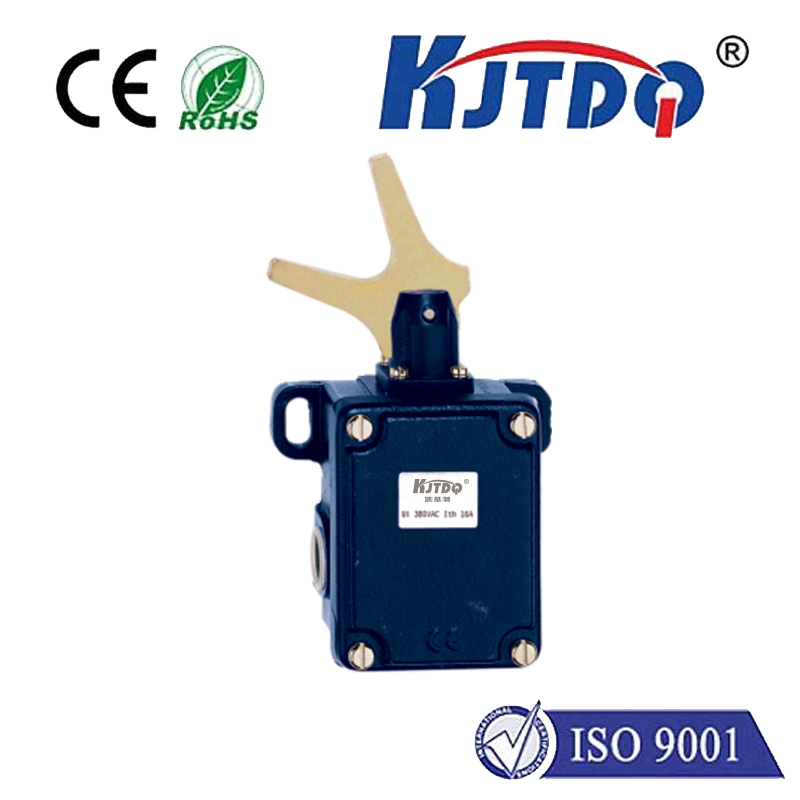
At its heart, a limit switch is a sensor activated by physical contact. It consists of an actuator—a lever, roller, plunger, or whisker—mechanically linked to a set of internal electrical contacts. When an external object, such as a moving machine carriage, a robotic arm, or a conveyor-stacked item, makes contact with the actuator, it triggers the movement of these contacts. This action either opens or closes an electrical circuit, sending a clear signal to the programmable logic controller (PLC) or other control unit. This signal is a definitive command: "The object has reached this specific point." It can be used to halt motion, initiate a subsequent sequence, change direction, or provide positional feedback.
The variety of limit switch sensors available caters to diverse environmental and operational demands. Basic models like plunger and lever arm switches are workhorses for general positioning tasks. For applications involving repeated lateral contact, roller lever switches offer durability. In harsh environments where dust, moisture, or corrosive agents are present, hermetically sealed or heavy-duty limit switches with robust housings (often rated IP67 or higher) are essential. Furthermore, precision snap-action switches provide a fast, clean electrical break, crucial for safety interlocks and high-cyclic applications. The choice of actuator material and shape is equally important, with options like stainless steel rollers or high-temperature plastics designed for specific wear and chemical resistance.
The advantages of integrating limit switch sensors into an automation system are multifaceted. First and foremost is their simplicity and cost-effectiveness. They provide a direct, unambiguous digital signal without the need for complex configuration or signal interpretation often associated with proximity sensors. Their physical nature makes troubleshooting straightforward; a technician can often visually or audibly confirm actuation. They offer high accuracy and repeatability for mechanical positioning tasks. Importantly, in safety-critical applications, a positively driven, mechanically linked limit switch can serve as a reliable hard stop or interlock, a feature sometimes required by safety standards to prevent machine hazards.
Successful implementation requires careful consideration. Proper mounting is crucial to ensure accurate and consistent actuation without undue stress on the actuator arm. The operating force and travel distance of the actuator must be matched to the application to prevent premature failure. Environmental factors like temperature extremes, vibration, liquid ingress, and the presence of conductive contaminants must inform the selection of the switch's housing and sealing rating. Regular maintenance, including checking for actuator wear, loose connections, and housing integrity, is key to long-term reliability. For instance, in a packaging line, a roller lever limit switch might be used to confirm a case is in position for sealing. The switch's durability and clear signal ensure the sealing head only activates when appropriate, preventing jams and product damage.
While newer, non-contact sensors like inductive or capacitive proximity switches offer advantages in wear-free operation, limit switch sensors maintain a strong position in the automation landscape. Their tangible feedback, mechanical robustness, and fail-safe potential in power-off scenarios ensure their continued relevance. They form the reliable backbone of position verification in CNC machines, material handling systems, robotic work cells, and elevator controls.
In conclusion, the limit switch sensor is a testament to elegant engineering simplicity solving complex control problems. From safeguarding operators to orchestrating precise mechanical sequences, its function is foundational. Understanding its operating principles, varieties, and application best practices empowers engineers and technicians to design and maintain automation systems that are not only intelligent but also fundamentally dependable and safe. Specifying the right limit switch sensor is a critical step in building resilient and efficient automated processes.