check

check

check

check

check

check
In the intricate world of industrial automation, where precision and reliability are non-negotiable, the humble limit switch plays a pivotal role. Among the various types available, the Jigo limit switch stands out as a critical component for ensuring machinery operates within safe and defined parameters. This device, often overlooked, is fundamental to the seamless and safe functioning of countless automated systems, from conveyor belts and robotic arms to packaging machines and assembly lines.
A limit switch is essentially an electromechanical device that consists of an actuator mechanically linked to a set of contacts. When an object, often called the target, makes physical contact with the actuator, it triggers the switch to change the state of its electrical contacts. This action can either make or break an electrical circuit, sending a signal to the control system. This signal is a fundamental piece of information, used to indicate that a machine part has reached a specific position, to count objects passing a point, to detect presence or absence, or to prevent over-travel that could cause damage.
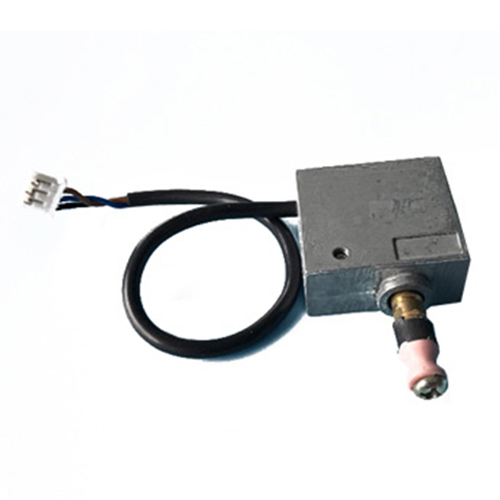
The Jigo limit switch, in particular, is recognized for its robust construction and dependable performance in demanding environments. Its design typically features a durable housing that offers protection against common industrial hazards such as dust, oil, water, and mechanical impact. This resilience is often denoted by an Ingress Protection (IP) rating, ensuring the switch can withstand the conditions of harsh factory floors. The actuator types can vary, including lever arms, roller levers, push plungers, and whisker types, allowing for customization based on the specific application and the nature of the target object.
The operational principle is straightforward yet brilliant. Imagine a robotic arm tasked with moving a component to a precise location. A Jigo limit switch is strategically mounted at the desired endpoint. As the arm extends, a cam or target attached to it eventually presses against the switch's actuator. This physical interaction causes the internal contacts to snap from their normal state (either Normally Open - NO, or Normally Closed - NC) to the opposite state. This instantaneous change in the electrical signal is instantly read by the Programmable Logic Controller (PLC). The PLC, the brain of the operation, interprets this signal as a command: "The arm has reached its limit." It then executes the next programmed sequence, such as retracting the arm, activating a gripper, or starting a new process cycle. This prevents the arm from over-extending and potentially colliding with other equipment, thereby ensuring operational safety and protecting valuable assets.
The advantages of integrating a reliable Jigo limit switch into a control system are manifold. Primarily, they provide a simple, cost-effective, and highly reliable method for positional detection. Unlike some sophisticated sensors, they do not require complex calibration or are susceptible to interference from ambient light or sound. Their electromechanical nature offers a tangible, physical confirmation of position. Furthermore, they contribute significantly to safety by acting as hard-wired interlocks, providing a fail-safe mechanism to halt machine motion if a dangerous condition is detected. This can be crucial for protecting both personnel and machinery.
When selecting a Jigo limit switch for an application, several factors must be considered. The operating environment dictates the required housing material and IP rating. The frequency of operation (number of cycles) influences the choice of contacts and actuator mechanism for longevity. The physical space constraints and the method of actuation (direction of target approach, required operating force) determine the ideal actuator style. Proper selection and installation are key to maximizing service life and ensuring consistent performance.
In conclusion, the Jigo limit switch is far more than a simple mechanical button. It is a fundamental sentinel in the automated world, providing essential feedback for control, sequencing, and safety. Its robust design and straightforward operation make it an indispensable tool for engineers designing and maintaining automated systems. By reliably defining the physical limits of machine movement, these switches ensure that complex industrial dances proceed with precision, efficiency, and, above all, safety. Their continued evolution, including the development of more compact and environmentally sealed models, ensures they will remain a cornerstone of industrial automation for the foreseeable future.