check

check

check

check

check

check
In the intricate world of industrial automation and machinery, countless components work in silent harmony to ensure efficiency, precision, and above all, safety. Among these, the small limit switch stands out as a fundamental yet often overlooked element. This compact device, frequently bearing designations like KJTDQ, plays a critical role in controlling machinery movement and preventing operational overruns.
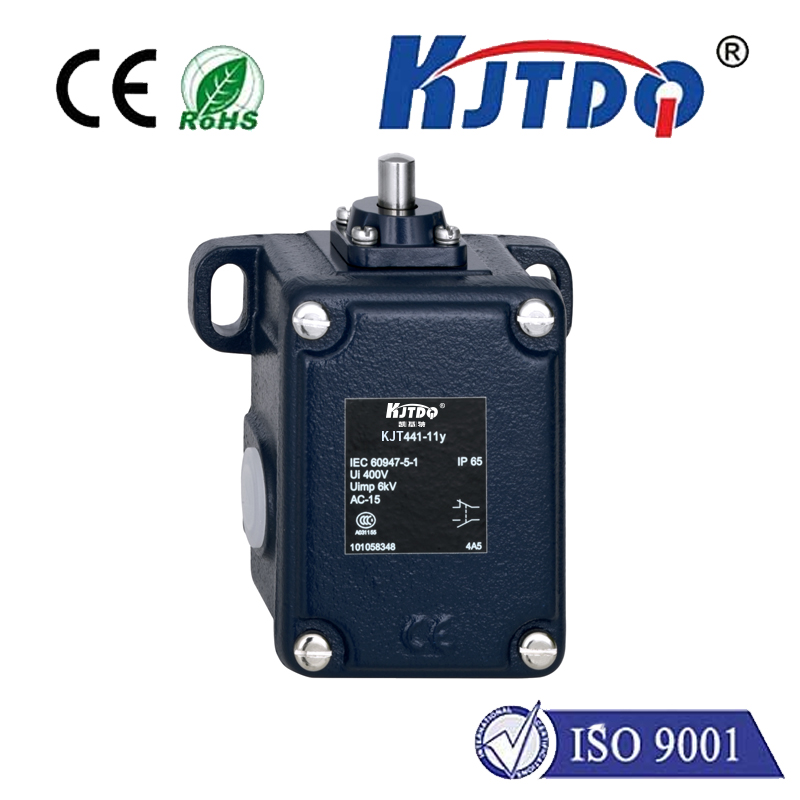
A small limit switch is essentially an electromechanical device designed to detect the presence or absence of an object, or to monitor positional limits. Its operation is elegantly simple: when an actuator (like a lever, roller, or plunger) on the switch is moved by a machine part or object, it triggers an internal change of state in its electrical contacts. This action either completes or interrupts a control circuit, sending a vital signal to the machine's control system. The "small" designation refers to its compact physical size, making it ideal for applications where space is at a premium, without compromising on reliability.
The applications for these robust little components are vast and varied. In automated assembly lines, a small limit switch might be used to confirm that a part has been correctly loaded into a fixture before a welding operation begins. Within packaging machinery, it can ensure a carton is in the proper position for sealing. In garage door openers, it acts as a safety sentinel, cutting power when the door reaches fully open or closed positions. The KJTDQ series, like many others, is engineered to deliver consistent performance in demanding environments, often featuring sealed housings to resist dust, moisture, and oil ingress.
Why is such a seemingly simple device so indispensable? The answer lies in its core functions: precision control and safety enforcement. By providing definitive physical feedback at a specific point, limit switches offer a level of accuracy that purely sensor-based systems can sometimes lack. They establish hard stops for mechanical motion, preventing costly damage from over-travel. For instance, in a CNC machine, a limit switch ensures the cutting tool does not move beyond its intended range, safeguarding both the tool and the workpiece. Furthermore, they are integral to safety interlock systems. A guard door on a heavy press cannot be opened unless the machine is in a safe state, a condition often verified by a limit switch, thereby protecting operators from harm.
When selecting a small limit switch for a project, several key specifications demand attention. The electrical rating (voltage and current capacity) must match the control circuit. The actuator type—whether lever, roller lever, or push plunger—should be chosen based on the direction and nature of the object it will contact. Durability, expressed in mechanical and electrical life cycles, is crucial for high-frequency operations. Environmental protection ratings (IP codes) indicate its resilience against contaminants. The KJTDQ models, for example, are typically designed with these operational rigors in mind, offering a blend of longevity and dependable switching.
Despite the rise of proximity sensors and vision systems, the small limit switch remains a staple in control panels and machine frames worldwide. Its advantages are clear: it provides a direct, physical interface with moving parts; it is generally cost-effective and easy to install; and its operation is straightforward to understand and troubleshoot. It represents a perfect marriage of mechanical and electrical engineering, delivering a binary, on-off signal that forms the bedrock of countless automated sequences.
In conclusion, the small limit switch, including variants like the KJTDQ series, is far more than a simple component. It is a vital guardian of process integrity and personnel safety. Its unassuming presence belies its importance in ensuring that machines start, stop, and repeat their actions with unwavering reliability. For engineers and system designers, understanding and correctly applying these switches is a fundamental step in building robust, safe, and efficient automated systems. As technology evolves, the core principle embodied by the limit switch—using physical feedback for control—will continue to be a cornerstone of industrial design.