check

check

check

check

check

check
In industrial processes where fluid management is critical, maintaining precise control over flow rates is not just a matter of efficiency—it's a fundamental requirement for safety, product quality, and equipment longevity. This is where the flow limit switch, a specialized monitoring device, plays an indispensable role. Often integrated into complex piping networks, these switches act as vigilant sentinels, continuously monitoring the movement of liquids or gases.
A flow limit switch, at its core, is a device designed to detect whether the flow rate of a medium within a pipe or duct has fallen below or risen above a predetermined set point. Unlike simple visual indicators, it provides a tangible electrical signal—typically a switch contact opening or closing—that can be used to trigger alarms, shut down pumps, activate auxiliary systems, or provide data to a central control system. This automated response is crucial. For instance, in a cooling system, a drop in coolant flow detected by the switch could automatically alert operators to a failing pump or a blockage, preventing catastrophic overheating of machinery. Conversely, in a chemical dosing application, an excess flow signal might indicate a line rupture, prompting an immediate shutdown to prevent spillage and environmental hazard.
The operational principle of most flow limit switches is elegantly straightforward, relying on mechanical or thermal sensing. A common mechanical design involves a paddle or vane inserted into the fluid stream. As flow moves, it deflects this paddle. When the flow is sufficient, the paddle remains in a position that holds an electrical switch in its normal state. If the flow drops below the critical threshold, a spring returns the paddle to a rest position, physically actuating the switch and changing its electrical state. Another prevalent technology is the thermal dispersion type. This switch uses a heated sensor element and measures the rate at which heat is carried away by the flowing medium. A significant change in this cooling rate correlates directly to a change in flow, triggering the switch output. Each technology has its ideal application: paddle switches are robust for clean liquids, while thermal switches excel with gases or dirty fluids where moving parts might fail.
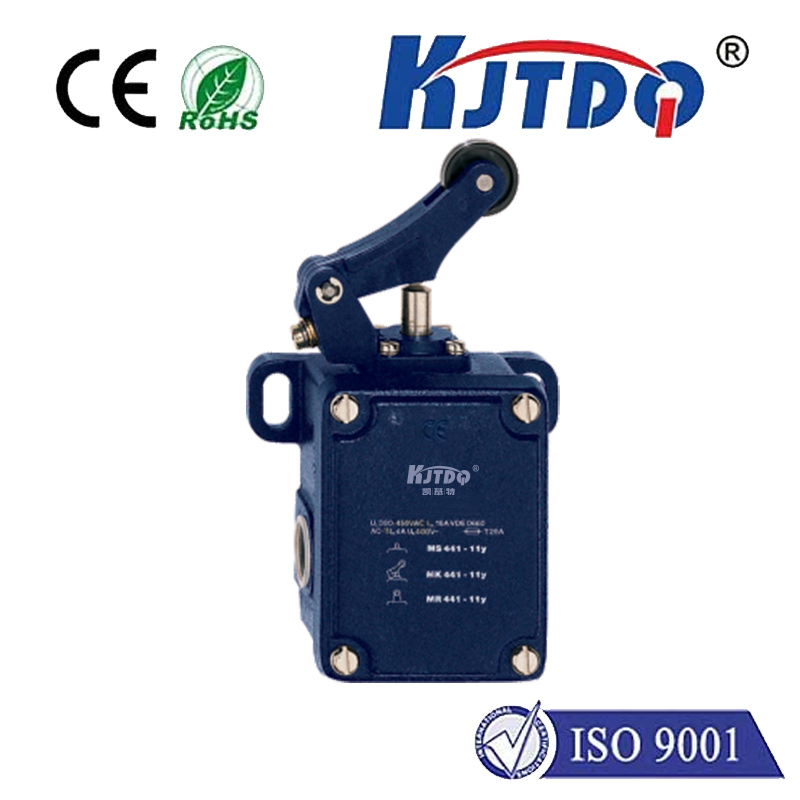
The integration of a flow limit switch, such as those represented by the KJTDQ series, into a fluid system brings multiple layers of benefit. Primarily, it is a cornerstone of preventative maintenance. By providing early warning of flow anomalies—like clogging filters, leaking seals, or impeller wear on pumps—it allows for intervention before secondary damage occurs. This predictive capability reduces unplanned downtime, extends the lifespan of expensive capital equipment like compressors and heat exchangers, and minimizes costly repairs. From a safety perspective, these switches are paramount. They are essential safeguards in systems carrying flammable, toxic, or high-temperature media, where loss of flow could lead to dangerous pressure buildups, thermal runaway reactions, or the failure of critical cooling.
Selecting the right flow limit switch requires careful consideration of several application-specific parameters. The chemical compatibility of the switch's wetted materials (like the paddle or sensor tip) with the process fluid is non-negotiable to avoid corrosion or contamination. The operating pressure and temperature ranges must comfortably exceed the process conditions. The set point—the specific flow rate at which the switch should activate—must be selectable and appropriate for the process. Furthermore, the required output signal (e.g., SPDT relay, PNP/NPN transistor) must be compatible with the existing control architecture. Proper installation is equally critical; the switch must be mounted in a location with stable, fully-developed flow, typically in a straight pipe section away from elbows, valves, or pumps, as per manufacturer guidelines to ensure accurate sensing.
In modern automated plants, the flow limit switch is rarely a standalone component. Its output is a vital piece of data fed into Programmable Logic Controllers (PLCs) or Distributed Control Systems (DCS). This integration enables sophisticated control strategies. For example, a switch signal might not just sound an alarm but initiate a sequenced response: starting a backup pump, modulating a control valve, or logging the event for maintenance history. This connectivity transforms a simple monitoring device into an active participant in system optimization and reliability.
From water treatment plants and HVAC systems to pharmaceutical production and food & beverage processing, the applications for flow limit switches are vast and varied. They protect pumps from running dry, ensure proper lubrication in gearboxes, verify coolant flow in welding machines, and confirm the presence of cleaning agents in CIP (Clean-in-Place) systems. The KJTDQ designation often signifies a product line built to meet rigorous industrial standards, offering reliability and durability in demanding environments.
In conclusion, the flow limit switch is a deceptively simple component with an outsized impact on system integrity. It provides the essential link between the physical flow of a medium and the electronic control system, enabling automated protection and operational intelligence. By investing in the correct selection, installation, and integration of a robust flow limit switch, engineers and plant managers can achieve a significant return through enhanced safety, reduced operational risk, improved efficiency, and lower total cost of ownership. In the relentless pursuit of operational excellence, this unassuming device proves to be an indispensable ally.