check

check

check

check

check

check
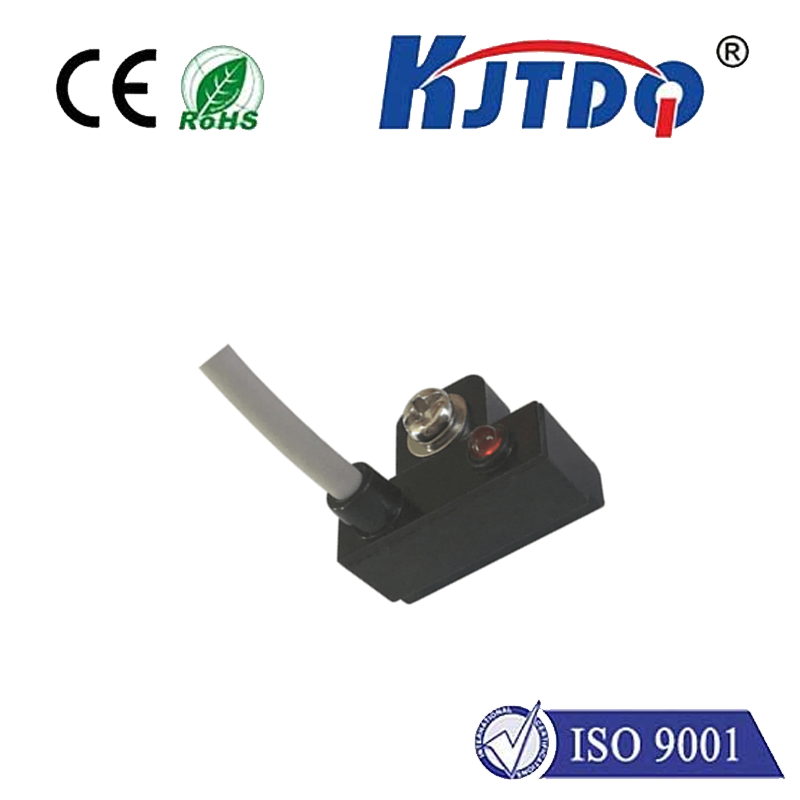
In the ever-evolving landscape of industrial automation and precision control, the quest for reliability, durability, and maintenance-free operation is perpetual. Traditional mechanical limit switches, with their levers, rollers, and actuators, have long been the standard for position detection and control. However, these components are inherently prone to wear, mechanical failure, and environmental contamination. Enter the leverless limit switch—a paradigm shift in sensing technology that is redefining the boundaries of performance and longevity in demanding applications. Unlike its mechanical predecessors, a leverless limit switch operates on a non-contact principle, typically utilizing magnetic, inductive, or capacitive sensing to detect the presence of a target. This fundamental design eliminates the need for any physical moving parts that make contact with the actuator or target. The absence of a lever arm means there is nothing to bend, break, or wear out from repeated operation or accidental impact. This translates directly into dramatically reduced maintenance costs, fewer unplanned downtimes, and a significantly extended operational lifespan. The core mechanism often involves a hermetically sealed reed switch or solid-state sensor embedded within a robust housing. A separate actuator, usually a permanent magnet, is mounted on the moving machine part. When the actuator passes within the sensing range of the switch, it triggers a state change without any physical contact. This hermetic sealing makes the switch body exceptionally resistant to ingress from dust, dirt, oil, coolants, and moisture, often achieving high IP (Ingress Protection) and NEMA ratings. Consequently, leverless limit switches thrive in environments that would swiftly degrade or jam a mechanical lever switch, such as food processing plants, sawmills, wastewater treatment facilities, and heavy machinery exposed to the elements. The benefits extend beyond mere durability. The repeat accuracy of a leverless switch is exceptionally high because its triggering point is not subject to the mechanical play or wear of a pivoting lever. This ensures consistent and precise machine positioning cycle after cycle. Installation and alignment are also simplified. Without a lever to adjust, the setup primarily involves mounting the switch body and the actuator in correct proximity, reducing commissioning time and potential for human error. Furthermore, the operational speed is not limited by the inertia or bounce of a mechanical arm, allowing for reliable detection at higher machine speeds. Industries are rapidly adopting this technology for critical safety interlocks, door and gate position monitoring, valve position indication, and end-of-travel detection on linear actuators and conveyors. In packaging machinery, for instance, where high-speed cycles are the norm, the reliability of leverless switches ensures continuous operation. In forestry and metalworking, their resilience to particulate contamination prevents false triggers and failures. The evolution towards Industry 4.0 and smart factories further amplifies their value. Many modern leverless limit switches come with integrated diagnostics and the ability to connect to industrial networks, providing valuable data on machine cycles and predictive maintenance needs, all while performing their primary control function with unwavering reliability. While the initial unit cost may be higher than a basic mechanical switch, the total cost of ownership over the lifecycle of the machine is invariably lower. The reduction in spare parts inventory, maintenance labor, and production losses due to switch failure presents a compelling economic argument. As machinery becomes faster, more complex, and operates in harsher conditions, the limitations of mechanical levers become increasingly apparent. The leverless limit switch is not merely an alternative; it represents the next logical step in control system design—a step towards ultimate reliability. By eliminating the weakest mechanical link, it provides a silent, robust, and intelligent foundation for automated systems, ensuring that operations proceed smoothly, safely, and efficiently without interruption. For engineers and plant managers seeking to future-proof their operations and minimize downtime, specifying a leverless limit switch is a strategic decision that pays continuous dividends in performance and peace of mind.