check

check

check

check

check

check
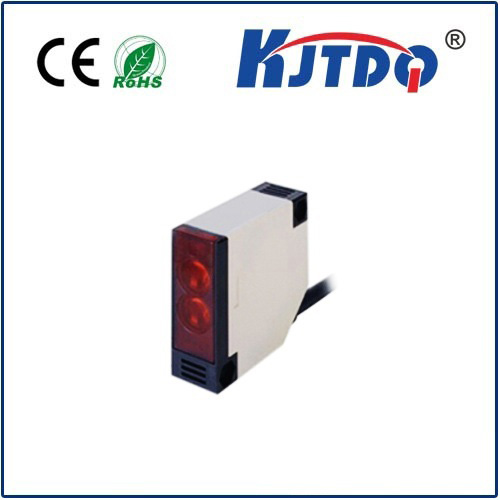
In the world of industrial automation, precision and reliability are non-negotiable. Among the myriad of sensing technologies available, the retroreflective photoelectric sensor stands out as a robust and versatile solution for countless detection challenges. Unlike other photoelectric sensors, this type utilizes a unique principle that combines simplicity with high performance, making it a cornerstone in modern manufacturing, packaging, logistics, and safety systems.
At its core, a retroreflective photoelectric sensor operates by emitting a beam of light—typically infrared or visible red—towards a specialized reflector, known as a retroreflector. This reflector is designed to return the light beam directly to its source, regardless of the angle of incidence. The sensor's receiver then detects this returned light. An object passing between the sensor and the reflector interrupts this beam, triggering a detection signal. This fundamental principle allows for reliable detection over considerable distances, often exceeding those achievable with diffuse or through-beam models in similar physical setups.
The key component enabling this function is the retroreflector, often a corner-cube prism array or a high-grade reflective tape. These materials are engineered to bounce light directly back along its original path. This characteristic is crucial. It means the sensor and reflector do not require precise optical alignment during installation, a significant advantage over through-beam systems that need separate, perfectly aligned emitter and receiver units. This ease of setup reduces installation time and cost, while also minimizing maintenance headaches associated with misalignment due to vibration or thermal expansion.
One of the primary strengths of the retroreflective photoelectric sensor is its long sensing range. By utilizing the efficient light return of the retroreflector, these sensors can detect objects at distances where diffuse reflection sensors would fail. This makes them ideal for applications like monitoring large conveyor belts, detecting vehicles at warehouse doors, or controlling access in large areas. Furthermore, they exhibit excellent performance in detecting opaque objects. The clear "beam-break" principle provides a strong signal contrast between the presence and absence of an object, leading to highly stable and accurate detection with minimal false triggers.
However, not all environments are created equal. A common challenge for standard retroreflective sensors is detecting transparent or highly reflective objects, such as glass bottles or polished metal. The light beam might pass through or be specularly reflected away, failing to be interrupted. To combat this, advanced models incorporate polarized light technology. These sensors emit polarized light, and the retroreflector is designed to rotate the polarization. The receiver has a filter that only accepts light with this rotated polarization. Light reflected directly from a shiny object (which maintains the original polarization) is rejected, ensuring only the genuine signal from the retroreflector is recognized. This innovation dramatically expands the sensor's applicability.
Modern retroreflective photoelectric sensors are packed with features designed for the smart factory. Many offer adjustable sensing ranges via potentiometers or teach-in functions, allowing fine-tuning for specific applications. Built-in diagnostics, often indicated by LED status lights, provide instant feedback on alignment quality and operational health, facilitating quick troubleshooting. Robust housings with high Ingress Protection (IP) ratings (e.g., IP67, IP69K) ensure reliable operation in harsh conditions, resisting dust, water jets, and chemical exposure. Connectivity has also evolved, with models offering IO-Link for digital parameter setting, data exchange, and condition monitoring, integrating seamlessly into Industry 4.0 frameworks.
The application spectrum is vast. In packaging, they count boxes, detect labels, and ensure proper fill levels. In automotive assembly, they verify the presence of components. In material handling, they control palletizing and depalletizing robots. They are also vital for safety, serving as perimeter guards or presence detectors for automated guided vehicles (AGVs). Their versatility is a testament to their fundamental design efficiency.
When selecting a retroreflective photoelectric sensor, several factors must be considered. The required sensing distance and the size of the target object are paramount. The environmental conditions—temperature, humidity, and potential contaminants—dictate the necessary housing material and IP rating. The object's characteristics (opaque, transparent, glossy) determine whether a standard or polarized lens model is needed. Finally, the required output type (PNP/NPN, analog, IO-Link) and electrical specifications must match the control system.
In conclusion, the retroreflective photoelectric sensor remains an indispensable tool in the automation engineer's arsenal. Its blend of long range, easy installation, and adaptability—especially with polarized light variants—ensures it can solve a wide array of detection problems reliably and cost-effectively. As industries continue to demand higher efficiency and smarter machines, the evolution of these sensors with enhanced connectivity and diagnostics will only solidify their role as a fundamental pillar of automated sensing technology.