check

check

check

check

check

check
In industrial automation and control systems, photoelectric sensors are indispensable components for detecting the presence, absence, or position of objects without physical contact. Their operation is based on the modulation of light, typically from an LED or laser diode, and the detection of changes in the received light signal. The choice of sensor type is critical for reliability and efficiency, as each is designed for specific environmental challenges and detection tasks. This guide explores the primary photoelectric sensor types, their operating principles, and ideal use cases to inform your selection process.
The most fundamental categorization is based on the light path configuration between the emitter and receiver. The three main types are through-beam, retro-reflective, and diffuse reflective sensors.
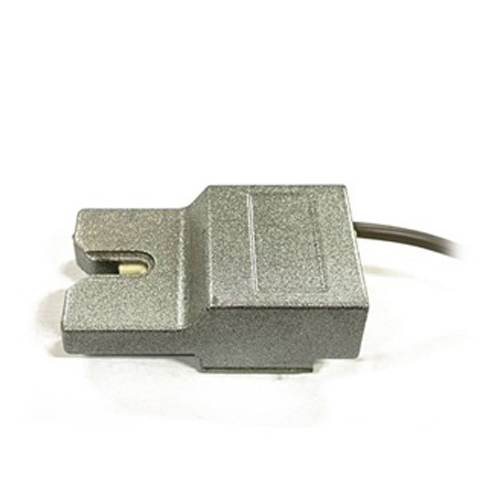
Through-beam sensors, also known as opposed-mode sensors, consist of separate emitter and receiver units placed opposite each other. The emitter projects a continuous beam of light directly to the receiver. An object is detected when it interrupts this beam. This configuration offers the longest sensing range, highest excess gain (meaning it can tolerate significant dirt or misalignment), and is highly reliable for detecting even transparent or small objects. It is ideal for precise detection over long distances, such as in material handling for counting boxes on a conveyor or in safety curtains for perimeter guarding. The primary drawback is the need for precise alignment of two separate units and wiring at both ends, which can increase installation complexity and cost.
Retro-reflective sensors house both the emitter and receiver in a single housing. They project light toward a specialized reflector, often a corner-cube reflector, which bounces the light beam directly back to the receiver. Detection occurs when an object breaks the light path between the sensor and the reflector. This type provides a good sensing range, longer than diffuse sensors but shorter than through-beam. It simplifies installation compared to through-beam as only one device needs wiring and alignment with the reflector is generally forgiving. However, it can be fooled by highly reflective objects, like shiny metal, which might bounce enough light back to the receiver even when present. Modern versions often use polarization filters to mitigate this; the emitter sends polarized light, and the receiver has a filter that only accepts light depolarized by the special reflector, ignoring light reflected directly from shiny objects.
Diffuse reflective sensors, or proximity-mode sensors, also integrate the emitter and receiver into one unit. They detect an object by measuring the light reflected directly off the object's surface. No separate reflector is needed. This makes them the easiest to install and ideal for applications where mounting a reflector or a separate receiver is impractical, such as detecting objects on a shelf or the fill level in a bin. Their sensing range is the shortest and is heavily dependent on the color, texture, and reflectivity of the target object. Light-colored objects are detected at a greater distance than dark, matte ones. Advanced versions, known as background suppression or convergent beam sensors, use triangulation principles to detect objects only within a specific focal point, ignoring more distant backgrounds. This makes them excellent for detecting objects against a reflective conveyor belt or for precise positioning.
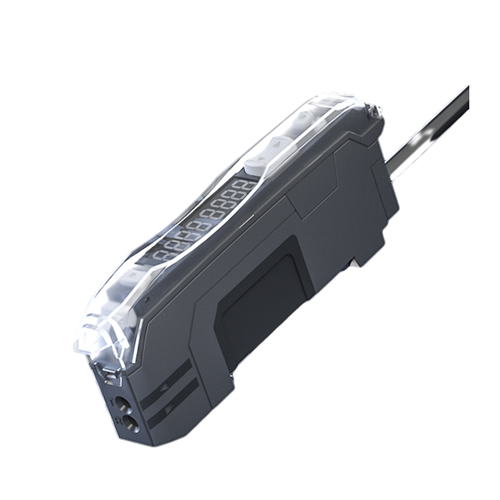
Beyond these core types, specialized variants address niche challenges. Fiber optic sensors use flexible light guides to deliver light to and from a remote amplifier. The sensing head can be extremely small and fit into tight spaces, is immune to electrical noise, and can withstand high temperatures or corrosive environments. Laser sensors use a focused laser beam instead of diffuse LED light, enabling very precise detection of tiny objects, exact positioning, and measurement tasks. Color sensors can distinguish between colors by analyzing the reflected light's wavelength, crucial in sorting or quality control applications. Contrast sensors detect differences in contrast or grayscale values, useful for reading marks or labels.
Selecting the correct photoelectric sensor type hinges on several application factors. Consider the required sensing distance, the size and characteristics of the target object (color, material, surface finish), the required response speed, the environmental conditions (dust, fog, ambient light), and installation constraints. For maximum reliability and long range with dirty environments, a through-beam sensor is often best. For a balance of range and easier installation with non-shiny objects, choose retro-reflective. For close-range detection where only one side of the target is accessible, a diffuse or background suppression sensor is the solution. Understanding these fundamental photoelectric sensor types empowers engineers and technicians to build more robust, efficient, and cost-effective automated systems.