check

check

check

check

check

check
In industrial automation, precise detection is paramount for maintaining production efficiency and product quality. The groove photoelectric sensor, particularly models like the G2R label sensor, represents a significant advancement in this field. These sensors are designed to detect the presence, absence, or position of objects, especially labels, tapes, and other thin materials, by utilizing a light beam that passes through a U-shaped groove. The core innovation in modern iterations like the G2R series lies in its self-adjusting capabilities, which streamline setup and enhance reliability in dynamic environments.
Traditional photoelectric sensors often require manual calibration to account for varying environmental conditions, target colors, or material translucency. This process can be time-consuming and prone to human error. The self-adjusting feature, sometimes called "teach-in" or auto-setup, revolutionizes this. For a groove photoelectric sensor such as the G2R label sensor, this means the device can automatically set its optimal sensing threshold. An operator simply presents the sensor with both the "label present" and "label absent" states during initial configuration. The sensor's internal microprocessor then learns the difference in light reception between these two states and locks in the ideal switching point. This intelligent adaptation ensures consistent performance even if the background surface, label color, or ambient light changes slightly over time.
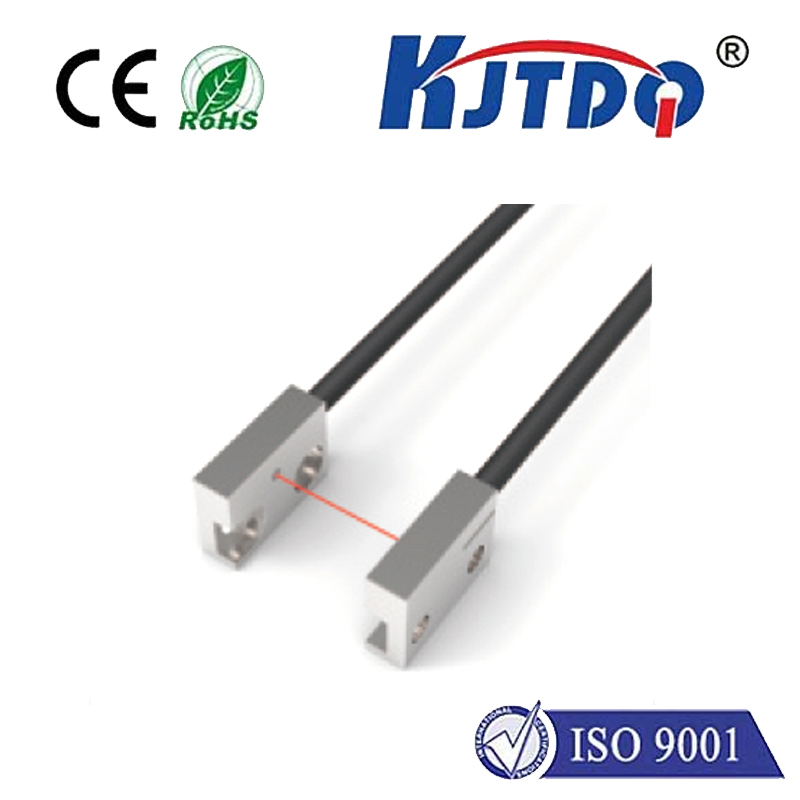
The mechanical design of the groove, or through-beam, configuration is inherently advantageous for label detection. The separate transmitter and receiver face each other across a gap, creating a precise detection zone. When a label or opaque object passes through this groove, it interrupts the light beam, triggering a signal. The G2R label sensor's groove is typically sized to accommodate specific label webs or edges, providing a physical guide that enhances positional accuracy. This makes it exceptionally reliable for applications like detecting missing labels on bottles, monitoring splice points on continuous rolls of packaging material, or verifying the passage of small components on a conveyor.
Implementing a self-adjusting groove photoelectric sensor translates directly to reduced downtime and lower maintenance costs. The elimination of manual potentiometer adjustments saves valuable time during installation and changeovers. In production lines handling multiple product SKUs with different label types, the sensor can be quickly re-taught for each new batch, ensuring flexibility without sacrificing detection accuracy. Furthermore, the self-diagnostic capabilities often integrated with self-adjusting functions can alert operators to potential issues like lens contamination or gradual LED output degradation before they cause a fault, enabling predictive maintenance.
A key application area is in packaging and bottling lines. Here, the G2R label sensor reliably detects whether a product has received its label. The self-adjusting feature compensates for variations in bottle color or label stock, preventing false triggers. In printing and converting machinery, these sensors monitor web guidance and detect breaks or splices in paper, film, or label stock. The precise groove ensures only the web itself interrupts the beam, ignoring minor flutter or vibrations. The robustness of the photoelectric principle, combined with solid-state electronics, ensures a long operational life even in environments with moderate dust or vibration, common in industrial settings.
When selecting a groove photoelectric sensor, the G2R label sensor with self-adjustment stands out for its ease of use and resilience. It reduces the dependency on highly skilled technicians for calibration and troubleshooting. The technology embodies a shift towards more intelligent, autonomous industrial components that contribute to the broader goals of smart manufacturing and Industry 4.0. By ensuring precise, reliable, and low-maintenance detection of critical production elements, these sensors play a vital role in optimizing workflow, minimizing waste, and guaranteeing final product quality. Their functionality, centered on the simple yet effective interruption of a light beam within a defined groove, is made profoundly more powerful and user-friendly through the integration of self-adjusting intelligence.