check

check

check

check

check

check
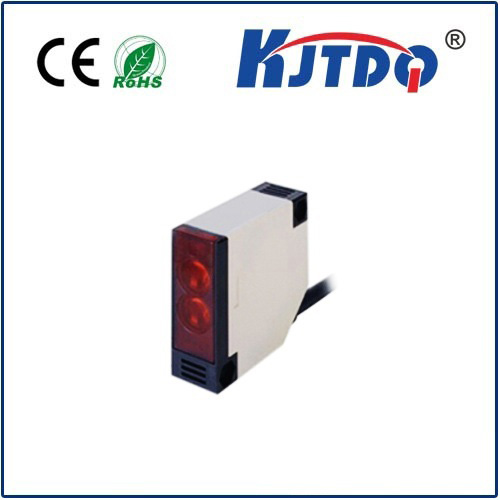
In the dynamic landscape of industrial automation, precise and reliable object detection is paramount. Among the array of sensing technologies available, reflection distance photoelectric sensors stand out for their versatility and efficiency. These devices, often simply called reflective sensors, operate on a fundamental principle: they emit a beam of light, typically from an LED or laser diode, and then measure the light that is reflected back from a target object. The key differentiator from other photoelectric types is that the emitter and receiver are housed within the same unit. This design simplifies installation and alignment compared to through-beam sensors, which require separate emitter and receiver components placed opposite each other.
The core functionality hinges on calculating distance based on the "time-of-flight" (ToF) principle or triangulation. In a ToF-based sensor, the device measures the time it takes for the emitted light pulse to travel to the target and back. Since the speed of light is constant, the sensor's internal processor can accurately calculate the distance to the object. Triangulation-based sensors, on the other hand, use the angle of the reflected beam hitting a position-sensitive receiver to determine distance. This allows them to ignore background objects and focus on the target within a specific sensing window.
The applications for reflection distance photoelectric sensors are vast and critical. They are indispensable in packaging lines for detecting the presence, absence, or precise position of products on a conveyor belt. In material handling, they ensure proper stacking height and palletizing. Robotics rely on them for object positioning and collision avoidance, enabling precise pick-and-place operations. Furthermore, they play a vital role in automated guided vehicles (AGVs) for navigation and obstacle detection, ensuring safe and efficient movement within facilities.
Choosing the right sensor requires careful consideration of several factors. The sensing range is primary; manufacturers specify a minimum and maximum distance for reliable operation. The type of target material, its color, and surface texture significantly affect performance. A glossy, light-colored surface reflects light well, while a dark, matte, or absorbent surface may require a sensor with higher output power or a specialized model. Environmental conditions cannot be overlooked. Factors like dust, fog, ambient light (especially sunlight), and temperature fluctuations can interfere with the light beam. Modern sensors incorporate features to combat these challenges, such as modulated LED light to ignore ambient light, robust IP67 or IP69K housings for dust and water resistance, and temperature compensation circuits.
The advantages of using these sensors are compelling. Their non-contact nature means no physical wear on the sensor or the target, leading to longer service life and maintenance-free operation. They offer high-speed response, capable of detecting objects at rates far exceeding mechanical switches. The ability to provide precise distance data, not just a simple on/off signal, opens doors for more sophisticated control and monitoring applications, such as measuring object dimensions or monitoring fill levels in transparent containers.
However, potential limitations exist. As mentioned, performance can vary with target surface properties. Very small objects or objects with holes might be challenging to detect consistently. For applications requiring extremely long ranges or detection through highly contaminated environments, alternative sensing technologies like ultrasonic sensors might be more suitable. Proper installation is also crucial; the sensor must be mounted securely and angled correctly to avoid false triggers from background objects.
In conclusion, reflection distance photoelectric sensors are a cornerstone of modern industrial sensing. Their combination of precision, reliability, and non-contact operation makes them an optimal solution for countless automation tasks. By understanding their operating principles, key specifications, and application requirements, engineers and technicians can effectively integrate these powerful devices to enhance productivity, ensure quality control, and improve the overall safety and efficiency of automated systems. As technology advances, we can expect these sensors to become even more intelligent, compact, and capable, further solidifying their essential role in the factories of the future.