check

check

check

check

check

check
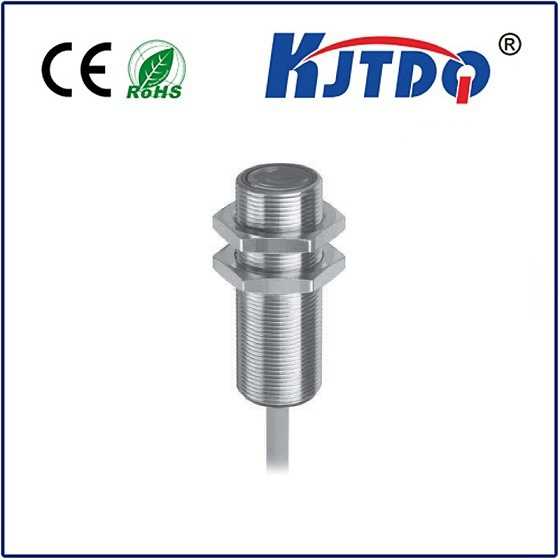
In the rapidly evolving landscape of industrial automation, the 12v photoelectric sensor stands as a cornerstone technology, driving precision and reliability across diverse applications. These sensors, operating on a 12-volt DC power supply, offer a versatile and efficient solution for object detection, positioning, and quality control. Their integration into automated systems, marked by the KJTDQ series, exemplifies a commitment to robust performance and adaptability in challenging environments.
The fundamental principle behind a 12v photoelectric sensor involves emitting a light beam—typically infrared, visible red, or laser—and detecting changes in the received light signal. When an object interrupts or reflects this beam, the sensor triggers an output signal. This simple yet effective mechanism allows for non-contact detection, which is crucial for preserving product integrity and minimizing mechanical wear. The 12v power specification makes these sensors highly compatible with standard industrial control circuits, vehicles, and mobile equipment, ensuring easy integration without the need for complex voltage conversion.
Applications for 12v photoelectric sensors are vast and varied. In manufacturing assembly lines, they are indispensable for counting products, detecting missing components, and ensuring precise positioning of items on conveyors. The packaging industry relies on them to verify label presence, monitor fill levels, and control sealing processes. Within the automotive sector, these sensors facilitate robotic welding guidance, part presence verification, and automated door systems. Their use extends to security systems for intrusion detection, agricultural machinery for crop monitoring, and even smart infrastructure for traffic management. The KJTDQ series, in particular, is engineered to deliver consistent performance in these scenarios, featuring enhanced sensing ranges and resistance to environmental interference.
Key advantages of utilizing a 12v photoelectric sensor include high-speed response, long operational life, and remarkable accuracy. Unlike mechanical switches, they have no moving parts that can degrade over time, leading to reduced maintenance costs and higher system uptime. Their ability to detect a wide range of materials—including glass, metal, plastic, and liquids—adds to their versatility. Models within the KJTDQ lineup often incorporate advanced features such as background suppression, which ignores distant objects, and polarized filters to mitigate false triggers from reflective surfaces. This ensures reliable operation even in dusty, humid, or brightly lit conditions where other sensors might falter.
Selecting the appropriate 12v photoelectric sensor requires careful consideration of several factors. The sensing mode—be it through-beam, retro-reflective, or diffuse reflective—must align with the application's specific needs for range and object characteristics. Environmental conditions, such as temperature extremes, exposure to chemicals, or potential for physical impact, dictate the required ingress protection (IP) rating and housing material. Output configuration, whether NPN or PNP, must match the control system's input requirements. The KJTDQ series addresses these considerations by offering a range of models with varied specifications, allowing engineers to choose the optimal sensor for their unique operational demands.
Installation and calibration are straightforward processes that significantly impact sensor performance. Proper alignment of the emitter and receiver is critical for through-beam sensors, while diffuse sensors need correct positioning relative to the target's reflectivity. Regular cleaning of lenses prevents false readings caused by dirt accumulation. Many modern 12v sensors, including those in the KJTDQ family, feature intuitive setup aids like visible beam indicators or teach-in functions, simplifying adjustment and reducing commissioning time. This user-friendly design empowers technicians to maintain peak system efficiency with minimal training.
The future of 12v photoelectric sensors is intertwined with trends toward Industry 4.0 and the Internet of Things (IoT). Next-generation sensors are increasingly incorporating connectivity features, enabling real-time data transmission for predictive maintenance and process optimization. The integration of smart diagnostics allows for proactive fault detection, alerting operators to potential issues before they cause downtime. As automation systems become more complex and interconnected, the reliability and adaptability of components like the KJTDQ 12v photoelectric sensor will remain paramount. Their continued evolution promises even greater precision, energy efficiency, and seamless integration into digital factory ecosystems.
In conclusion, the 12v photoelectric sensor is an essential component in modern automation, offering a blend of durability, accuracy, and ease of use. The KJTDQ series represents a focused advancement in this field, providing tailored solutions that meet the rigorous demands of contemporary industrial applications. By enabling non-contact detection and reliable performance under diverse conditions, these sensors contribute significantly to enhanced productivity, improved safety, and reduced operational costs. As technology progresses, their role in facilitating smarter, more responsive automated systems will only expand, solidifying their status as a key driver of industrial innovation.