check

check

check

check

check

check
In the realm of industrial automation and precision control, the demand for reliable, accurate, and compact sensing solutions is ever-present. The KJTDQ FC-SPX305 5mm Slot Photoelectric Proximity Sensor stands out as a critical component designed to meet these rigorous demands. This sensor exemplifies advanced photoelectric technology packaged into a slim, 5mm slot configuration, making it an indispensable tool for a wide array of applications where space is at a premium and detection accuracy is non-negotiable.
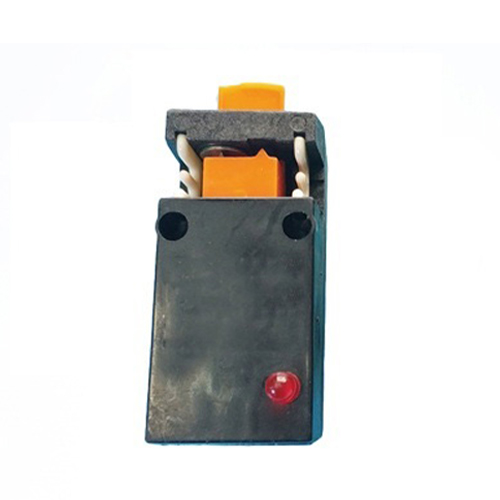
At its core, the FC-SPX305 operates on the through-beam sensing principle. It consists of two separate units: a transmitter and a receiver, facing each other across the 5mm slot. The transmitter emits a focused beam of light, typically infrared or red LED, which is directly received by the opposing unit. An object passing through the slot interrupts this light beam, causing a change in the receiver's output state. This method provides several distinct advantages, including a high degree of accuracy, long sensing ranges relative to the sensor's size, and exceptional reliability since it is less susceptible to the color or reflectivity of the target object. This makes it ideal for detecting very small objects, precise edges, or for use in high-speed counting applications.
The defining feature of this sensor is its compact 5mm slot width. This ultra-slim profile allows for installation in extremely tight spaces where other sensors cannot fit. It is perfectly suited for applications such as detecting thin materials, monitoring paper or film feed in printing machinery, verifying the presence of small components on assembly lines, or ensuring precise registration marks in packaging equipment. The robust construction of the KJTDQ FC-SPX305 ensures stable performance even in environments with moderate levels of vibration or dust, provided the optical lenses are kept clean.
Installation and integration are straightforward. The sensor typically comes with pre-wired cables or connector options for easy connection to programmable logic controllers (PLCs), counters, or other control systems. Many models feature a visible LED indicator that provides immediate feedback on the sensor's operational status and detection events, simplifying setup and troubleshooting. Its digital output, often in NPN or PNP configuration, provides a clear, switch-like signal for immediate system response.
When selecting a slot sensor like the FC-SPX305, several practical factors must be considered. The required response speed is crucial for high-speed production lines. The sensor's switching frequency must exceed the rate of objects passing through the slot to avoid missed counts. Environmental conditions are another key consideration. While the through-beam design is robust, excessive dust, dirt, or heavy condensation can obstruct the light beam and require protective measures or regular maintenance. Additionally, ensuring precise mechanical alignment during installation is vital for optimal performance, as even slight misalignment can weaken the signal.
Comparing the photoelectric slot sensor to alternative technologies highlights its specific benefits. While inductive proximity sensors are excellent for detecting metals, they are ineffective for non-metallic materials. Capacitive sensors can detect a wider range of materials but are more sensitive to environmental changes like humidity. The photoelectric slot sensor, particularly the through-beam type, offers a superior solution for non-contact detection of virtually any material that interrupts its light path, with high speed and precision.
In conclusion, the KJTDQ FC-SPX305 5mm Slot Photoelectric Proximity Sensor is a specialized instrument that delivers high-performance detection in a minimalist form factor. Its through-beam operation ensures reliable and accurate sensing of small objects, independent of their surface properties. For engineers and system integrators designing equipment for packaging, material handling, textile manufacturing, or any automated process requiring precise object detection in confined spaces, this sensor provides a reliable and effective solution. By ensuring the uninterrupted flow of operations and enhancing quality control, it becomes a silent yet vital contributor to efficient and error-free automated systems.