check

check

check

check

check

check
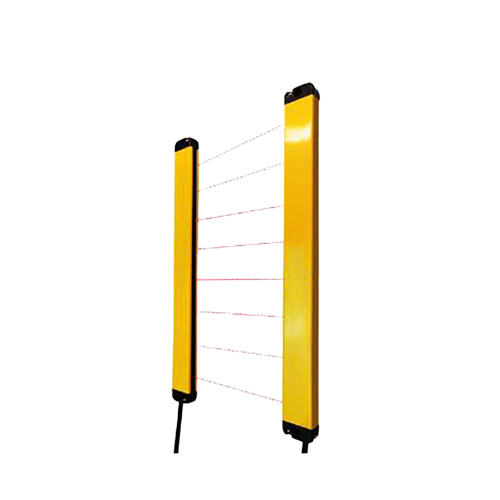
In the world of industrial automation and precision detection, beam photoelectric sensors stand as a cornerstone technology, enabling accurate, non-contact object detection across countless applications. These sensors operate on a simple yet powerful principle: they consist of a separate transmitter and receiver. The transmitter emits a focused beam of light—often infrared, visible red, or laser—toward the receiver. When an object interrupts this beam, the receiver detects the change in light intensity, triggering an output signal. This fundamental mechanism makes beam sensors, sometimes called through-beam sensors, exceptionally reliable for long-range detection and in challenging environments where dust, dirt, or target object color could confuse other sensor types.
The superiority of beam photoelectric sensors lies in their impressive sensing range and stability. Unlike diffuse reflective sensors that rely on light bouncing back from the target, the through-beam design provides the longest possible range for a given light source, often reaching tens of meters. This makes them ideal for large-scale applications like warehouse door monitoring, conveyor belt gap detection, and vehicle counting on highways. Their high signal-to-noise ratio ensures minimal false triggers, a critical factor in maintaining uninterrupted production lines in manufacturing. Furthermore, they are largely immune to the color, texture, or reflectivity of the target object; their primary job is to sense the presence or absence of the light beam itself.
When selecting a beam photoelectric sensor for a specific task, several key specifications demand attention. The sensing range, or the maximum distance between the transmitter and receiver for reliable operation, is paramount. The light source type is another crucial choice: modulated infrared LEDs offer excellent immunity to ambient light interference, visible red beams allow for easy alignment during setup, and laser diodes provide extremely precise, narrow beams for detecting very small objects or for applications requiring pinpoint accuracy. Environmental ratings, such as IP67 for dust and water resistance, and robust housing materials like stainless steel, are essential for sensors deployed in harsh industrial settings, washdown areas, or outdoor installations.
The applications for beam photoelectric sensors are vast and varied. In packaging and material handling, they are used to detect jams, count products, and ensure proper box sealing. In the automotive industry, they monitor robotic cell perimeters for safety and verify part placement on assembly lines. In the food and beverage sector, stainless-steel-housed sensors can detect bottles or cans on high-speed filling lines. Beyond traditional industry, they find use in modern security systems as invisible tripwires, in agriculture for equipment control, and in building automation for people counting and door control. Their versatility is a testament to their robust and effective design.
Implementing a beam sensor system requires careful consideration of mounting and alignment. Since the transmitter and receiver are separate units, they must be precisely aligned to ensure the beam hits the receiver's detection area. Many modern sensors feature alignment indicators, such as LED signals that change color or brightness when optimal alignment is achieved, simplifying setup. For long-range applications or environments with vibration, choosing models with a generous "effective beam aperture" or using laser sources can mitigate alignment drift issues. Regular maintenance, primarily lens cleaning to prevent buildup of grime that could attenuate the light signal, is recommended to ensure long-term reliability.
As technology advances, beam photoelectric sensors continue to evolve. Integration with Industrial Internet of Things (IIoT) platforms is a growing trend, where sensors equipped with IO-Link or other communication protocols can provide diagnostic data—like signal strength, operating temperature, and contamination warnings—enabling predictive maintenance and smarter factory operations. The development of background suppression techniques in some through-beam models now allows them to ignore objects beyond a set distance, adding another layer of application specificity. The core KJTDQ series, for instance, embodies these advancements, offering a range of high-performance, ruggedized sensors designed for the most demanding detection tasks, ensuring precision, durability, and seamless integration into automated systems worldwide.