check

check

check

check

check

check
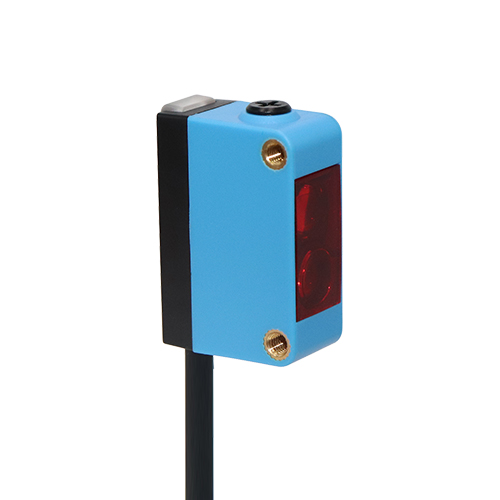
In the world of industrial automation and control, few components are as ubiquitous and critical as the photoelectric sensor. Often simply called a photo sensor, this device uses a light beam to detect the presence, absence, or distance of an object. Its principle is elegantly simple: a light emitter sends out a beam, and a receiver detects changes in this beam caused by an object interrupting or reflecting it. This fundamental operation belies a sophisticated technology that forms the backbone of countless processes, from packaging lines to safety systems.
The versatility of photoelectric sensors stems from their various operating modes, each suited to specific challenges. The most common types are through-beam, retro-reflective, and diffuse reflective sensors. Through-beam sensors, also known as opposed mode sensors, consist of separate emitter and receiver units placed opposite each other. An object is detected when it breaks the light beam traveling between them. This configuration offers the longest sensing range and highest reliability, as it is largely immune to the object's color, texture, or reflectivity. They are ideal for precise detection in demanding environments like logistics sorting.
Retro-reflective sensors house both the emitter and receiver in a single housing. They rely on a reflector, typically a prismatic tape, placed opposite the sensor. The emitted light beam travels to the reflector and bounces back to the receiver. Detection occurs when an object interrupts this return path. This mode provides a good balance of range and convenience, eliminating the need to wire two separate units. However, it can be fooled by highly reflective objects that might bounce light back like the reflector itself, a problem often solved with polarization filters.
Diffuse reflective sensors, or proximity mode sensors, also have a single housing. They detect an object by the light it reflects directly back to the receiver. The target itself acts as the reflector. This makes installation simplest, as only one device needs mounting. However, sensing distance is shorter and highly dependent on the object's color, size, and surface finish. A white object reflects more light and can be detected from farther away than a black one. Advanced versions, like background suppression sensors, use triangulation to measure distance, making them less sensitive to color and ideal for detecting objects against a similar background.
Beyond these core types, specialized photoelectric sensors address niche needs. Fiber optic sensors use flexible light guides to deliver the beam to tight or hazardous spaces, keeping the electronics safely remote. Color sensors distinguish between colors by analyzing the reflected light's wavelength. Luminescence sensors detect markings visible only under UV light. Laser sensors provide a precise, focused beam for detecting very small objects or exact positioning.
The applications of photoelectric sensors are virtually limitless. In manufacturing, they count bottles on a conveyor, check for correct label placement, and ensure robotic arms pick up components accurately. In packaging, they verify fill levels, control film cutting, and inspect seals. For safety, they create invisible light curtains around dangerous machinery, instantly stopping operation if a hand breaches the barrier. In the automotive industry, they ensure precise welding and assembly. Even in everyday life, they automate doors, control faucets in public restrooms, and are integral to barcode scanners.
Selecting the right photoelectric sensor requires careful consideration of several factors. First, define the sensing task: What needs to be detected (size, material, color)? At what distance? In what environment (dust, moisture, vibration)? The required sensing range will point you towards through-beam for long distances or diffuse for short. Environmental factors dictate the needed ingress protection (IP) rating; a washdown area in a food plant requires a high IP69K rating. The output type must match the control system—common options are NPN, PNP analog, or IO-Link for digital communication and parameterization. Don't forget the light source: traditional red LED, infrared for stealth, or laser for precision.
Modern advancements continue to push the boundaries. Smart sensors with IO-Link capability allow for remote configuration, diagnostics, and process data monitoring, enabling predictive maintenance. Miniaturization allows sensors to fit into increasingly compact machinery. Enhanced algorithms improve immunity to ambient light interference and enable more stable detection of challenging surfaces.
In conclusion, the humble photoelectric sensor is a powerhouse of automation. Its ability to provide non-contact, reliable, and fast detection makes it indispensable. By understanding the different types, their operating principles, and key selection criteria, engineers and technicians can harness this technology to build more efficient, safe, and intelligent systems. From a simple presence check to a complex measurement task, the right photoelectric sensor is often the key to a seamless automated process.