check

check

check

check

check

check
In modern industrial environments, automation and precision are paramount. The 24V proximity sensor stands as a critical component in this landscape, offering reliable, non-contact detection of metallic objects. These sensors operate by generating an electromagnetic field, and when a metal target enters this field, it causes a change that the sensor detects, triggering an output signal. The 24V DC power specification is particularly significant as it aligns with the standard control voltage used in countless industrial machinery and Programmable Logic Controller (PLC) systems worldwide. This compatibility simplifies integration, reduces the need for additional power conversion modules, and enhances overall system reliability.
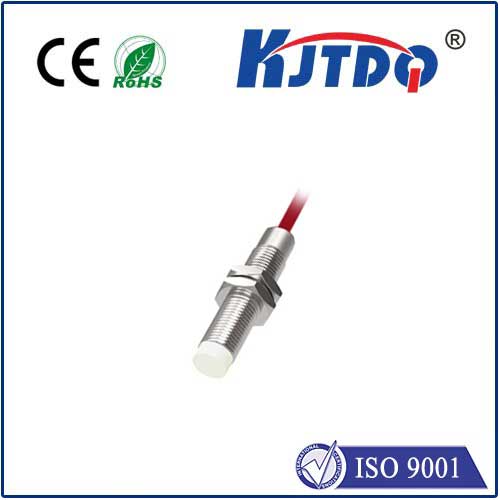
The KJTDQ series of 24V proximity sensors exemplifies this technology with robust performance tailored for demanding applications. Designed for longevity, these sensors often feature rugged housing materials like nickel-plated brass or stainless steel, providing excellent resistance to corrosion, moisture, and physical impact. This durability is essential in harsh settings such as automotive manufacturing lines, packaging machinery, and material handling systems, where continuous operation is required. The sensing range varies by model, allowing for precise selection based on the specific detection distance needed, from a few millimeters to several tens of millimeters.
One of the primary advantages of using a 24V proximity sensor like the KJTDQ is its inherent safety and stability. Compared to higher voltage alternatives, 24V DC is generally considered a safe extra-low voltage, minimizing risks in the event of insulation failure. Furthermore, these sensors exhibit minimal leakage current and high noise immunity. This means they are less susceptible to false triggers caused by electrical interference from nearby motors, frequency drives, or welding equipment, ensuring consistent and accurate operation. Many models also feature short-circuit and reverse polarity protection, safeguarding both the sensor and the connected control circuitry from accidental wiring errors.
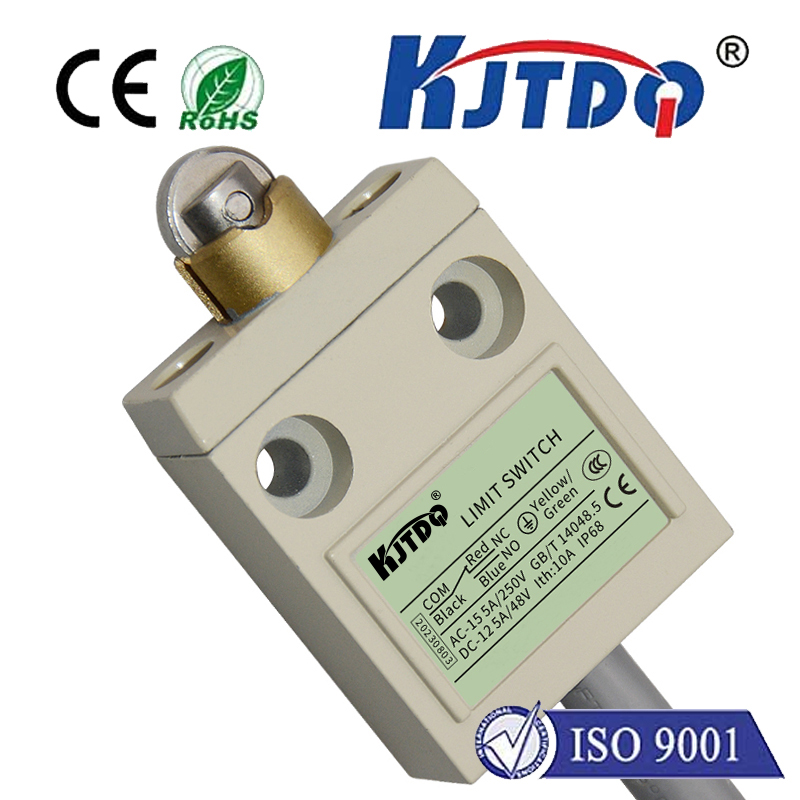
Installation and maintenance are straightforward. The typical cylindrical form factor allows for easy mounting in standard brackets. Indicators, often an LED, provide immediate visual feedback on the sensor's operational status—power on and target detection—facilitating quick troubleshooting. For environments with heavy metallic dust or chips, shielded (flush-mountable) versions are available. These sensors can be embedded in metal without affecting their sensing field, preventing false actuation from surrounding metallic materials. Conversely, non-shielded types offer a longer sensing range but require clearance from adjacent metal.
The application scope is vast. In conveyor systems, these sensors reliably detect the presence or absence of products, controlling sorting gates or counting items. In machine tools, they serve as limit switches to determine the position of moving parts like robotic arms or slides, preventing over-travel. They are also integral in safety interlock systems, ensuring a guard door is closed before a machine can start. The output from these sensors, typically a solid-state NPN or PNP transistor switch, can directly interface with PLC inputs, relays, or other control devices, forming the essential sensory layer of an automated control loop.
Choosing the right sensor involves considering several factors beyond just voltage. The target material is crucial; while standard sensors detect ferrous metals like steel and iron most effectively, specially designed models (often referred to as non-ferrous or all-metal sensors) can detect aluminum, copper, and brass. The operating frequency, or switching speed, determines how quickly the sensor can respond to passing targets, a critical parameter in high-speed assembly lines. Environmental ratings, denoted by IP (Ingress Protection) codes, indicate the level of protection against dust and water, ensuring the sensor can withstand washdowns in food processing or exposure outdoors.
As Industry 4.0 and smart manufacturing evolve, the role of foundational components like the 24V proximity sensor remains undiminished. They provide the essential, reliable data on physical object presence that higher-level systems depend on for analytics and optimization. The KJTDQ series, with its focus on 24V DC operation, robust construction, and consistent performance, represents a dependable choice for engineers and system integrators looking to build or maintain efficient, fault-resistant automation systems. Their widespread use is a testament to their effectiveness in bridging the gap between the physical movement of machinery and the digital world of control.