check

check

check

check

check

check
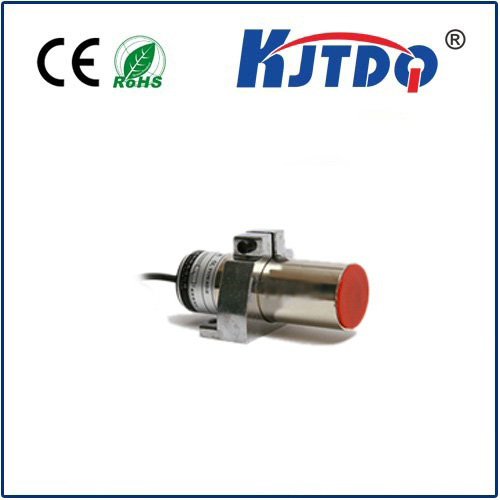
In the rapidly evolving landscape of industrial automation, precision, reliability, and durability are non-negotiable. The KJTDQ Q25 D7NK proximity sensor emerges as a cornerstone technology, engineered to meet the rigorous demands of modern manufacturing and control systems. This inductive sensor represents a significant leap forward, offering unparalleled performance in object detection without physical contact.
The core of the Q25 D7NK's superiority lies in its advanced inductive sensing technology. Designed to detect metallic objects, it operates by generating an electromagnetic field. When a metal target enters this field, it induces eddy currents, causing a change in the field's oscillation amplitude. The sensor's sophisticated circuitry detects this shift, triggering a precise switching signal. This non-contact method eliminates mechanical wear and tear, ensuring a remarkably long operational lifespan even in the most demanding cycles. The "D7NK" designation often refers to a specific form factor and sensing distance, typically a compact cylindrical shape with a 7mm sensing range, making it ideal for space-constrained applications where accurate positioning is critical.
What truly sets the KJTDQ Q25 D7NK apart is its robust construction. Housed in a rugged, often stainless-steel or nickel-plated brass body, it boasts exceptional resistance to environmental challenges. It is inherently shielded, meaning it can be mounted flush with metal surfaces without false triggering from surrounding materials—a crucial feature for streamlined machine design. Furthermore, its high protection rating, typically IP67 or higher, guarantees reliable performance against dust ingress and temporary immersion in water. This resilience makes it perfectly suited for harsh industrial environments found in automotive assembly lines, packaging machinery, material handling systems, and CNC machining centers.
From an integration standpoint, the sensor offers outstanding versatility. It is commonly available in both PNP (sourcing) and NPN (sinking) output configurations, allowing seamless compatibility with a wide array of programmable logic controllers (PLCs) and control systems from brands like Siemens, Allen-Bradley, and Mitsubishi. The consistent and fast response time of the Q25 D7NK ensures no lag in detection, which is vital for high-speed production processes where timing is everything. Its ability to detect ferrous and non-ferrous metals, albeit with different correction factors, adds another layer of application flexibility.
Installation and maintenance are remarkably straightforward. The sensor's design often includes LED status indicators for easy diagnostics, showing power status and output activation. This visual feedback simplifies setup and troubleshooting, minimizing machine downtime. Its long-term stability means once calibrated and installed, it requires minimal intervention, providing a consistently reliable signal that control systems can depend on for years.
In practical application, the KJTDQ Q25 D7NK proves indispensable. Imagine a bottling plant where precise bottle cap presence detection is necessary before filling. A malfunction here leads to waste and stoppages. The Q25 D7NK, with its precise 7mm range, reliably detects each metallic cap, ensuring the filling head only activates when appropriate. Similarly, in automated robotic welding cells, these sensors are used to confirm the precise position of a metal workpiece before the weld cycle begins, preventing costly collisions and ensuring weld quality. Its reliability forms the backbone of safety interlock systems and precise counting operations.
For system designers and maintenance engineers, choosing the KJTDQ Q25 D7NK proximity sensor translates to reduced total cost of ownership. The initial investment is quickly offset by its durability, which drastically cuts replacement costs and production losses associated with sensor failure. Its accuracy enhances overall product quality by ensuring manufacturing processes are controlled with exacting precision. In an era where efficiency and uptime are directly tied to profitability, integrating such a robust and dependable component is a strategic decision.
Ultimately, the KJTDQ Q25 D7NK is more than just a sensor; it is a critical enabler of industrial efficiency and automation intelligence. By delivering unwavering accuracy, enduring physical robustness, and seamless integration capabilities, it addresses the core challenges faced in factory automation today. For any operation seeking to enhance reliability, optimize processes, and build a more resilient production floor, this proximity sensor stands as a proven and essential technological asset.