check

check

check

check

check

check
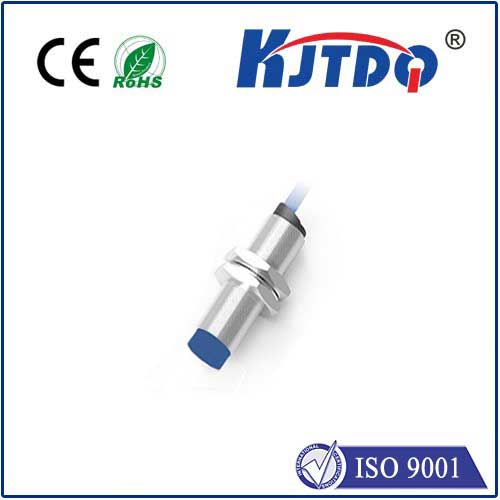
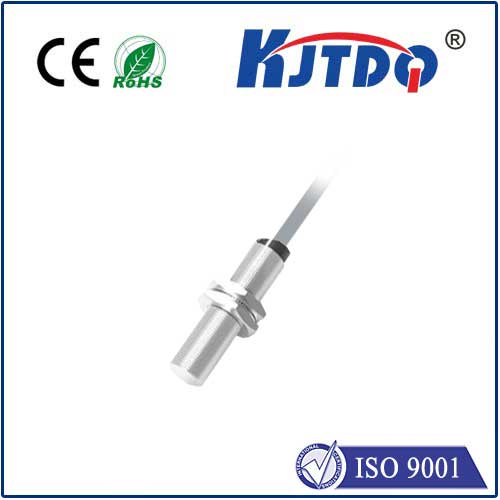
In the world of industrial automation and electronic design, the three-wire proximity sensor stands as a cornerstone component. Its reliability and straightforward interface make it a preferred choice for countless applications, from assembly line object detection to precise positioning in machinery. Unlike its two-wire counterpart, which simplifies wiring at the cost of some performance, the 3-wire sensor offers distinct advantages in signal stability and output configuration.
At its core, a proximity sensor detects the presence or absence of a target object without physical contact, typically using electromagnetic fields, light, or sound. The "3-wire" designation refers to its fundamental wiring scheme: one wire for power supply (usually labeled V+ or Brown), one wire for ground (0V or Blue), and one wire for the output signal (Black or White). This separation of power and signal paths is the key to its enhanced performance. The power and ground wires provide a dedicated circuit for the sensor's internal oscillator and amplifier, ensuring stable operation. The output wire then provides a clean, switched signal—either a digital ON/OFF voltage—to the control system, such as a Programmable Logic Controller (PLC) or a microcontroller.
The output type is a critical specification. Three-wire sensors are predominantly available in two configurations: NPN (sinking) and PNP (sourcing). An NPN sensor switches the output signal to ground (0V) when activated, effectively "sinking" current from the load. Conversely, a PNP sensor switches the output to the positive supply voltage when activated, "sourcing" current to the load. The choice between NPN and PNP is not about superiority but about compatibility with the control system's input module. Asian and European markets often favor PNP sensors, while NPN is common in other regions. Mismatching these can lead to a non-functional circuit, so verifying the PLC input type is essential.
Why choose a 3-wire sensor over a 2-wire version? The benefits are significant for demanding applications. First is the lower voltage drop. Two-wire sensors are wired in series with the load, causing a residual voltage drop even when "off," which can sometimes be enough to falsely trigger sensitive inputs. Three-wire sensors eliminate this issue entirely, providing a crisp, full-range voltage swing between the OFF and ON states. This results in superior noise immunity and allows for longer cable runs without signal degradation. Furthermore, three-wire sensors often support a wider range of output options, including not just standard digital switches but also analog outputs (4-20mA, 0-10V) or even IO-Link digital communication for advanced diagnostics and parameter setting.
Installation and wiring are straightforward but require attention to detail. Always refer to the manufacturer's datasheet. The standard color coding (Brown/V+, Blue/0V, Black/Output) is widely adopted but not universal. Connect the brown wire to the positive DC supply (typically 10-30V DC), the blue wire to the negative or ground, and the black (or white) wire to the input of your controller. A crucial step is to connect a protective diode or ensure the controller has built-in protection for inductive loads if the sensor drives a relay or solenoid directly. Proper shielding and routing away from high-power cables minimize electromagnetic interference.
When selecting a 3-wire proximity sensor for your project, consider these key parameters: Sensing distance (rated and effective), target material (ferrous metals, non-ferrous metals, or all metals), output type (NPN/PNP, NO/NC), supply voltage range, housing material (nickel-plated brass or stainless steel for harsh environments), and switching frequency. Inductive sensors are common for metal detection, while capacitive sensors can detect liquids, plastics, and other materials.
Troubleshooting common issues often involves a systematic approach. If a sensor fails to operate, first check the power supply voltage at the sensor's terminals. Next, verify the wiring against the diagram. Use a multimeter to measure the output voltage relative to ground; it should switch between near 0V and near supply voltage when a target is presented and removed. Ensure the target is within the specified sensing range and is of the correct material. Environmental factors like excessive dust, coolant, or strong magnetic fields can also cause malfunctions.
In summary, the 3-wire proximity sensor offers a robust, high-performance solution for non-contact detection. Its clear separation of power and signal, combined with flexible output configurations, makes it an indispensable tool for engineers and technicians. By understanding its operating principles, wiring schemes, and selection criteria, you can ensure reliable integration into any automated system, enhancing efficiency and reducing downtime.