check

check

check

check

check

check
In the world of industrial automation and precision control, the ability to detect objects without physical contact is not just a convenience—it's a necessity for efficiency, safety, and longevity of machinery. Among the myriad of solutions available, the LJA1M-5N1 proximity sensor stands out as a paragon of reliability and performance. This comprehensive guide delves into the core features, applications, and technical advantages of this exceptional sensor, providing a clear understanding of why it is a preferred choice for engineers and system integrators globally.
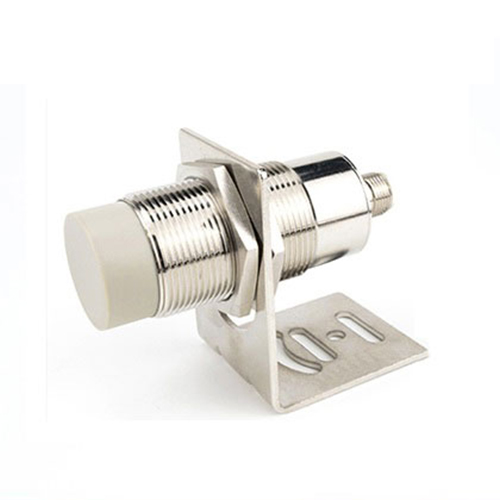
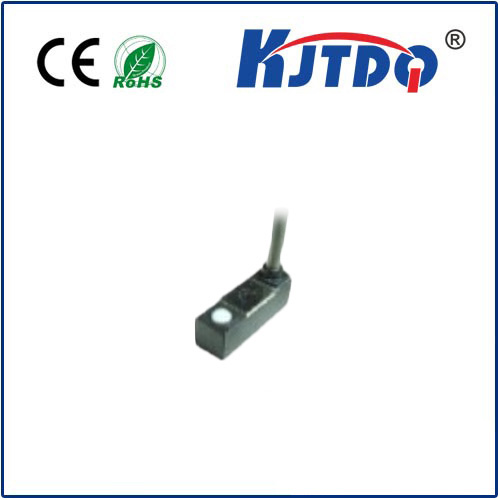
At its heart, the LJA1M-5N1 is an inductive proximity sensor. This technology operates on a simple yet profound principle: it generates an electromagnetic field. When a metallic object enters this field, it induces eddy currents within the object, causing a change in the sensor's internal oscillation. The sensor's circuitry detects this change and triggers a solid-state output signal. The "5N1" designation typically relates to its specific sensing distance, output configuration, and electrical characteristics, making it suited for a wide range of standard industrial applications. The key benefit of this non-contact method is the complete elimination of mechanical wear and tear, leading to a dramatically extended operational lifespan compared to mechanical limit switches.
The construction of the LJA1M-5N1 is engineered for resilience. Housed in a robust, typically cylindrical metal body, it is designed to withstand the harsh environments common in factories and plants. It offers excellent resistance to common industrial contaminants like oil, coolants, and dust. Many models feature IP67 or higher ingress protection ratings, meaning they are dust-tight and can withstand temporary immersion in water. This ruggedness ensures consistent performance on busy assembly lines, in machining centers, and within automated packaging systems, where downtime is not an option.
One of the most critical specifications of any proximity sensor is its sensing range. The LJA1M-5N1 provides a precise and stable detection distance, optimized for its form factor. This consistent range, often with minimal hysteresis, allows for accurate positioning and repeatability in automated processes. Whether it's counting metal parts on a conveyor, confirming the position of a robotic arm, or verifying the closure of a metal door or hatch, the sensor delivers a dependable signal. Its fast response time enables it to keep pace with high-speed production cycles, ensuring no event goes undetected.
Electrical integration is straightforward. The LJA1M-5N1 commonly operates on standard DC voltages (like 12-24V DC) and provides a digital output (often NPN or PNP transistor types). This compatibility makes it a plug-and-play component with most Programmable Logic Controllers (PLCs), industrial PCs, and other control systems. The wiring is simple, usually involving just three connections: power supply, ground, and the output signal line. This ease of installation reduces setup time and simplifies maintenance procedures.
The applications for the LJA1M-5N1 are virtually limitless within industrial automation. It is indispensable for position sensing, end-of-travel detection on linear actuators and cylinders, and rotary speed monitoring by detecting gear teeth or bolts. In material handling, it ensures proper object presence for sorting and routing. On machine tools, it safeguards operations by confirming the presence of a workpiece or tool before a cycle begins. Its reliability also makes it ideal for safety interlocks on guards and doors, helping to protect personnel.
Selecting the right sensor is crucial. When considering the LJA1M-5N1, engineers evaluate the target material (ferrous metals are most easily detected), the required sensing distance, the operating voltage, the output type needed by the control system, and the environmental conditions. Proper mounting is also essential; ensuring the correct clearance around the sensor head prevents false triggers and guarantees the rated sensing performance is achieved.
In conclusion, the LJA1M-5N1 proximity sensor represents a blend of proven inductive technology, rugged industrial design, and practical functionality. It is a workhorse component that provides the invisible "eyes" for countless machines, enabling smarter, safer, and more efficient automated systems. For projects demanding dependable non-contact detection of metallic objects, specifying the LJA1M-5N1 is a decision that supports long-term operational stability and productivity. Its performance and durability make it more than just a component; it is a foundational element in building resilient industrial automation.