check

check

check

check

check

check
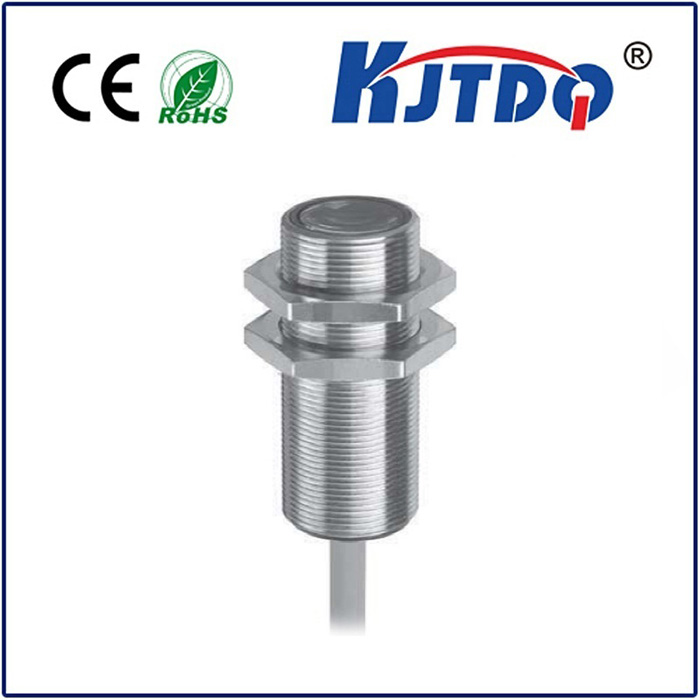
In the world of industrial automation and electronic control, selecting the right sensor is critical for system reliability and performance. Among the various configurations available, the PNP proximity sensor stands out as a fundamental component in countless applications. This guide delves into the workings, advantages, and practical uses of PNP-type proximity sensors, providing a clear understanding of why they are often the preferred choice.
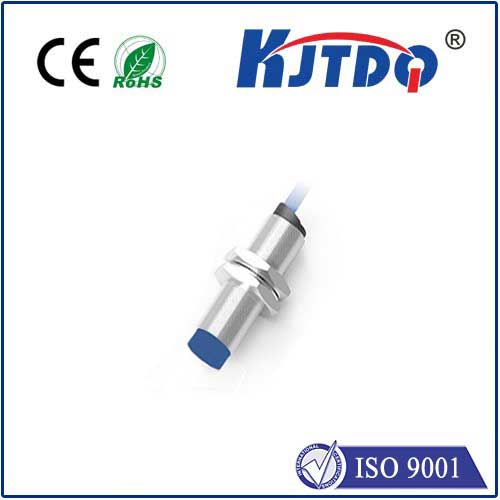
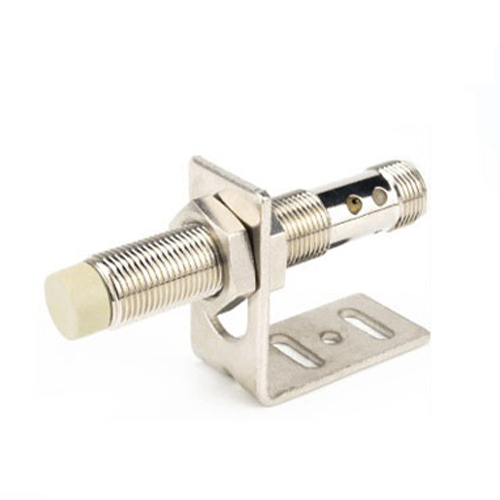
At its core, a proximity sensor is a device that detects the presence or absence of an object without physical contact. It does this by emitting an electromagnetic field or a beam of radiation and looking for changes in the field or return signal. The terms "PNP" and "NPN" refer to the type of transistor output the sensor uses to switch the load. A PNP sensor, also known as a "sourcing" sensor, provides a positive voltage output to the load when it detects a target. In simpler terms, when the sensor is activated, it connects the load to the positive supply voltage. The common wire (often the black wire) is connected to the ground or negative side. This configuration is particularly intuitive for many designers because the switched wire carries the positive potential.
The operational principle is straightforward. Inside the sensor housing, an oscillator circuit generates a high-frequency electromagnetic field at the sensing face. When a metallic target enters this field, it induces eddy currents on the target's surface. These currents absorb energy from the oscillator, causing its amplitude to decrease. This change is detected by a threshold circuit, which then triggers the output switch—in this case, a PNP transistor—to change state. For a PNP sensor, this means the output wire (typically brown or blue, depending on the standard) goes "high" or to the supply voltage level.
One of the primary reasons for the widespread adoption of PNP sensors, especially in regions like Europe and Asia, is their compatibility with common programmable logic controller (PLC) input modules. Many PLCs are designed to accept a sourcing (PNP) input, where the PLC common is connected to the negative rail. Wiring a PNP sensor to such a PLC is direct and logical: the sensor's output wire goes to the PLC input, and the sensor's common wire goes to the PLC common and the power supply negative. This simplifies cabinet wiring and reduces the chance of errors during installation and maintenance.
Comparing PNP to its counterpart, the NPN (sinking) sensor, highlights key differences. An NPN sensor switches the negative or ground side of the load. The choice between PNP and NPN often depends on the control system's architecture and regional conventions. For systems where the load (like a relay coil or PLC input) needs to be connected to positive voltage upon activation, the PNP sensor is the natural fit. This sourcing nature makes it ideal for directly controlling loads that have one terminal permanently connected to ground.
The applications for PNP proximity sensors are vast and varied. They are indispensable in manufacturing assembly lines for detecting the position of parts, in packaging machinery for counting products, and in automated guided vehicles (AGVs) for obstacle detection. In the automotive industry, they ensure robotic arms are in the correct position for welding or assembly. Their robust, non-contact operation makes them perfect for harsh environments where dirt, oil, or vibration would compromise mechanical switches.
When integrating a PNP sensor, several practical considerations are paramount. First, ensure the supply voltage matches the sensor's specifications, commonly 10-30V DC. Second, pay close attention to wiring. Incorrectly connecting the load between the sensor's output and ground (for a PNP) is a common mistake. The load must be placed between the output and the positive supply for an NPN configuration, but for a PNP, it is between the output and ground. Always refer to the manufacturer's datasheet for the specific wiring diagram. Third, consider the sensing distance, target material, and environmental factors like temperature and potential interference from other electromagnetic sources.
Maintenance of these sensors is generally minimal due to their solid-state design. However, keeping the sensing face clean from debris and metallic dust is crucial for consistent performance. Regular functional checks should be part of any preventive maintenance schedule to ensure the entire control loop is operating correctly.
In conclusion, the PNP proximity sensor is a versatile, reliable, and intuitive solution for non-contact object detection in modern industrial systems. Its sourcing output configuration aligns seamlessly with many standard control components, streamlining design and troubleshooting. By understanding its operation and proper application, engineers and technicians can build more efficient, dependable, and safer automated systems. Whether you are designing a new machine or maintaining an existing line, the PNP proximity sensor remains a cornerstone of effective automation.