check

check

check

check

check

check
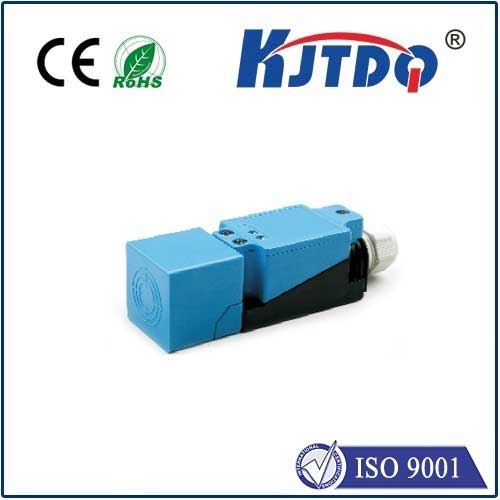
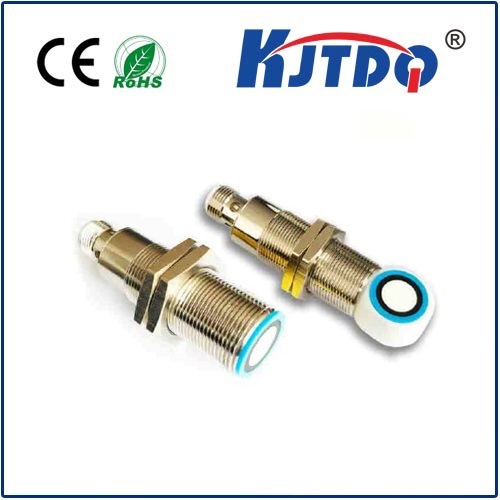
In the world of industrial automation, precision and reliability are non-negotiable. For engineers and system integrators tasked with detecting metallic objects in harsh environments, the choice of sensor is critical. Among the array of options, the inductive proximity sensor with a 12mm sensing face has emerged as a workhorse, offering a perfect blend of performance, durability, and versatility. This guide delves into the core principles, key applications, and selection criteria for this essential component, the KJTDQ series standing as a prime example of robust engineering.
At its heart, an inductive proximity sensor operates on a simple electromagnetic principle. The sensor contains an oscillator circuit that generates a high-frequency electromagnetic field emanating from its active face. When a metallic object, such as steel, aluminum, or brass, enters this field, eddy currents are induced on the surface of the target. This causes a change in the oscillation amplitude within the sensor, which is detected by a threshold circuit. This change triggers a solid-state output switch, sending a clear signal to the programmable logic controller (PLC) without any physical contact. The 12mm designation typically refers to the diameter of the sensor's sensing face, which directly influences its nominal sensing range. A 12mm sensor often provides a sensing distance of up to 4mm for mild steel, making it ideal for applications requiring a moderate range with a compact form factor.
The advantages of using a 12mm inductive proximity sensor are numerous. First and foremost is its exceptional reliability. With no moving parts and a completely sealed housing, often rated IP67 or higher, it is immune to dust, oil, coolant, and other contaminants that would cripple mechanical switches. This makes it perfect for machine tools, packaging lines, and automotive assembly plants. Its non-contact nature eliminates wear and tear, ensuring millions of reliable switching cycles. Furthermore, its high switching speed allows it to detect objects moving at high velocities, a necessity in modern high-speed production. The KJTDQ series, for instance, is engineered with these industrial rigors in mind, featuring temperature-stable circuitry and robust housing materials like nickel-plated brass or stainless steel to withstand mechanical stress and corrosion.
When selecting a 12mm inductive proximity sensor, several technical specifications demand attention. The sensing distance, or Sn, is paramount. It's crucial to note that this rated distance is defined for a standard target of mild steel. For other metals like aluminum or copper, a reduction factor must be applied, as these materials induce weaker eddy currents. The output type is another key decision: NPN (sinking) or PNP (sourcing), which must match the input card of your controller. The connection method, whether pre-wired cable or quick-disconnect, affects installation and maintenance ease. Environmental factors like operating temperature, voltage range, and short-circuit protection are also vital for long-term stability. The KJTDQ sensor line typically offers variants to cover all these bases, ensuring a fit for diverse electrical and physical requirements.
Real-world applications for the 12mm inductive proximity sensor are vast. Common uses include position sensing of cylinders by detecting the piston's metal band, end-of-travel detection on linear actuators, part presence verification on conveyor belts, and rotary speed monitoring by detecting gear teeth or keyways. In a bottling plant, it might confirm a metal cap is present. In a metal stamping press, it could verify a blank is in position before the cycle begins. Its robust build allows it to perform these tasks reliably in environments filled with vibration, shock, and electromagnetic interference.
Installation and maintenance are straightforward but require careful planning. To ensure optimal performance, the sensor should be mounted securely to minimize vibration. It's also important to maintain the recommended clearance from other metal objects to prevent false triggering. Regular checks for physical damage, buildup of metallic debris on the sensing face, and verification of the output signal are part of a simple preventative maintenance routine. Choosing a reputable product like the KJTDQ series minimizes downtime, as these sensors are built for endurance and consistent performance over extended periods.
In conclusion, the 12mm inductive proximity sensor represents a cornerstone of industrial sensing technology. Its ability to provide accurate, wear-free detection of metallic objects in challenging conditions makes it an indispensable tool for automation engineers. By understanding its operating principles, key specifications, and application best practices, you can leverage its full potential to enhance machine efficiency, safety, and uptime. For projects demanding proven reliability and performance, the KJTDQ series of 12mm inductive proximity sensors offers a compelling solution, engineered to meet the exacting standards of modern manufacturing.