check

check

check

check

check

check
In the intricate world of industrial automation, precision and reliability are not just advantages; they are absolute necessities. Among the myriad components that ensure seamless operation, the proximity sensor stands out as a critical element for non-contact detection. Specifically, the 18mm 12V DC inductive proximity sensor, often identified by model codes like KJTDQ, has become a cornerstone in modern machinery and control systems. This article delves into the functionality, applications, and key benefits of this specific sensor type, providing a clear understanding of its role in enhancing operational efficiency.
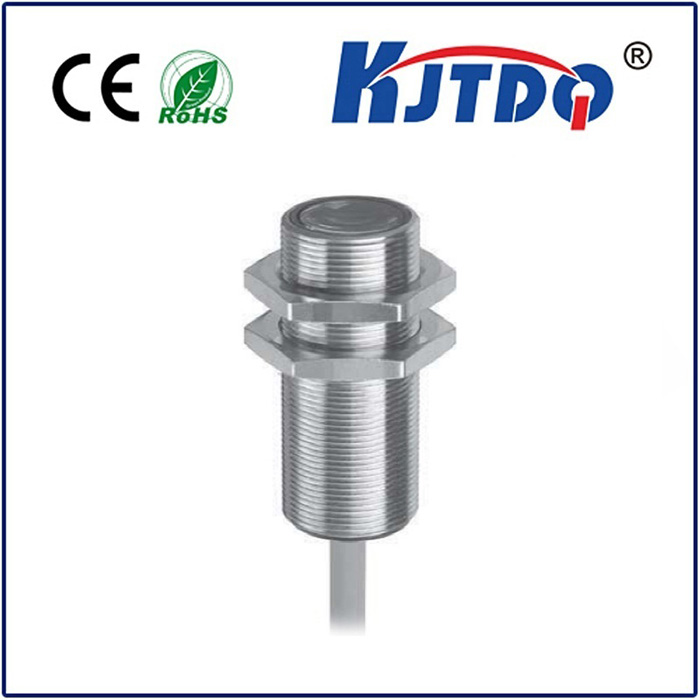
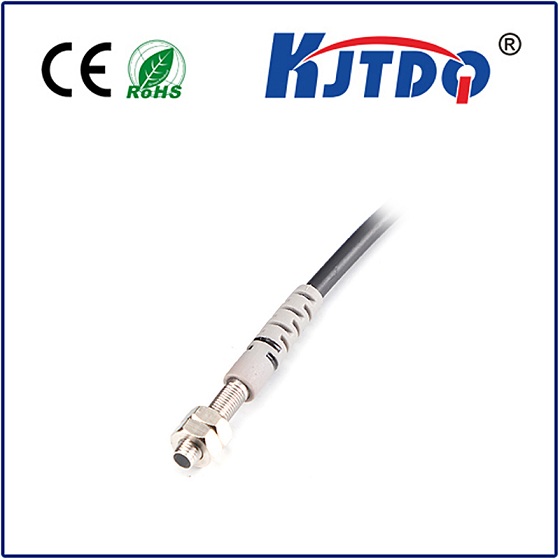
An inductive proximity sensor is designed to detect metallic objects without any physical contact. The "18mm" refers to its sensing distance or the diameter of its sensing face, which is a common and versatile size for many applications. The "12V DC" denotes its operating voltage, making it compatible with a wide range of standard industrial control circuits and Programmable Logic Controllers (PLCs). This combination of size and voltage offers a balanced profile suitable for diverse environments, from packaging lines to automotive assembly.
The core principle behind its operation is electromagnetic induction. The sensor generates an oscillating electromagnetic field from its face. When a metallic target, such as steel, aluminum, or copper, enters this field, it causes eddy currents to form on the target's surface. This change in the oscillation is detected by the sensor's internal circuit, which then triggers a solid-state switch to change its output state. This entire process happens in milliseconds, enabling high-speed detection crucial for timing and sequencing in automated processes.
Why is the 18mm 12V specification so prevalent? The 18mm cylindrical housing provides a robust physical form factor that is easy to install and offers good mechanical strength to withstand vibrations and minor impacts common in industrial settings. The 12V DC power requirement is a standard in low-voltage control panels, ensuring easy integration without the need for complex power conversion. Sensors like the KJTDQ series are typically built to meet international protection ratings, such as IP67, meaning they are dust-tight and can withstand temporary immersion in water, guaranteeing performance in harsh conditions.
The applications for an 18mm 12V proximity sensor are extensive. They are indispensable for position sensing, such as verifying if a robotic arm has reached its endpoint or if a cylinder is fully extended or retracted. In conveyor systems, they count products, detect jams, or control sorting gates. They are also used for speed monitoring on rotating shafts and as safety interlock devices to ensure machine guards are properly closed before operation. Their non-contact nature eliminates wear and tear, leading to a significantly longer service life compared to mechanical limit switches.
Selecting the right sensor involves considering several factors beyond just size and voltage. The sensing distance, while nominally 18mm, has a rated operating distance that must be considered for reliable detection. The type of metal being detected also influences performance; for instance, steel is detected at the full nominal distance, while non-ferrous metals like brass or aluminum may require a reduced distance. Output configuration (typically NPN or PNP) must match the input card of the controller. The KJTDQ and similar models often come in various output types to suit different PLC architectures.
Installation and environmental considerations are paramount for optimal performance. Maintaining the correct gap between the sensor face and the target is crucial. Surrounding metal objects can interfere with the electromagnetic field, so adequate clearance from machine frames or other sensors is necessary. While resistant to many industrial contaminants, buildup of conductive materials like metal chips or dust directly on the face can cause false triggering, necessitating periodic inspection in dirty environments.
In conclusion, the 18mm 12V DC inductive proximity sensor, exemplified by series like KJTDQ, is a fundamental and highly reliable workhorse in automation technology. Its standardized design, rugged construction, and straightforward integration make it a preferred choice for engineers and maintenance technicians worldwide. By providing accurate, wear-free detection of metallic objects, it directly contributes to increased machine uptime, improved product quality, and enhanced overall system safety. For any application requiring dependable non-contact sensing of metals, this sensor specification remains a proven and essential solution.