check

check

check

check

check

check
In the realm of modern electronics, the seamless interaction between users and their devices is often taken for granted. A key enabler of this intuitive experience is a sophisticated component working silently behind the scenes: the capacitive proximity sensor. Unlike simple touch interfaces that require physical contact, this advanced sensor technology detects the presence or absence of nearby objects without any direct touch, opening a world of possibilities for design, efficiency, and user convenience.
At its core, a capacitive proximity sensor operates by creating an electrostatic field. A sensing element, typically a copper area on a printed circuit board, is charged to form this field. When an object, such as a human hand or finger, enters this field, it causes a detectable change in capacitance—the ability of the system to store an electrical charge. The sensor's integrated circuitry continuously monitors this capacitance level. A significant variation triggers a signal, indicating the presence of an object within a predefined range. This fundamental principle allows for highly reliable and non-contact detection.
The advantages of capacitive sensing over other methods, like infrared (IR) or ultrasonic sensors, are substantial. It is exceptionally responsive to conductive materials, most notably the human body, making it ideal for user interface applications. These sensors are also largely immune to ambient light conditions, dust, or opaque materials that can interfere with optical systems. Furthermore, they can be designed to sense through non-conductive materials like glass or plastic, enabling sleek, sealed device designs that are both aesthetically pleasing and robust against environmental factors.
The applications of capacitive proximity sensors are vast and growing. In the smartphone industry, they are the technology behind the familiar "screen-off" feature during calls, preventing accidental cheek touches. They bring "touchless" tap functionality to modern faucets and soap dispensers in public restrooms, promoting hygiene. In automotive interiors, they enable gesture control for infotainment systems, allowing drivers to adjust volume or answer calls with a wave of the hand, minimizing distraction. Industrial automation heavily relies on them for non-contact object detection on assembly lines, especially for delicate or sensitive items. Even in consumer appliances, they are used to activate backlighting on kitchen panels as a hand approaches, combining elegance with functionality.
Integrating a capacitive proximity sensor into a product requires careful consideration. Engineers must account for factors such as the sensing range, which can be tuned from a few millimeters to several centimeters, the response time needed for the application, and environmental stability. Shielding the sensor from unintended electromagnetic interference is crucial for consistent performance. Modern sensors often come with digital outputs and programmable sensitivity, allowing for fine-tuning during the development process to suit specific design needs, whether it's ignoring a hovering insect or reliably detecting a specific gesture.
Looking ahead, the evolution of capacitive proximity sensing is intertwined with the Internet of Things (IoT) and smarter automation. Future developments point toward sensors with even lower power consumption for battery-dependent devices, multi-object detection capabilities, and integration with artificial intelligence for contextual awareness. Imagine a smart home system that not only turns on a light as you approach but also adjusts its brightness based on your specific gesture or the time of day. The potential for creating more intuitive, energy-efficient, and responsive environments is immense.
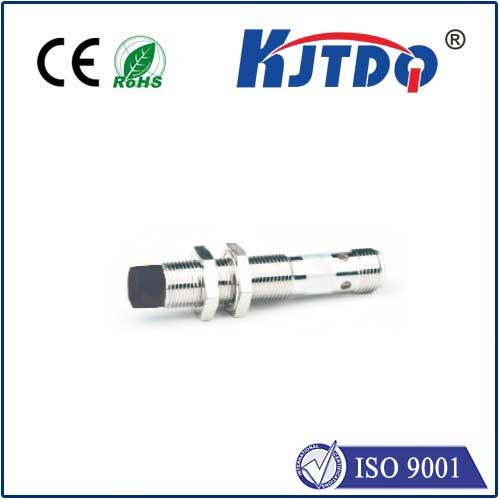
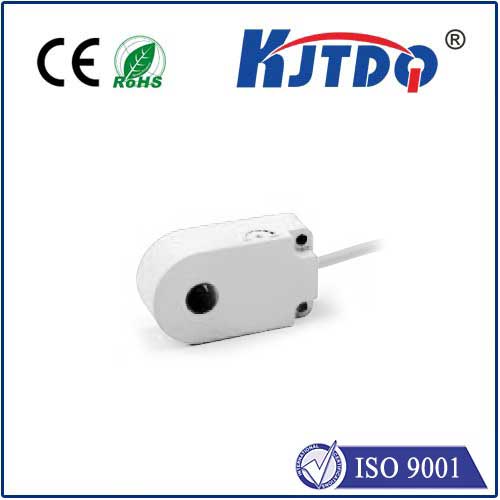
In conclusion, the capacitive proximity sensor is a foundational technology that significantly enhances how we interact with the electronic world. By enabling reliable, touchless detection, it empowers designers to create products that are more hygienic, durable, and intuitive. From the smartphone in your pocket to the automated systems in factories, this sensor technology, often abbreviated in industry contexts with identifiers like KJTDQ for specific models or series, continues to push the boundaries of convenience and innovation, making our interactions with technology feel more natural and effortless than ever before.