check

check

check

check

check

check
In the intricate world of industrial automation and electronic control, the demand for precise, durable, and non-contact sensing solutions is paramount. Among the array of technologies available, the combination of proximity sensors and reed sensors stands out for its reliability in diverse applications. Specifically, the MK21P 500W model represents a significant advancement in this field, offering robust performance for demanding environments. This guide delves into the core principles, advantages, and practical applications of these critical components, focusing on the capabilities of the reed sensor MK21P 500W.
At its core, a proximity sensor is a device that detects the presence or absence of an object within a specific range without physical contact. This non-contact operation eliminates mechanical wear and tear, leading to longer service life and higher reliability. Proximity sensors come in various types, including inductive, capacitive, and magnetic. Reed sensors, a subset of magnetic proximity sensors, utilize the simple yet effective principle of magnetic actuation. A reed sensor consists of two ferromagnetic reed contacts sealed within a glass tube filled with an inert gas. When an external magnetic field approaches, these contacts magnetize, attract each other, and close the electrical circuit. When the magnetic field is removed, the contacts spring back to their original open position.
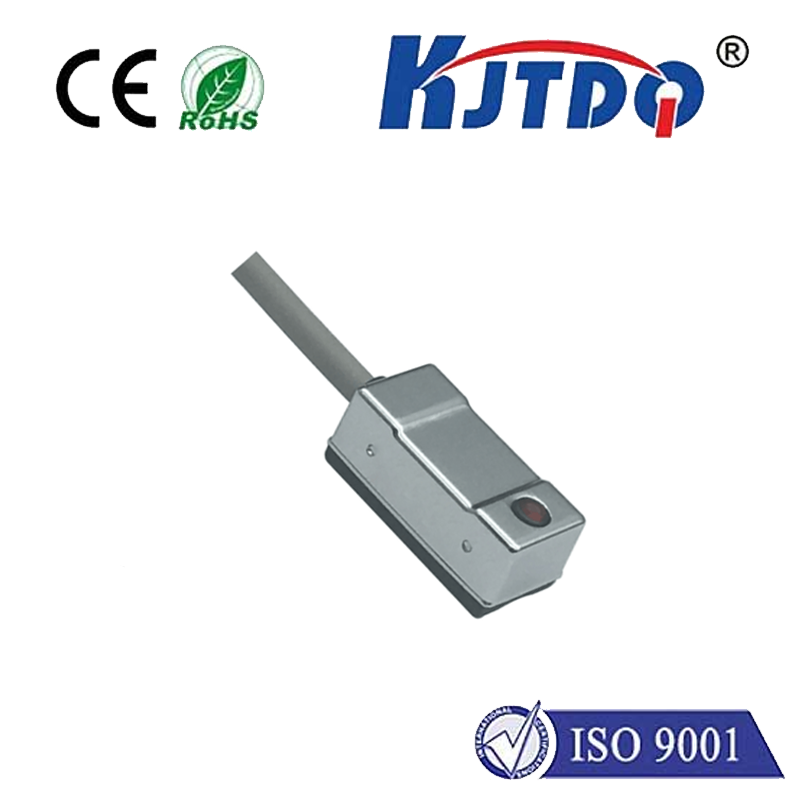
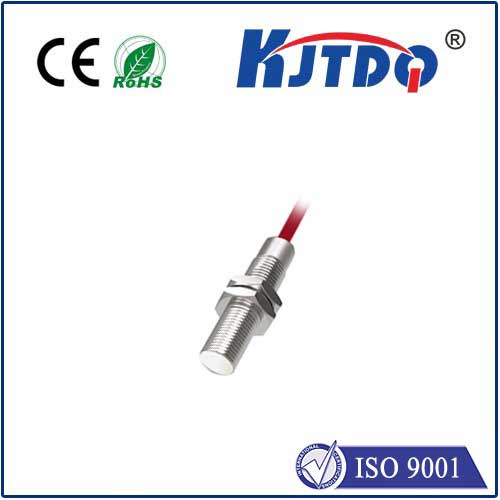
The MK21P 500W reed sensor exemplifies this technology with enhanced specifications. The "500W" rating typically indicates its power handling capacity, suggesting it can switch relatively high loads directly, often up to 500 Watts. This makes it suitable for controlling motors, solenoids, or heaters without always requiring an intermediary relay, simplifying circuit design. The MK21P model is engineered for industrial-grade durability. The hermetic glass seal protects the contacts from dust, moisture, and oxidation, ensuring stable operation in harsh conditions where contaminants are present. Its compact size allows for easy integration into space-constrained assemblies, from machinery and conveyor systems to security devices and automotive applications.
The synergy between a general proximity sensing concept and the specific reed sensor technology is powerful. While inductive sensors detect metals and capacitive sensors detect various materials, magnetic reed sensors like the MK21P 500W are ideal for detecting the presence of a permanent magnet or an electromagnet. This makes them perfect for position sensing in clean environments, fluid level detection using magnetic floats, and as safety interlocks on doors and guards. Their binary on/off signal is straightforward to interface with programmable logic controllers (PLCs), microcontrollers, or simple relay logic.
One of the standout features of the reed sensor MK21P 500W is its electrical isolation. The contacts are physically separated from the actuating magnetic field, providing excellent isolation between the control signal (the magnet) and the switched load. This enhances safety and reduces electrical noise interference. Furthermore, reed sensors have no active semiconductor components in the switching path, making them inherently resistant to voltage spikes and transients common in industrial settings. Their fast response time and low contact bounce contribute to precise timing control in automated processes.
In practical application, installing the MK21P 500W is straightforward. It is often mounted in a fixed position, while a small permanent magnet is attached to the moving part to be detected. The sensor triggers when the magnet comes within its specified operating distance. Designers must consider factors like the magnetic field strength, orientation, and the required switching distance to ensure consistent operation. For high-power switching at 500W, attention must be paid to the inrush currents of inductive loads, and appropriate protective circuits like snubbers may be used to prolong contact life.
From manufacturing assembly lines and packaging equipment to HVAC systems and renewable energy installations, the utility of a robust sensor like the MK21P 500W is vast. Its ability to provide a reliable, contact-free switch in the presence of a magnetic field makes it a cornerstone of modern control systems. When selecting a sensor for an application requiring non-contact detection of magnetic targets with direct high-power switching capability, the proximity sensor reed sensor MK21P 500W emerges as a compelling, time-tested solution that balances performance, durability, and cost-effectiveness for engineers and system integrators worldwide.