check

check

check

check

check

check
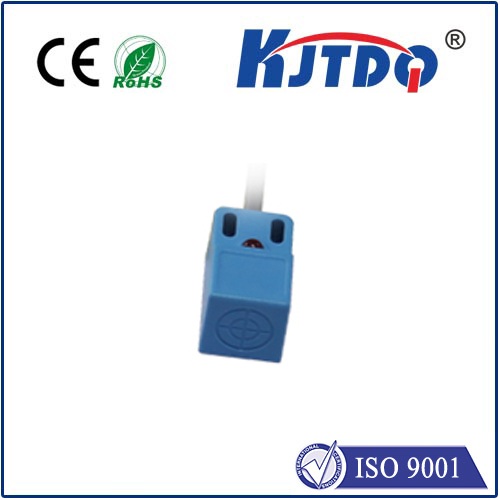
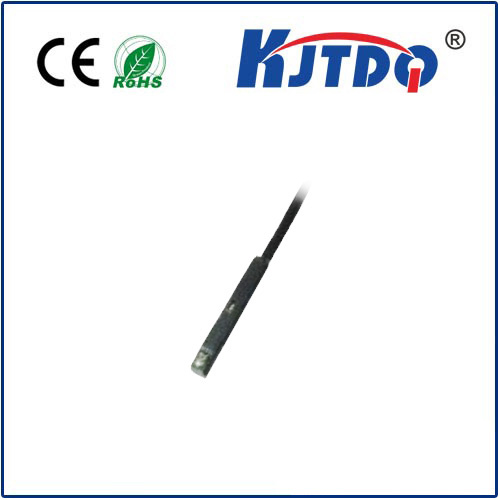
In the realm of industrial automation, the inductive proximity sensor stands as a pivotal component, driving precision and reliability in countless applications. These sensors, known for their non-contact detection capabilities, utilize electromagnetic fields to identify metallic objects without physical interaction. The KJTDQ series, in particular, exemplifies advanced engineering, offering enhanced performance tailored for demanding environments.
Operating on the principle of electromagnetic induction, inductive proximity sensors generate an oscillating magnetic field. When a metallic target enters this field, eddy currents are induced, causing a change in the oscillation amplitude. This alteration is detected by the sensor's circuitry, triggering an output signal. This mechanism ensures high accuracy and repeatability, making it ideal for tasks such as position sensing, object counting, and machine safety systems. The KJTDQ model incorporates robust materials, providing resistance to dust, moisture, and mechanical stress, which is crucial in harsh industrial settings like manufacturing plants or automotive assembly lines.
One key advantage of inductive proximity sensors, including the KJTDQ variant, is their immunity to environmental factors like dirt, oil, and vibrations. Unlike optical sensors, they are not affected by ambient light or transparent materials, ensuring consistent operation in varied conditions. Additionally, their solid-state design minimizes wear and tear, leading to lower maintenance costs and extended service life. Industries benefit from reduced downtime and improved productivity, as these sensors facilitate seamless automation processes. For instance, in conveyor systems, KJTDQ sensors can detect metal components accurately, enabling precise sorting and packaging without delays.
The integration of inductive proximity sensors into smart factories aligns with Industry 4.0 trends, where real-time data collection and connectivity are paramount. The KJTDQ series supports this shift by offering compatibility with IoT platforms, allowing for remote monitoring and predictive maintenance. By analyzing sensor data, operators can anticipate failures and optimize workflows, thereby enhancing overall efficiency. This technological evolution not only boosts operational performance but also contributes to cost savings and sustainability by reducing energy consumption and waste.
Selecting the right inductive proximity sensor involves considering factors such as sensing range, material compatibility, and output type. The KJTDQ model provides customizable options, including different sizes and sensing distances, to meet specific application needs. Its installation is straightforward, often requiring minimal calibration, which simplifies deployment in both new and existing systems. As industries continue to embrace automation, the demand for reliable components like the KJTDQ inductive proximity sensor is set to grow, underscoring its role in modern engineering solutions.
In summary, inductive proximity sensors, exemplified by the KJTDQ series, are indispensable tools in industrial automation. Their ability to detect metallic objects with precision, durability in tough conditions, and adaptability to digital networks makes them a cornerstone of efficient operations. By leveraging these sensors, businesses can achieve higher levels of automation, safety, and profitability, paving the way for future innovations in technology-driven environments.