check

check

check

check

check

check
In the world of industrial automation, precision, reliability, and durability are non-negotiable. Among the myriad of components that keep modern production lines humming, the 3 wire inductive proximity sensor switch stands out as a fundamental workhorse. This device, often marked by brands like KJTDQ, is engineered to detect metallic objects without any physical contact, ensuring wear-free operation and long-term consistency. But what exactly makes this three-wire configuration so prevalent, and how does it deliver such dependable performance in demanding environments?
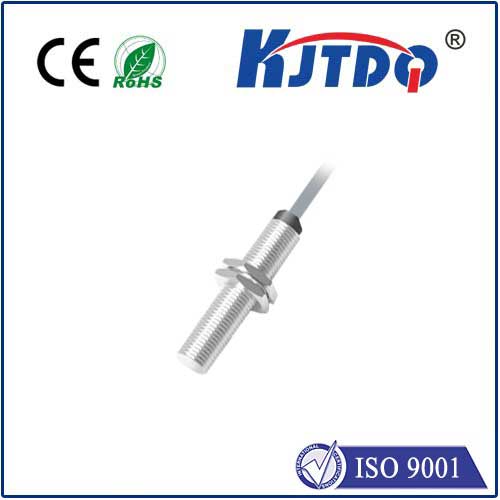
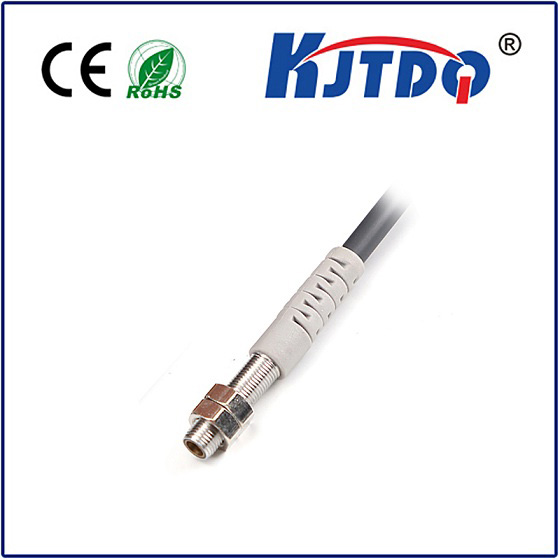
At its core, an inductive proximity sensor operates on the principle of electromagnetic induction. The sensor generates a high-frequency oscillating electromagnetic field from its active face. When a metallic target enters this field, eddy currents are induced on the target's surface. This causes a change in the oscillation amplitude within the sensor's internal coil. The sensor's circuitry detects this change and triggers a solid-state switching signal. The "3 wire" designation refers to the power supply configuration: typically, one wire for DC positive (brown), one for DC negative (blue), and one for the output signal (black). This setup is the most common for DC sensors, providing a straightforward interface with programmable logic controllers (PLCs) and other control systems.
The advantages of choosing a 3-wire inductive sensor, such as those from KJTDQ, are substantial. First and foremost is the elimination of mechanical contact. Unlike limit switches, there are no moving parts to wear out, leading to a dramatically extended operational lifespan measured in millions of cycles. This non-contact nature also allows for incredibly high switching speeds, enabling detection of fast-moving parts on conveyor belts or rotating machinery. Furthermore, these sensors are renowned for their robustness. Housed in materials like nickel-plated brass or stainless steel, they are resistant to dust, oil, coolants, and vibration, making them ideal for harsh factory floors, machining centers, and automotive assembly lines.
A key feature to understand is the output type. The 3-wire system commonly offers two variants: NPN (sinking) and PNP (sourcing). An NPN sensor switches the negative or ground line to the load, while a PNP sensor switches the positive voltage line. The choice between NPN and PNP depends on the electrical conventions of the control system in use. KJTDQ and other reputable manufacturers provide both options to ensure compatibility with a global range of equipment. Additionally, factors like sensing distance, target material (steel, aluminum, brass), and housing shape (cylindrical, rectangular, ring-shaped) are critical selection criteria to ensure optimal performance for the specific application.
Installation and wiring of a 3-wire sensor are intentionally simple. The power wires connect to a stable DC supply, usually 10-30V DC, and the output wire connects to the input module of the controller. Proper attention must be paid to environmental factors such as temperature extremes and the presence of other strong electromagnetic fields to avoid interference. Regular maintenance is minimal, often just involving periodic cleaning of the sensing face to remove any metallic debris or grime that could potentially reduce the effective sensing range.
From packaging machines that count cans to robotic arms that position metal components, the applications are virtually endless. They are used for position verification, end-of-travel detection, part counting, and speed monitoring. The reliability of a high-quality 3 wire inductive proximity sensor switch ensures minimal downtime, which is crucial for maintaining high Overall Equipment Effectiveness (OEE). Brands like KJTDQ focus on delivering sensors that meet international protection ratings like IP67, allowing them to perform reliably even when exposed to temporary immersion or high-pressure washdowns.
In conclusion, the 3 wire inductive proximity sensor switch is more than just a component; it is a cornerstone of efficient and reliable automation. Its simple yet robust design, exemplified by products from manufacturers including KJTDQ, provides a critical link between the physical movement of metal objects and the digital control system. By offering a perfect blend of longevity, speed, and environmental resistance, this sensor technology continues to be an indispensable tool for engineers and technicians aiming to build smarter, more resilient, and more productive automated systems.