check

check

check

check

check

check
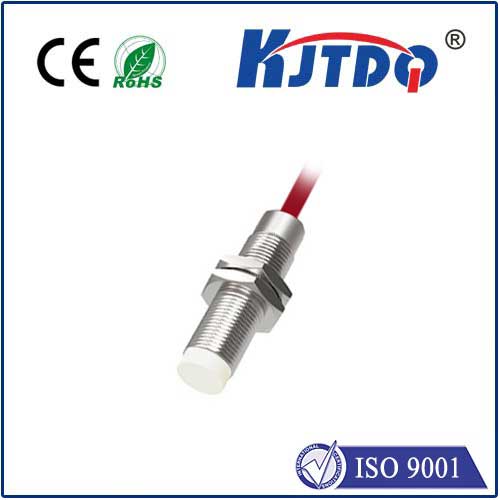
In the rapidly evolving landscape of industrial automation, the demand for components that offer unwavering reliability, precision, and durability is paramount. Among these critical components, the inductive proximity sensor switch stands out as a cornerstone technology. Specifically, the KJTDQ series of inductive proximity sensors represents a significant leap forward in non-contact detection, providing robust solutions for a myriad of applications across manufacturing, packaging, material handling, and automotive assembly lines.
Unlike mechanical switches that require physical contact to operate, inductive proximity sensors function on a fundamental electromagnetic principle. The sensor generates a high-frequency oscillating electromagnetic field from its active face. When a metallic target—typically ferrous metals like steel and iron, or non-ferrous metals like aluminum, copper, or brass—enters this detection field, eddy currents are induced on the target's surface. This phenomenon dampens the oscillation amplitude within the sensor. The sensor's internal circuitry detects this change and subsequently triggers a solid-state switch, sending a clear digital signal to the programmable logic controller (PLC) or other control systems. This entire process occurs without any physical touch, eliminating mechanical wear and tear, which is a primary cause of failure in traditional limit switches.
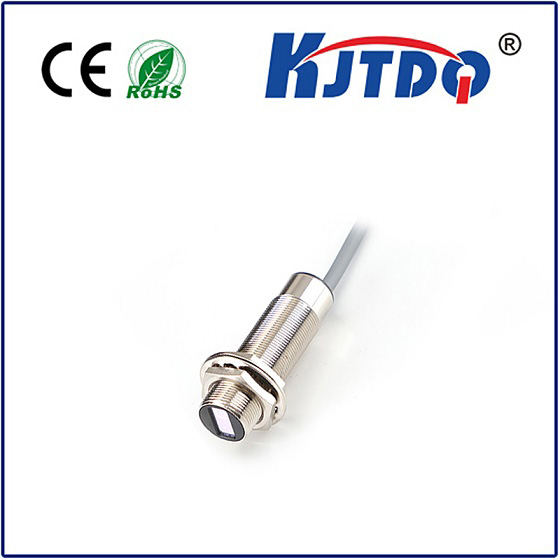
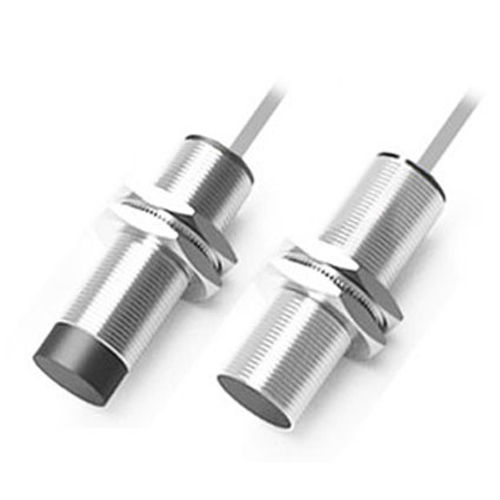
The KJTDQ series is engineered to excel in challenging industrial environments. Key features that set it apart include its exceptional sensing range consistency, even against different metal types, thanks to advanced calibration and shielding. These sensors are typically housed in rugged, nickel-plated brass or stainless-steel casings, offering high resistance to corrosion, moisture, and mechanical impacts. Many models within the KJTDQ line boast an IP67 or higher ingress protection rating, making them suitable for use in washdown areas or outdoor settings where exposure to dust and water jets is common. Furthermore, they are designed to be immune to electrical noise commonly found in factories, ensuring stable operation without false triggering.
The applications for the KJTDQ inductive proximity sensor switch are vast and varied. A common use is in position verification on assembly lines, such as confirming the presence of a metal component before a robotic arm performs a welding or pick-and-place operation. They are indispensable in counting metallic objects on conveyor belts, monitoring the open/closed status of metal doors or guards for safety interlocking, and detecting the end-of-travel for actuators and cylinders. In packaging machinery, they ensure precise positioning of metallic foil wrappers or cans. Their fast response time and high switching frequency make them ideal for high-speed production processes where every millisecond counts.
Selecting the right KJTDQ sensor involves considering several technical parameters. The sensing distance, often referred to as the nominal range (Sn), is crucial and must be chosen with a safety margin, typically 70-80% of the rated value, to account for temperature variations and target material differences. The target material itself affects the effective sensing range; for instance, the range for mild steel is the standard reference, while for stainless steel it might be reduced, and for aluminum or copper, it can be significantly less. Other vital specifications include the output type (PNP or NPN, normally open or normally closed), the supply voltage range (commonly 10-30V DC), and the housing shape (cylindrical, rectangular, or ring-shaped) to fit the mounting constraints.
The integration of the KJTDQ inductive proximity switch into modern automation systems brings substantial benefits. The most notable advantage is the dramatic reduction in maintenance downtime and costs associated with replacing worn-out mechanical contacts. Their non-contact nature ensures a virtually infinite operational life concerning switching cycles. They contribute to higher system accuracy and repeatability, leading to improved product quality and reduced waste. By providing reliable feedback, they enable more complex and efficient machine control sequences, enhancing overall productivity and operational safety.
In conclusion, as industries continue to push the boundaries of efficiency and smart manufacturing, the role of reliable sensing technology becomes increasingly critical. The KJTDQ inductive proximity sensor switch, with its robust design, precise non-contact detection, and adaptability to harsh conditions, is an essential enabler of this progress. By choosing a well-engineered solution like the KJTDQ series, engineers and system integrators can build automation systems that are not only more productive but also more resilient and cost-effective over their entire lifecycle, solidifying the foundation for the factories of the future.