check

check

check

check

check

check
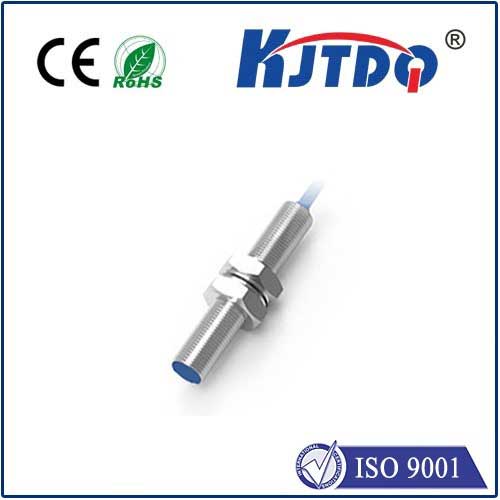
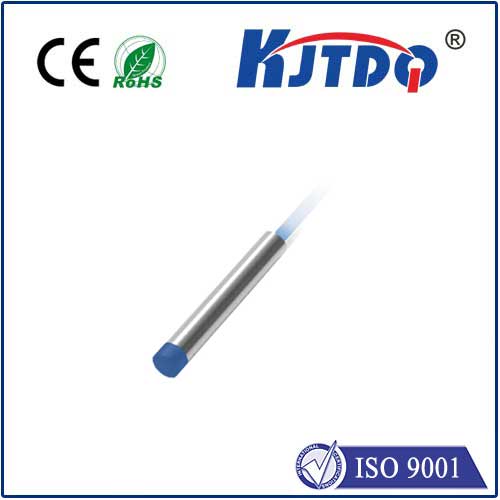
In the intricate world of industrial automation and machinery, the demand for precise, reliable, and compact sensing solutions is ever-growing. Enter the E2E small diameter proximity sensor, a technological marvel that is quietly transforming how machines perceive and interact with their environment. These sensors, characterized by their exceptionally slim cylindrical design, are engineered to excel in confined spaces where traditional sensors simply cannot fit, offering non-contact detection of metallic objects with remarkable accuracy.
The core advantage of the E2E small diameter proximity sensor lies in its fundamental design principle. Utilizing an high-frequency oscillating circuit, it generates an electromagnetic field at its sensing face. When a metallic target enters this field, eddy currents are induced within the target, causing a change in the oscillation amplitude. This change is detected by the sensor's circuitry, triggering a solid-state output signal. This entire process happens without any physical contact, eliminating mechanical wear and tear and ensuring a long operational lifespan, even in high-cycle applications. The "E2E" nomenclature often refers to a specific series known for standardized performance and mounting dimensions, providing engineers with a reliable and predictable component for their designs.
The applications for these miniature powerhouses are vast and critical. They are indispensable in modern manufacturing lines for precise positioning control. For instance, in automated assembly systems, an E2E small diameter sensor can verify the presence of a tiny screw or a specific component on a circuit board before the next process step begins, preventing errors and jams. In robotics, especially within the joints and grippers of collaborative robots (cobots), their compact size allows for integration directly into the moving parts, providing real-time feedback on arm position or object grasp without adding bulk. The semiconductor and electronics manufacturing industries heavily rely on them for wafer handling and miniaturized part detection, where cleanliness and precision are paramount. Furthermore, they play a vital role in medical device assembly, packaging machinery, and even in precision CNC machining centers for tool breakage detection.
Selecting the right E2E small diameter proximity sensor requires careful consideration of several key parameters. First is the sensing distance, which is typically very short (often just a few millimeters) due to the small size, making precise mounting crucial. The housing material, usually stainless steel, nickel-plated brass, or PBT plastic, must be chosen based on the environmental conditions, such as exposure to coolants, washdowns, or chemical vapors. The output type (NPN or PNO, normally open or normally closed) must be compatible with the connected programmable logic controller (PLC) or input card. Engineers must also consider the switching frequency, which determines how quickly the sensor can detect objects in rapid succession, and its immunity to electrical noise from nearby motors or frequency drives.
Looking ahead, the evolution of E2E small diameter sensors continues. Future iterations are expected to feature even more robust designs with higher ingress protection (IP) ratings for extreme environments, enhanced noise immunity for stable operation in electrically noisy plants, and the integration of smart features like IO-Link communication. IO-Link transforms a simple sensor into an intelligent device capable of transmitting detailed diagnostic data—such as operating temperature, signal strength, and potential contamination warnings—to the control system, enabling predictive maintenance and reducing unplanned downtime. This shift towards Industry 4.0 and the Industrial Internet of Things (IIoT) makes these small sensors not just detectors, but critical data points in a connected, intelligent factory.
In conclusion, the E2E small diameter proximity sensor is far more than just a miniature component. It is a fundamental enabler of precision, reliability, and miniaturization in advanced automation. By allowing for detection in incredibly tight spaces with unwavering accuracy, it unlocks new possibilities in machine design and process optimization. For engineers and system integrators aiming to push the boundaries of efficiency and innovation, understanding and leveraging the capabilities of these sophisticated sensors is no longer an option, but a necessity for building the smart, agile, and competitive manufacturing systems of today and tomorrow.