check

check

check

check

check

check
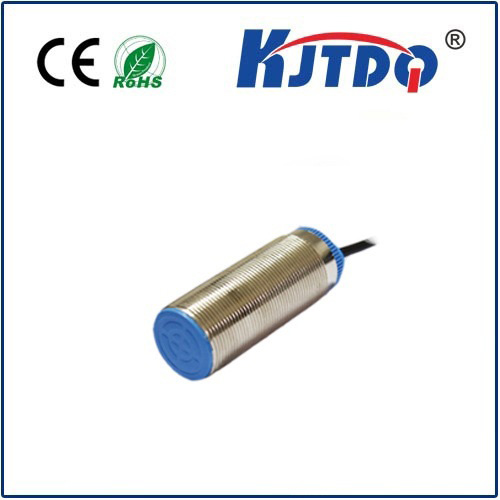
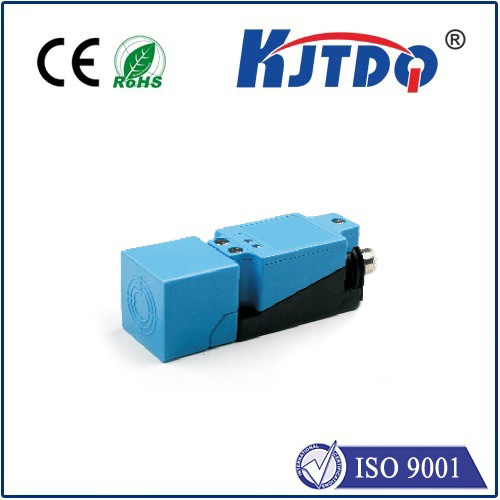
In industrial automation and control systems, proximity sensors are indispensable components for detecting the presence or absence of objects without physical contact. Among the various types, the 3-wire PNP proximity sensor is widely used due to its specific output configuration. This guide delves into the details of PNP proximity sensor output, explaining its operation, wiring, and practical applications to help engineers and technicians implement reliable sensing solutions.
The term "PNP" refers to the type of transistor used in the sensor's output switching circuit. In a PNP configuration, the output acts as a switching device that connects the load to a positive voltage supply when activated. Essentially, when the sensor detects a target within its sensing range, its output terminal switches to a HIGH state, providing a positive voltage (typically +24V DC) to the connected load, such as a PLC input, relay, or indicator lamp. Conversely, when no target is present, the output switches off, presenting a high-impedance state or floating condition. This behavior is often summarized as "sourcing" current, as the sensor sources or provides positive power to the load.
Understanding the wiring is crucial for correct operation. A standard 3-wire PNP proximity sensor has three distinct wires: brown, blue, and black. The brown wire is connected to the positive supply voltage (usually +24V DC), and the blue wire is connected to the common negative or ground (0V). The black wire is the output signal line. When active, the black wire carries the positive supply voltage to the load. The load itself is then connected between this black output wire and the ground (blue wire). This setup ensures that current flows from the sensor's output, through the load, and back to the ground, completing the circuit. Incorrect wiring, such as confusing PNP with its counterpart NPN (which sinks current to ground), can lead to system malfunctions or damage.
The output characteristics of a PNP sensor are defined by several key parameters. The output voltage in the active state will be slightly lower than the supply voltage due to a small voltage drop across the internal transistor, often around 0.5V to 2V. The maximum output current the sensor can safely handle is specified in its datasheet, typically ranging from 100mA to 500mA. Exceeding this rating can cause overheating and failure. Furthermore, the switching speed, or response time, determines how quickly the output can turn on and off, which is vital for high-speed counting or positioning applications. Most modern PNP sensors offer a short-circuit protected output, safeguarding the device if the output is accidentally connected directly to ground.
Choosing a PNP proximity sensor output is often dictated by the input requirements of the control system. Many Programmable Logic Controllers (PLCs) from European and North American manufacturers are designed to accept PNP-sourced inputs. In these systems, the PLC's digital input module expects a positive voltage to signal a TRUE or ON state. Connecting a PNP sensor's output to such an input creates a compatible interface: sensor activation provides +24V to the PLC input, which is then recognized as a logic '1'. This compatibility simplifies system design and reduces the need for additional interfacing components.
Practical applications for PNP output sensors are vast. They are commonly used in conveyor systems to detect the passage of items for counting or sorting. In automated assembly lines, they verify the presence of components before a robotic arm performs an operation. Machine safety systems might use them as part of an interlock mechanism. Their robust, contactless design makes them ideal for harsh environments with dust, moisture, or vibration, where mechanical limit switches would fail prematurely. When installing these sensors, considerations include proper mounting, ensuring the correct sensing distance, and avoiding mutual interference between multiple sensors placed closely together.
Troubleshooting issues with PNP output often involves a systematic approach. If a sensor fails to trigger, first verify the power supply connections (brown to +24V, blue to 0V). Use a multimeter to check if the output voltage on the black wire rises to near the supply voltage when a target is presented. If the voltage remains low or at zero, the sensor may be faulty or the sensing face might be obstructed. If the connected load does not energize, check the load's wiring and ensure it is not drawing more current than the sensor's rated capacity. Understanding the fundamental "sourcing" nature of the PNP output is the first step in diagnosing and resolving such operational challenges.